

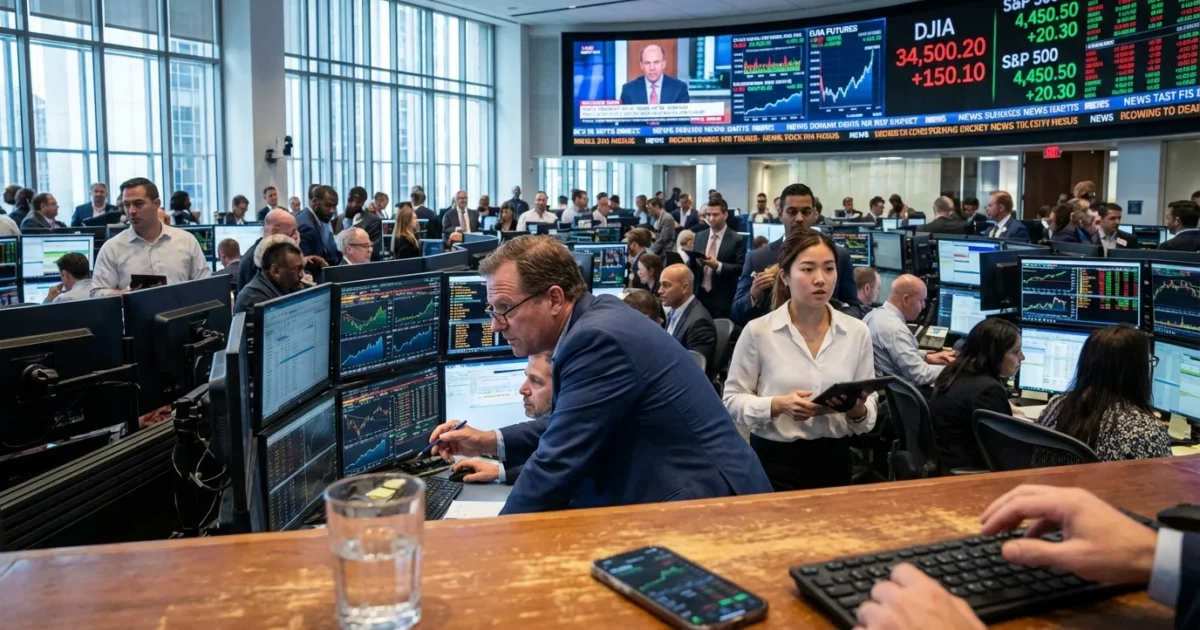
DJIA futures slip as Trump’s Davos speech looms, Greenland tariff threat jolts markets
DJIA futures are edging lower this morning, and the reason is political, not corporate. Traders are bracing for President Trump’s Davos speech after a fresh tariff threat tied to a possible Greenland purchase. Earnings chatter has faded to the background. Policy risk is back in the driver’s seat.
Futures tied to the Dow are lower by roughly 0.1% to 0.3% ahead of the open. Safe haven demand is intense. Gold has surged to fresh records, trading around 4,865 to 4,873 dollars per ounce as investors move to shelter. The message is clear. This market wants certainty, and it is not getting it yet.

What is moving the Dow right now
The selloff began after Trump’s new tariff plan on eight European NATO countries. He set a timetable, and the clock is now ticking into February. Traders see a high stakes negotiation, and they are cutting risk into the speech.
Mega cap tech is weak again, adding pressure to index futures. A cautious tone on streaming earnings, including Netflix, has soured the mood across growth names. That is feeding into Dow-linked contracts, even as industrials and banks watch global headlines.
Safe haven flows are doing the rest. Gold is at records. Cash is building on the sidelines. Treasuries are bid as investors seek safety, a sign that fear is edging out greed for now.
Tariff path in play: 10% on February 1, rising to 25% by June, unless a Greenland deal is reached.
The politics behind the selloff
This is not a routine trade spat. The tariff threat is tied to Greenland, which makes it an unusual test of alliance politics and economic policy. Targeting several European NATO partners links military allies to a commercial demand. That is a sharp break from recent practice, and markets are reacting fast.
Republicans close to the White House argue the pressure is needed. They say Europe responds only when costs are real. They see a strong executive posture that plays well with a base that prizes toughness. Some House conservatives welcome the move, saying tariffs can help domestic producers.
Democrats call it reckless. They warn that consumers will pay higher prices and exporters will face blowback. They also point to NATO strain at a time of rising global risk. Expect committee chairs to threaten hearings and to demand legal justifications for the tariff tool the White House plans to use.
The 2026 map hangs over it all. Swing district lawmakers, in both parties, are watching local costs. Midwest manufacturers see a chance at relief if Europe blinks, but they also fear higher input prices. Farmers remember previous retaliation. Union pension funds and 401(k)s feel every futures wobble. The politics of price hikes can bite fast in a midterm year.
What to watch in Davos
The speech is the catalyst. Tone will set the next move for the Dow and for the broader risk mood.
- If Trump signals flexibility, futures can stabilize, with a relief bounce into the cash open.
- If he repeats the timeline, markets may drift lower, with defensive sectors in the lead.
- If he threatens earlier or wider tariffs, risk assets could slide, with gold and Treasuries gaining.
Watch the dollar and Treasury yields for confirmation. A firm dollar and falling yields point to deeper caution. A softer dollar and steady yields hint at easing stress.
Volatility risk around the speech is high. Position sizes and stops matter today. ⚠️

Why it matters beyond Wall Street
Policy does not live in a vacuum. Tariffs raise costs that often hit voters before they hit official data. That means prices on cars, machinery, and select consumer goods can rise fast if the plan proceeds. Small businesses that import parts from Europe could face a squeeze. City budgets, tied to sales taxes and local investment gains, can feel the chill.
Allies are watching. NATO cohesion is not a ticker symbol, but it affects supply chains and defense deals that support jobs in many states. A public rupture with key European economies would ripple through aerospace, energy, and pharmaceuticals. Those are sectors with deep footprints in swing counties.
Earnings season is now the sideshow, which is rare in January. Executives will get questions about tariff exposure on every call. Guidance will lean cautious if policy risk remains high. That is how a political shock can cap a rally, even when profits hold up.
The bottom line
This morning’s dip in DJIA futures is a vote on policy risk, not on profits. The Greenland linked tariff threat has muscled past earnings and put Davos center stage. Markets want a path to de escalation. If they do not get one, the defensive turn will harden.
The stakes are political and civic, not just financial. Prices, pensions, and partnerships are on the line. All eyes now shift to the podium in Switzerland. The Dow’s next move will follow the words we hear there.

