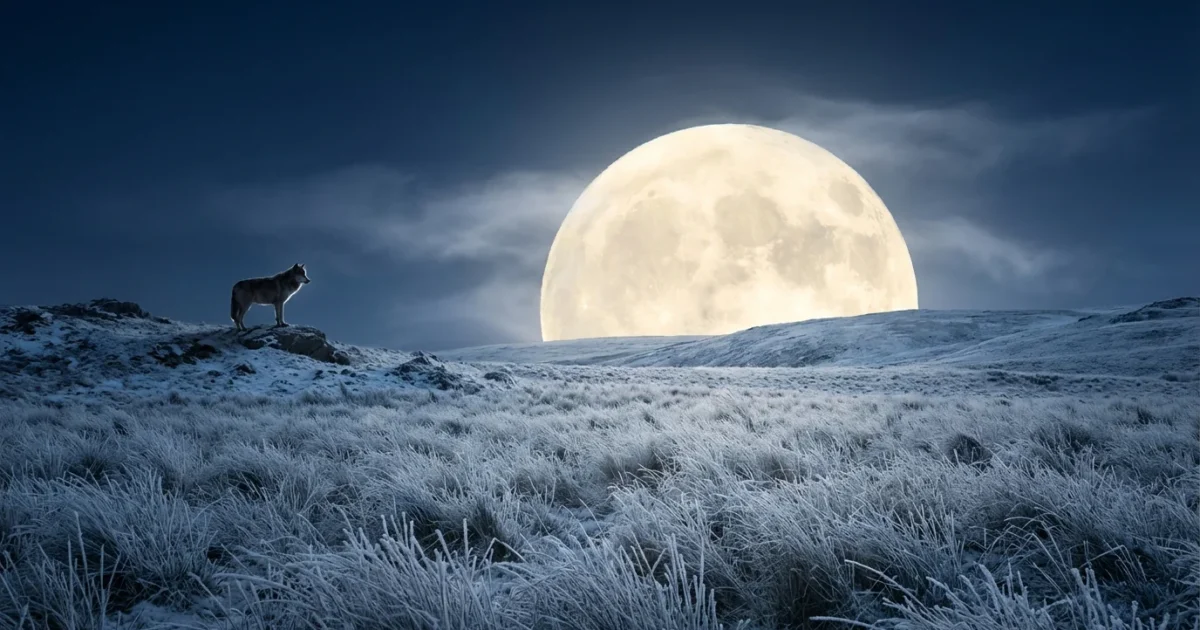
Tonight, the first full moon of the year is rising big and bright. It is January’s Wolf Moon, and it is also a supermoon. I am tracking it now. The disc looks slightly larger than average, and its glow cuts through thin cloud. If you step outside at moonrise, you will see it take over the horizon.
What is actually happening in the sky
A full moon happens when the Moon sits opposite the Sun in our sky. Earth is in between. Sunlight floods the Moon’s Earth-facing side, which turns it into a glowing circle. This one occurs near perigee, the Moon’s closest point to Earth in its slightly oval orbit. That is what makes it a supermoon.
Near perigee, the Moon can appear up to about 14 percent larger than at apogee, its farthest point. Your eyes will boost the effect near the horizon. That is the well known Moon illusion. The Moon is not swelling. Your brain is. The physics is steady and simple.
Check local moonrise and moonset times. Stand where you have a clear view to the east at dusk, or to the west at dawn.
Supermoon science, not superstition
Supermoon is a popular term for a full moon near perigee. Astronomers note the same facts with different words, full phase close to minimum Earth Moon distance. Average Earth Moon distance is about 384,400 kilometers. At perigee, it drops by tens of thousands of kilometers. More light reaches us, so the Moon looks brighter.
This slightly closer pass also tugs a bit harder on our oceans. The strongest tides occur when the Sun, Earth, and Moon line up. That happens at full and new moon. When full phase and perigee match, coastal communities can see higher than normal high tides. These are called perigean spring tides. They are not dramatic most of the time, but forecasters and port pilots pay attention, especially if a storm is nearby.
Expect slightly higher high tides and lower low tides in the next day or two. Local weather can amplify or reduce the effect.
The Quadrantids meet a bright sky
The early January Quadrantid meteor shower is also underway. It can produce sharp peaks in rates for a few hours. Most years, dark skies show dozens of meteors per hour. This year, the bright Wolf Supermoon will wash out many faint streaks. Only the brightest meteors will punch through the glare.
If you still want to try, pick a dark location and give your eyes time to adjust. Face away from the Moon, and shield the Moon with a building or tree. The meteors can appear anywhere, though they seem to point back to a spot near the constellation Boötes.
Moonlight will cut the meteor count. Adjust expectations, and look after midnight when the radiant is higher.
About that “Wolf Moon” name, and why astrology falls short
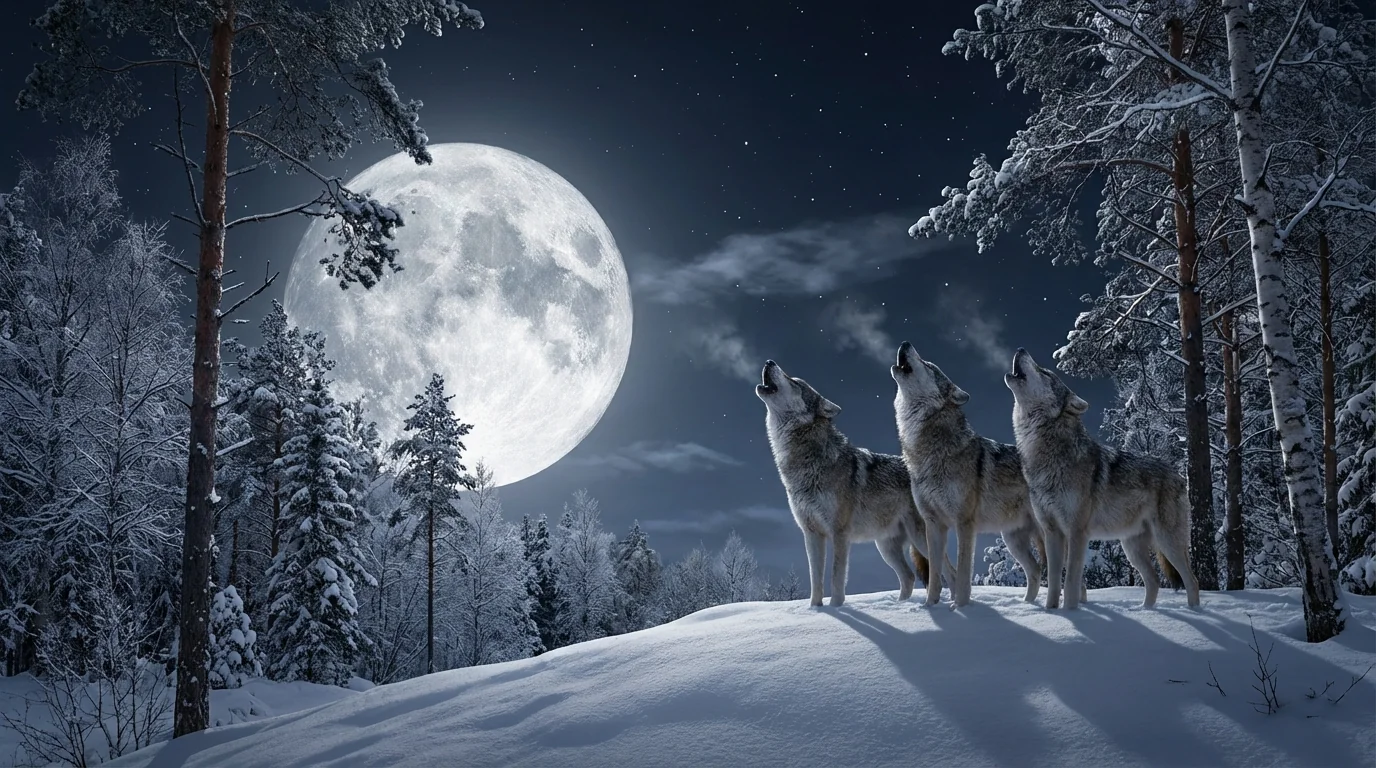
“Wolf Moon” is a folk label for January’s full moon. It has roots in North American and European traditions. It marks deep winter, long nights, and historically, howling wolves in many regions. The name is a cultural story, not a scientific category. Astronomers track lunar phases and orbital distance, not the month’s nickname.
Astrology also often gets new life during full moons. It links moon phases and zodiac positions to human moods and events. The evidence does not support those claims. Decades of studies find no reliable link between lunar phase and behavior, births, or accidents. Gravity is real, but the Moon’s extra pull during a supermoon is tiny compared to everyday forces on your body. The Moon does shape tides, and it lights our nights. It does not steer our personalities.
How to get the best view tonight
No telescope is needed. Your eyes are perfect for this show. A simple plan helps.
- Arrive 15 minutes before moonrise to scout a clear horizon.
- Watch for deep orange color near the horizon from dust and air scattering.
- Use binoculars to spot the dark lunar maria and bright ray craters.
- For photos, use a tripod, a short exposure, and include a skyline for scale.
The Moon will look largest to you when it hugs the horizon. That is a trick of perception, not a change in its size. Later in the night, it will look smaller but actually sits at almost the same distance.
Why this matters beyond the view
Bright full moons offer more than beauty. They give field teams extra light for wildlife surveys. They help calibrate instruments that need steady, known light sources, since the Moon’s reflectance has been well measured. They help coastal managers time inspections around stronger tides. Even casual skywatchers learn to read the sky, which builds a habit of attention that science needs.
Conclusion
Tonight’s Wolf Supermoon is a clean, bright start to the year. It is folklore and physics in one frame. Step out, look up, and enjoy the view. Know what you are seeing, and what you are not. The Moon is close, the tides respond, and the night is yours to explore.