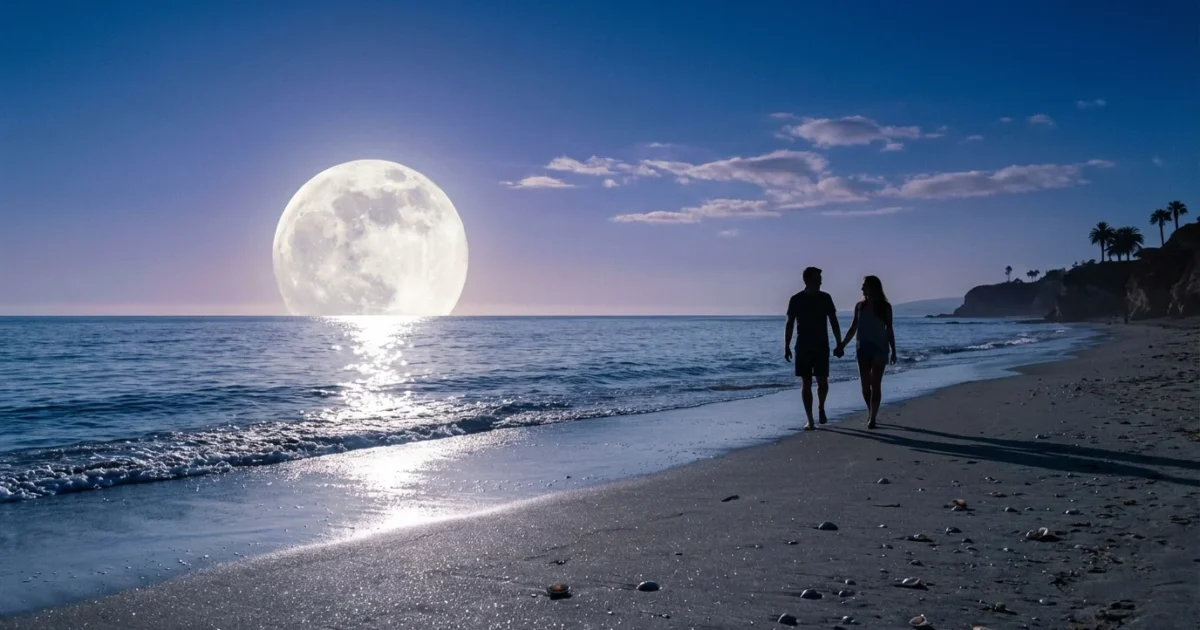
Look east at sunset tonight. The first full Moon of 2026 is lifting into view, big and bright. It is January’s Wolf Moon, and it is a supermoon. The sky is also primed for the Quadrantid meteor shower. If clouds stay away, you can watch the Moon glow and meteors flare in the same night. I am on this story and here is how to catch the show, and why it matters.
What makes tonight’s Moon a supermoon
A supermoon happens when a full Moon arrives near the Moon’s closest point to Earth. The Moon’s path is an oval, not a perfect circle. That closer swing is called perigee. The result is simple. The Moon looks a bit larger and brighter to the eye.
Full moons are a lineup of the Sun, Earth, and Moon. The Moon is opposite the Sun in our sky. That is why it rises near sunset and sets near sunrise. You get all night to watch it climb, drift, and sink. The light is steady and cold. It throws long shadows and glints off frost and snow.
This close pass also nudges our oceans. Expect slightly higher high tides and slightly lower low tides over the next day. Coastal flooding is not likely from the Moon alone, but local weather can add to the effect.
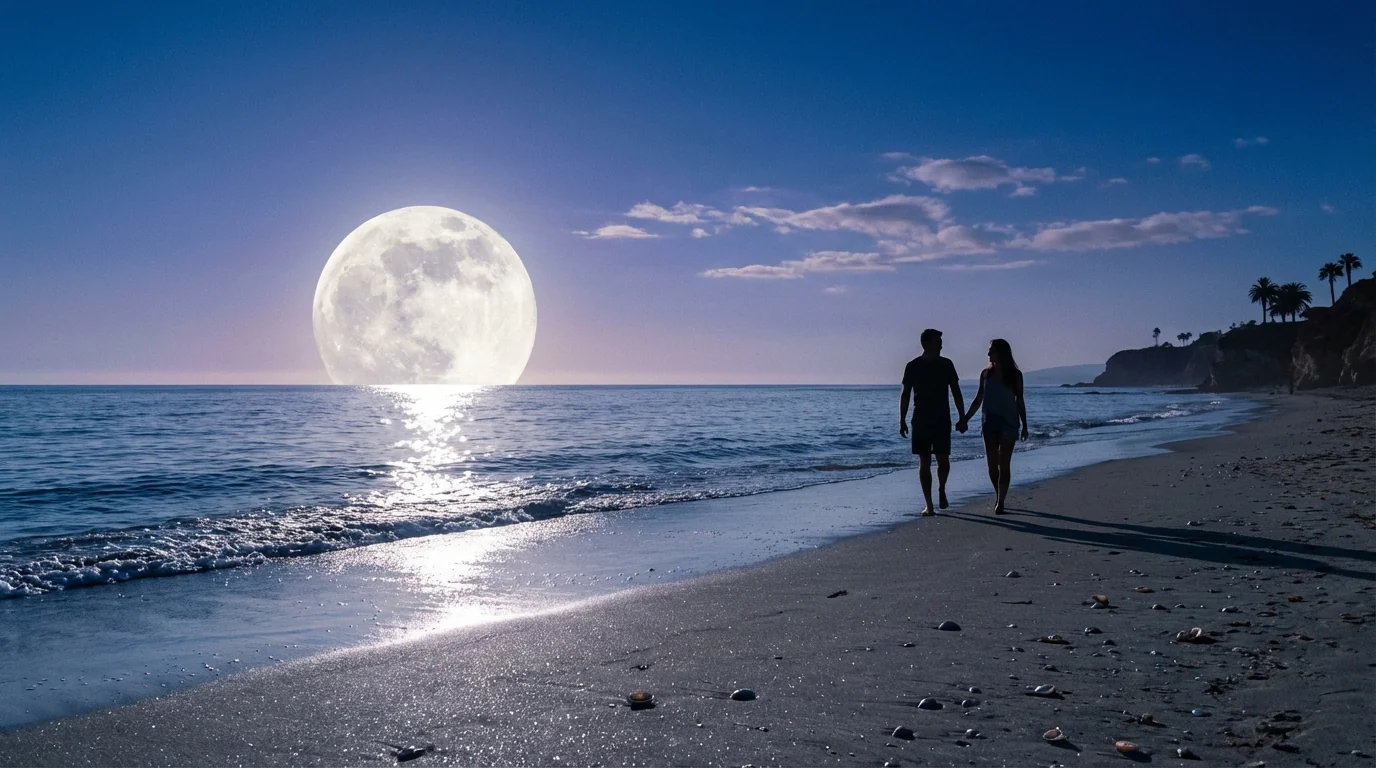
Full Moon rises near local sunset. Check your local moonrise time, then set up with a clear view to the east.
When and where to look
Step outside at sunset and face east. The Moon will lift from the horizon like a lantern. Near the horizon it can look huge. That is a trick of the mind called the Moon illusion. The Moon is not changing size. Your brain is.
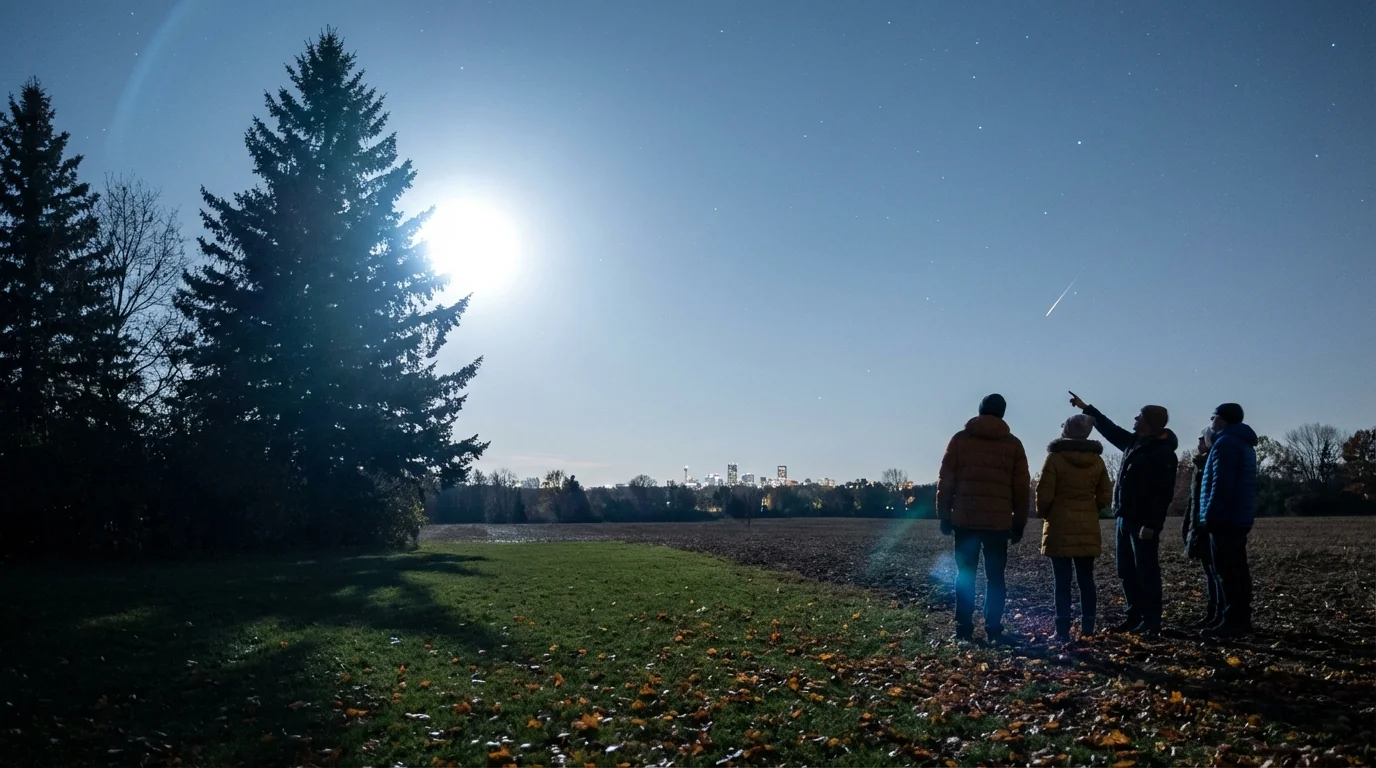
The Quadrantid meteors come later. They are best after midnight and before dawn, when the radiant gets higher in the northeast. The radiant sits in a dim patch of sky near Bootes, once called Quadrans Muralis. The shower has a sharp peak that lasts only a few hours. Bright moonlight will wash out faint streaks, but do not give up. The Quadrantids are known for occasional fireballs, large and fast, that punch through the glare.
Pick your spot with care. A dark site helps with meteors. A low eastern horizon helps with moonrise. City lights will not ruin the Moon but they will swallow the fainter meteors.
How to see both events tonight
You can make a plan that fits both the Moon and the meteors. Here is a simple timeline that works across most time zones.
- At sunset, watch the Wolf Supermoon rise in the east. Enjoy it with the naked eye.
- During the evening, use binoculars to scan the lunar seas and craters.
- After midnight, shift your gaze to the northeast and the higher sky for meteors.
- Keep watching until dawn. Fireballs can appear at any time.
For easy Moon photos, stabilize your phone on a railing or tripod. Tap to focus on the Moon, then lower exposure until detail appears. For meteors, use a wide lens, high ISO, and 10 to 20 second exposures. Turn off flash. Dress warm, bring a chair, and be patient. 🌕
The science behind the show
The Moon takes about 29.5 days to go from full to full. That is the synodic month. Its distance to Earth changes over that cycle, because the orbit is stretched. When full phase lines up near perigee, we get a supermoon. The size change is small to the eye, but the brighter light is real. Shadows look crisper, surface detail pops, and landscapes glow.
Look closely with binoculars. You will see the dark maria, ancient lava plains, and bright ray systems shooting from young craters like Tycho. Near the limb, the surface looks rough and scalloped. That is the Moon’s mountains catching the sunlight at a shallow angle.
The Quadrantids come from a narrow stream of debris left by a small body named 2003 EH1, likely a burned out comet. Earth plows through this thin river of dust each January. The stream is tight, which is why the peak is brief and intense. The meteors hit fast, spark, and burn in the upper atmosphere. Many are faint. Some carry enough mass to flare as fireballs, even in bright moonlight.
Moonlight matters because the sky is never fully dark during a full Moon. The glare raises the background glow, which hides dim streaks. Your eyes adapt if you give them time. Look away from the Moon to cut the glare. Use a building, tree, or your hand to block the Moon when scanning for meteors.
Make tonight count
This is the sky’s way of ringing in the year. A supermoon to start the night, a meteor shower to close it. You do not need special gear. You need time, a clear horizon, and a bit of patience. If clouds win, the Moon will be full again next month, and the Quadrantids will return next year. If the sky opens, step outside and claim your front row seat. The Wolf Supermoon and the Quadrantids are clockwork. The show is on whether we show up or not. Tonight, show up. ✨