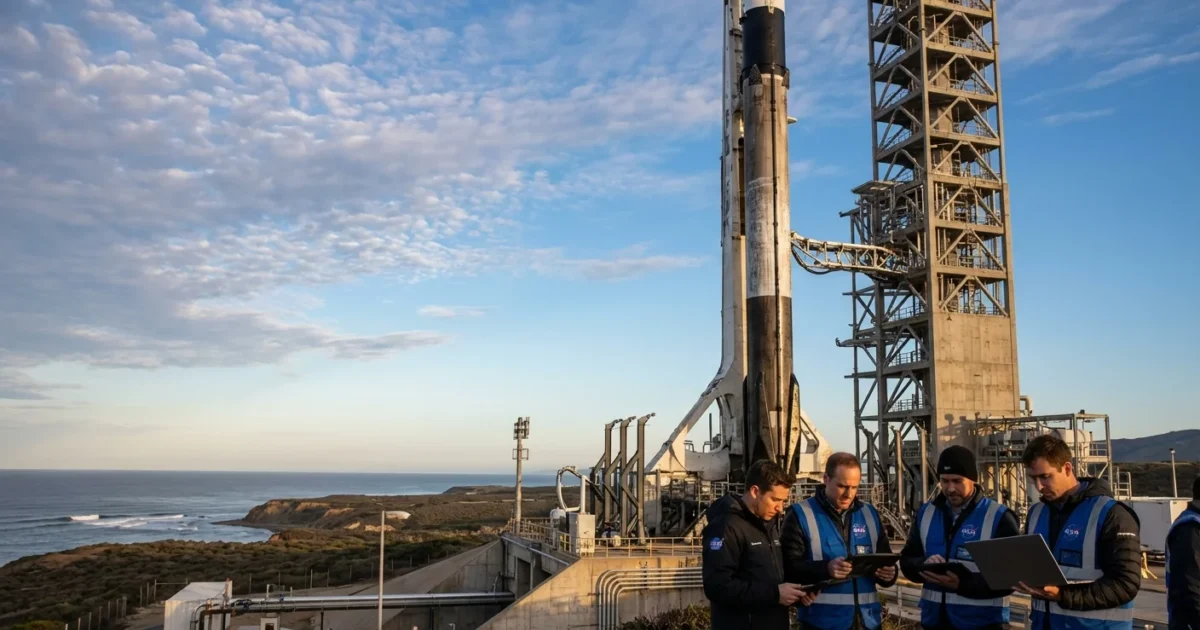
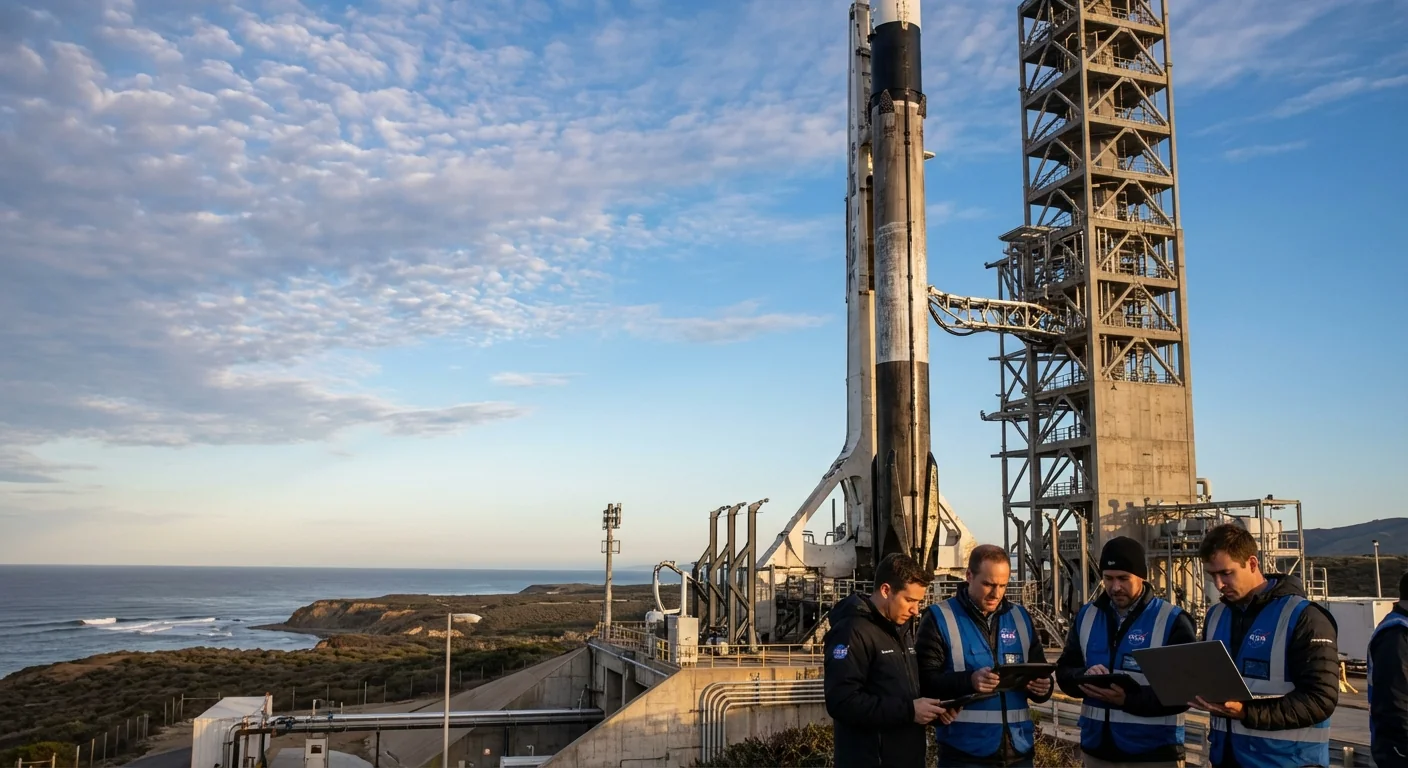
Falcon 9 is on the pad at Vandenberg right now, loaded and ticking toward launch. The mission is NROL-105, a classified Starshield payload for the National Reconnaissance Office. Another Falcon 9 is staged to fly a Starlink batch tomorrow from Florida. Back to back rockets, one national security flight, one commercial broadband shot, all inside 36 hours. I am at the range on the California coast, where the countdown feels like a drumbeat. 🚀
What flies today, and why it matters
The NROL-105 flight lifts toward a polar track from Space Launch Complex 4E. Polar orbits let satellites see almost every point on Earth as the planet spins. That is ideal for imaging, weather, and secure communications. The payload is classified, but the physics is not. This is about coverage, power, and time on target.
This sprint follows last week’s Starlink launch from Cape Canaveral. On January 12, a Falcon 9 sent 29 Starlink satellites to orbit at 4:08 p.m. EST. Booster B1078 flew for the 13th time. It landed on the droneship A Shortfall of Gravitas. That quick recovery keeps the launch queue moving.
The pace does not ease next. Here is the near term manifest I am tracking from the pads:
- Jan 17, Vandenberg, NROL-105 Starshield
- Jan 18, Cape Canaveral, Starlink Group 6-100
- Jan 22, Vandenberg, Starlink Group 17 flight
- Jan 25, Vandenberg, another Group 17 flight
This cadence is not a stunt. It is the plan. It links the factory, the pads, and the network in orbit.
The science under the smoke
Falcon 9 works by stages. The first stage lifts the stack through the thick air, then separates. The second stage takes over and pushes to orbital speed. The first stage flips, fires small burns, and returns for landing. Grid fins guide it through supersonic air like a steel parachute. Reuse saves time and cost, which is why you see the same boosters flying again and again.
Starlink satellites use laser links to pass data between spacecraft. That means fewer ground stations, and more reach over oceans and remote land. Each launch adds capacity and lowers latency. The constellation is now near 9,500 active satellites. That is a giant switchboard in low Earth orbit, and it is getting denser.
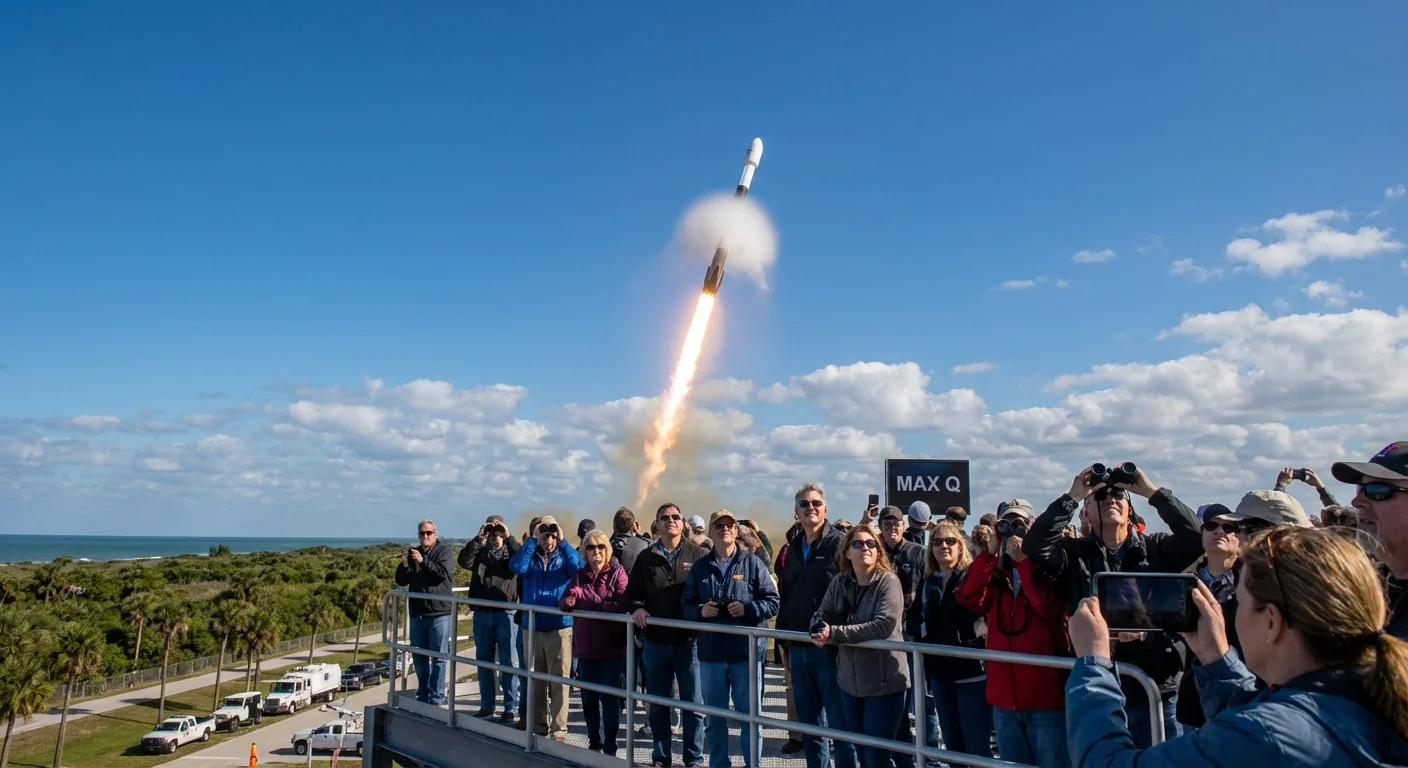
Watch for these key events on ascent. Max Q, when the rocket meets peak air pressure. Stage separation and the second stage ignition. The first stage entry burn, then the landing burn. If the drone ship catch is planned, expect a video cutoff near touchdown.
A regulatory green light that speeds everything up
On January 10, the FCC approved 7,500 more second generation Starlink satellites. That brings the total approved to about 15,000. The ruling also eased limits on overlapping coverage. This matters, because it lets SpaceX shape beams and share spectrum more flexibly. The result is more service, in more places, with fewer gaps.
Deadlines are set. Half of the new Gen2 fleet must be operational by December 1, 2028. The rest must be up by December 2031.
The real world impact is already visible. Remote clinics can backhaul scans. Fire crews can keep comms in a blackout. Ships, planes, and farms move data without fiber. Disaster zones get online in hours, not weeks. A launch like tomorrow’s is not just a spectacle, it is capacity showing up where it is needed.
Trade offs in the night sky
A bigger constellation means more bright tracks for astronomers. Reflections can wash out faint targets. SpaceX has tried darker coatings, sun shades, and smarter orientation to cut glare. These steps help, but the tension remains. Observatories plan around predicted passes. The company shares trajectory and brightness data to aid that planning.
Then there is debris risk. Low orbits help, because drag pulls dead objects down within a few years. Starlink satellites can dodge using onboard propulsion, and they are programmed to deorbit at end of life. The system also listens for warnings from tracking networks.
Crowded orbits raise collision odds. Rules, transparency, and quick deorbit plans are not optional, they are the price of operating in LEO.
The bigger picture, and the week ahead
SpaceX ended 2025 with 165 orbital launches. It crossed 500 landings and 500 reuses. Some boosters flew up to 32 times. That record pace is not slowing in early 2026. Today’s NROL-105 flight shows national security relying on rapid reuse. Tomorrow’s Starlink mission adds capacity for homes and first responders. Two more Starlink flights next week expand polar coverage from Vandenberg.
The cadence is the story. Rockets fly, stages return, satellites talk to each other, and service turns on in new places. The FCC green light clears the highway for Gen2. The astronomy and debris questions demand care, and they should. But the launch rhythm on both coasts is now part of the modern communications grid.
As I write, the Falcon 9 here at Vandenberg is still on track. If the range stays green, the sky above the Pacific will carry a thin white trail, then a quiet booster return far downrange. The next rocket rolls soon after. The network grows by the day. The signal reaches farther. And the countdowns keep coming.