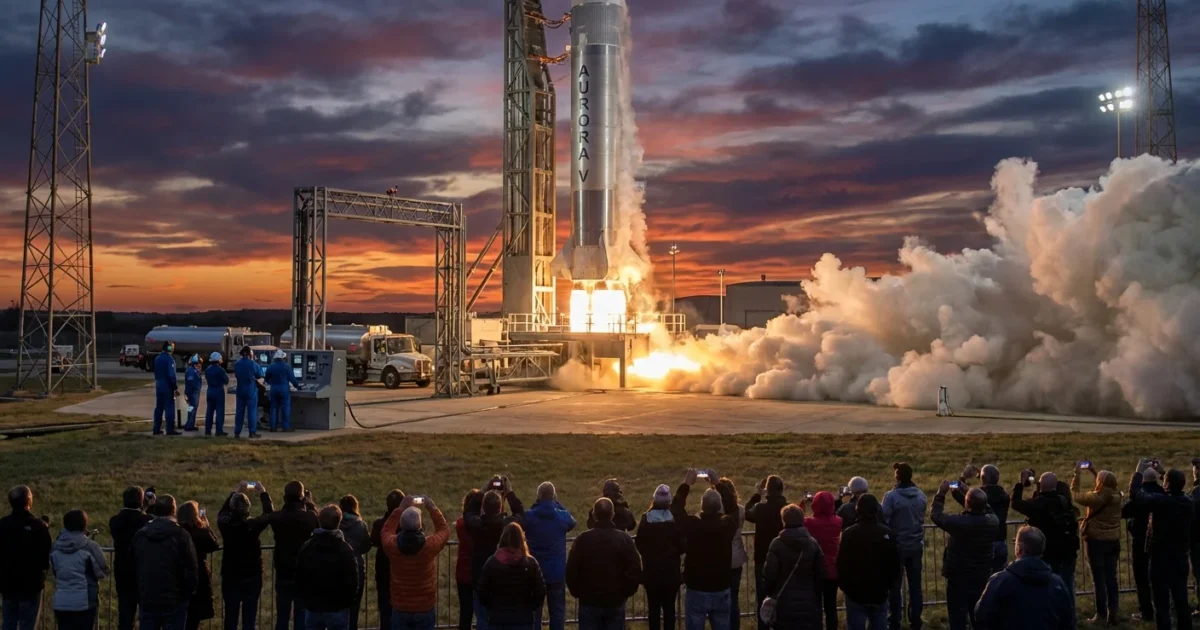
Rocket launch day has arrived. Two vehicles. Two coasts of the planet. One clear message. Spaceflight is moving faster, cheaper, and more routine than ever.
SpaceX targets liftoff at 3:19 p.m. EST
This afternoon, a Falcon 9 is set to rise from Cape Canaveral. The payload is 29 Starlink V2 Mini satellites. The launch time is 3:19 p.m. Eastern, weather permitting. The first stage will try to land on the drone ship Just Read the Instructions in the Atlantic.
The booster flying today is on its 16th mission. That number matters. Every repeat flight cuts cost, risk, and time. It also shows how robust closed-loop reuse has become. A clean landing today would push the record deeper and the price of access to orbit lower.
Key moment to watch, the landing burn about eight minutes after liftoff. That is the make or break for reuse.
These launches are coming in rapid bursts. Teams push to meet year-end targets. Hardware cycles are shorter. Turnaround is tight, yet predictable. That is how you build a transport system, not one-off stunts.
Why reuse changes everything
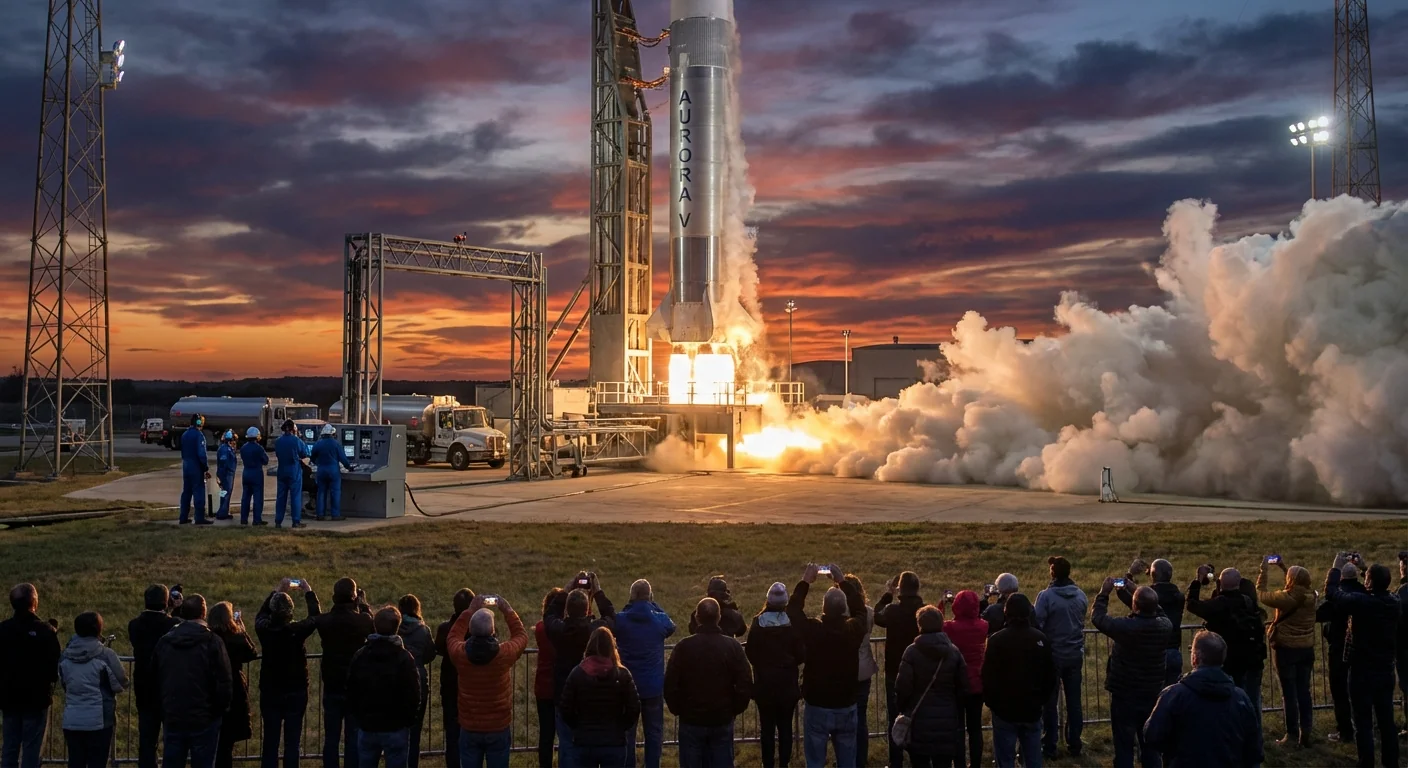
A reusable first stage is not just a neat trick. It is an economic engine. The expensive part flies again, often with minimal refurbishment. That changes the math for every customer who needs orbit.
Here is what reuse unlocks for space:
- Lower launch prices and more access for small payloads
- Faster scheduling, with less time waiting on the pad
- More chances to test new tech in real missions
- A path to scale, with weekly or even daily flights in time
On landing, grid fins steer the stage. Cold gas thrusters nudge attitude. Engines reignite for entry and landing burns. The guidance targets a moving drone ship. The process is precise and now very repeatable.
What the Starlink V2 Mini satellites add
The V2 Mini spacecraft are compact and capable. They carry larger phased array antennas for stronger links. They use inter-satellite lasers to pass data across the network. That reduces the need for ground stations in remote regions. Some units support direct-to-cell messaging, which turns ordinary phones into emergency beacons under open sky.
The science is simple to explain. Shorter distance means lower signal delay. Low Earth orbit sits a few hundred miles up, not tens of thousands. That keeps latency low. It also increases revisit time over any point on Earth when you have enough satellites.
Real world use cases are broad. Rural homes get service without fiber. Ships and planes stay connected over oceans. First responders can stand up a network after storms or quakes. Schools and clinics in remote areas come online with a small dish and clear view of the sky.
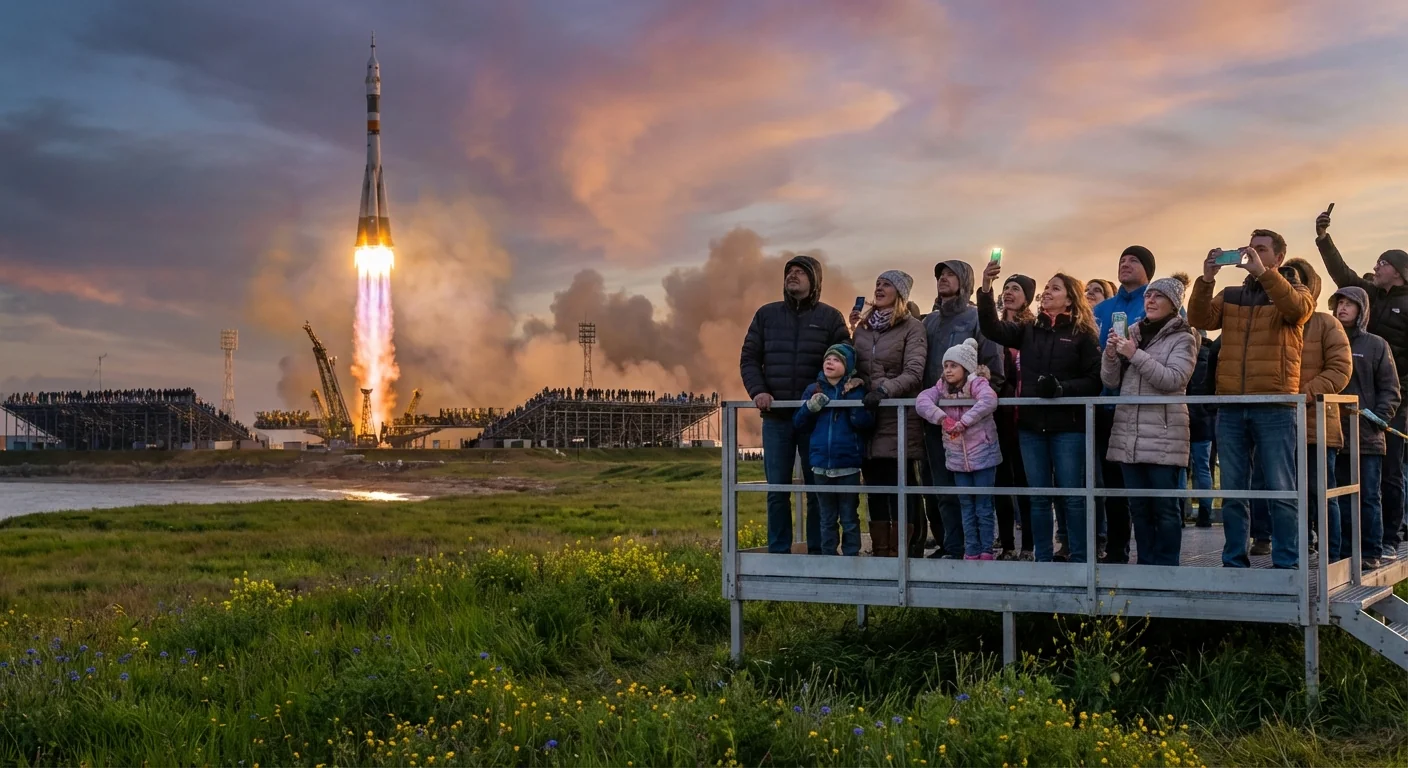
If the sky is clear near dusk, look for a faint “train” of dots in the days after launch. That is the fleet raising orbit.
Each Starlink group first reaches a drop-off orbit. Small onboard thrusters then raise and align the satellites. Laser links come online after checkout. Spacecraft that fail tests deorbit and burn up. That limits debris.
Another launch tonight from China
A second rocket is due to fly this evening from Hainan island. China’s Long March 12 is set to lift off from Wenchang around 6:00 p.m. Eastern, 2100 GMT. The payload has not been disclosed. Wenchang sits near the equator, which is ideal for certain orbits. The site also allows overwater trajectories for safety.
This paired activity shows a new global cadence. Commercial and state operators are flying often. The launch market is now a weekly, sometimes daily, drumbeat.
More launches mean more objects in low orbit. Regulators are tightening deorbit timelines and tracking rules to keep space usable.
Space traffic management is the next big challenge. Satellites need clear lanes and clear rules. Automated collision alerts and quick maneuver systems help. So do bright, public tracking tools. The goal is simple, more satellites with fewer close calls.
Why today matters
Today is not just about spectacle. It is about a shift in how we use space. Reliable reuse cuts cost. Constellations add capacity. Global launch sites spread the load. The result is better internet from the sky, faster science missions, and quicker delivery of national assets.
Expect this pace to hold through the end of the year. Expect bigger stacks of satellites in 2026. Expect more direct-to-device service, more laser links, and tighter rules to keep orbits clean. This is what a mature space economy looks like at the pad.
Conclusion, two launches in one day frame the new normal in orbit. Reliable rockets, rapid reuse, and dense constellations are now the baseline, not the exception. The space age has picked up the pace, and it is not slowing down.