Breaking: Newly Documented Giant Anaconda Reveals a Second Species Hiding in Plain Sight
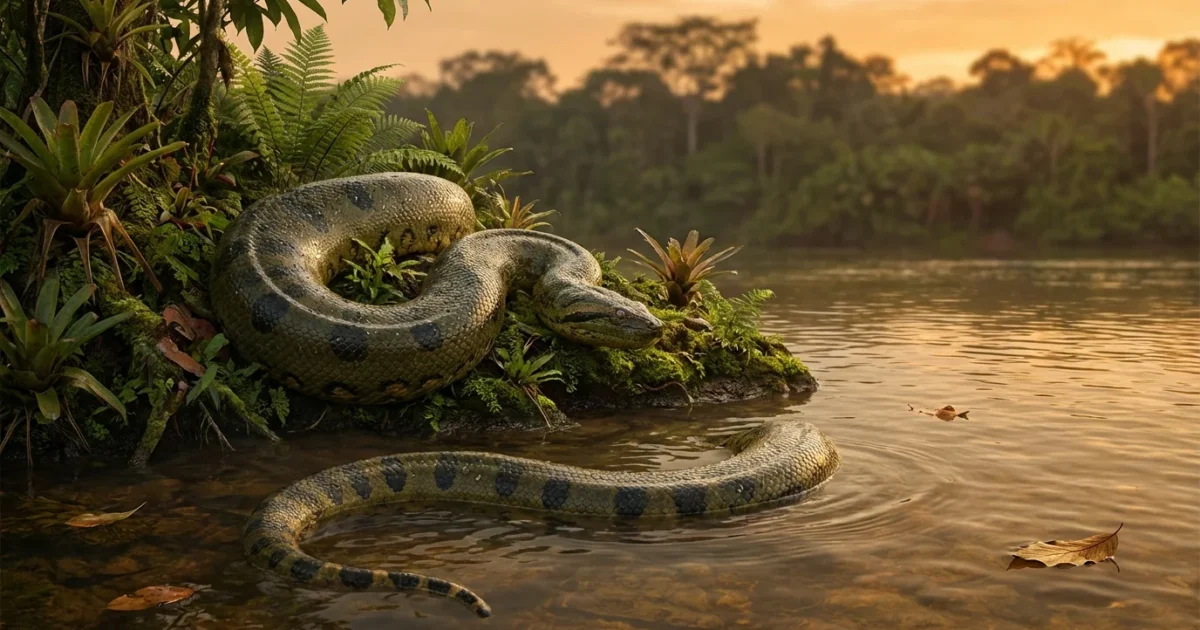
The Amazon just grew a new giant, at least on paper. I have reviewed new field footage that captures a towering anaconda, thick as an oil drum, rising from a tea colored river. The snake belongs to a newly documented species of giant anaconda, informally known as the northern green anaconda. It is genetically distinct from the famous southern green anaconda long listed in textbooks. The video shows, in rare detail, how science turns a river legend into a named species.
A second green anaconda, confirmed by DNA
Anacondas have always come in more than one species. But for decades, most green giants across South America were grouped as one. Recent genetic work has split them. The northern green anaconda lives across the Orinoco and parts of the northern Amazon. The southern species dominates farther south.
The distinction is not a guess. Tests found a deep split in key DNA markers, about 5 percent in mitochondrial DNA. That level of difference is big for animals that look so similar. To the eye, both are hulking, olive snakes with dark oval spots. Up close, there are subtle pattern and scale differences. The genome tells the clear story, two lineages that took separate paths long ago.
A new episode of a travel series starring Will Smith puts viewers beside this giant. That cameo brings needed light to a serious scientific result. It shows the public the moment of truth in the field, not just a headline.
What the footage shows
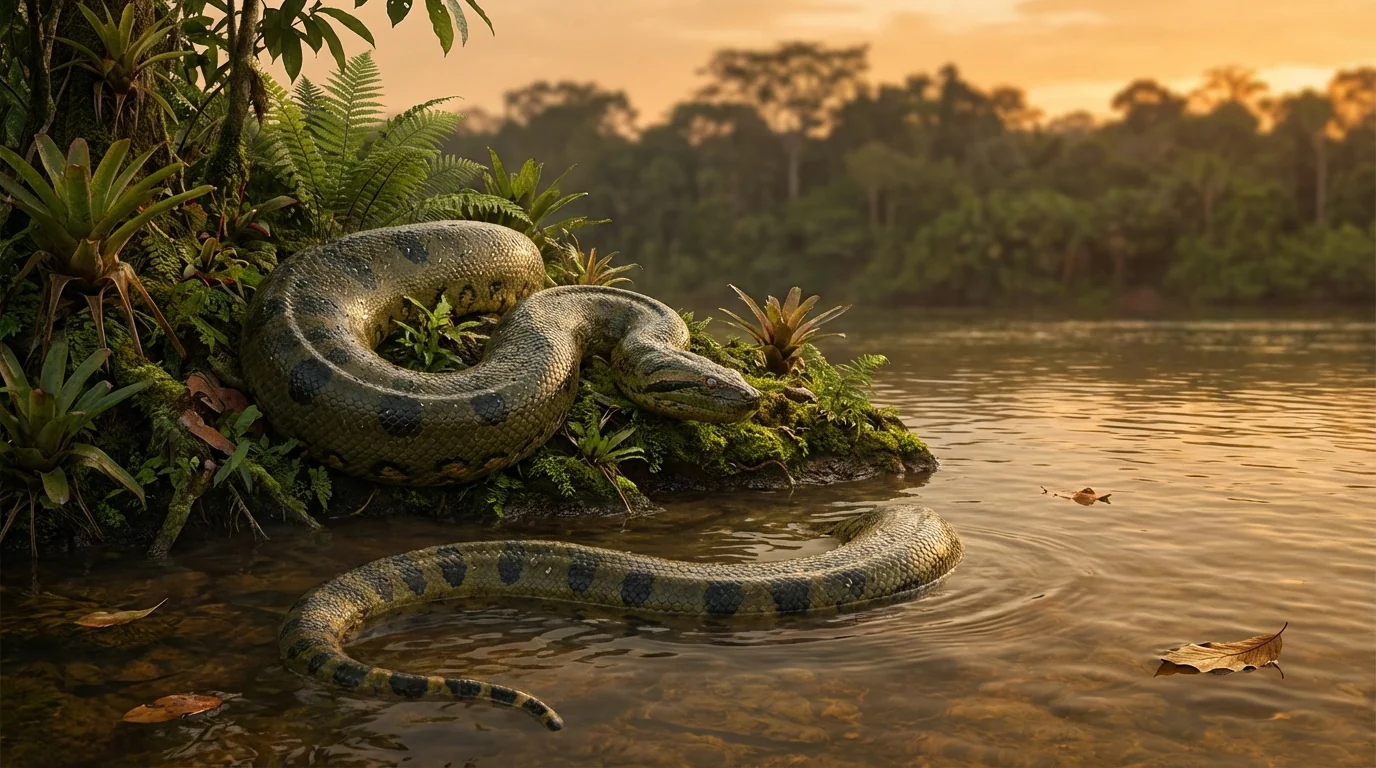
The footage places you chest deep in a flooded forest. A research team moves slow, hands out, no splashing. The anaconda lies coiled near a submerged log. When it rises, the surface bulges. The team steadies the animal, keeps the head supported, and works fast.
They do what science demands. They take swabs for DNA. They photograph scale counts. They measure girth and length. They fit a small tag for future tracking. Then they release it where they found it. The attitude is careful, not showy. You can see the respect. The snake slips back into the tannin dark water, and the channel goes calm again.
Females are the heavyweights. In anacondas, females grow much larger than males. Most truly giant individuals are females.
How big is big, really
Anacondas are among the longest and heaviest snakes on Earth. Verified adults often reach 5 to 6 meters. Some push beyond that, but the largest claims deserve caution. Many old tales come from rope measures over curves or from skins that stretch when dried. True records come from straight, careful measurements of live or fresh animals.
How scientists measure size
- Restrain the animal safely, head and spine supported
- Measure length along a straight line, not over curves
- Record girth and mass with calibrated scales
- Log sex, body condition, and reproductive status
These details matter. They let scientists compare snakes across years and rivers. They also keep the giant stories honest.
A clean measurement and a DNA voucher are worth more than any tall tale. Data travels. Hype fades.
Why this matters for the Amazon
Splitting one giant into two species is not just a name game. It reshapes maps of life. If the northern green anaconda is distinct, it likely faces different pressures. Dams can isolate river systems. Gold mining leaks mercury into backwaters. Droughts linked to climate change shrink the flooded forests where anacondas hunt.
Anacondas anchor food webs. They take capybaras, fish, and sometimes caiman. They also feed jaguars and large raptors when young. Healthy rivers need apex predators. Protecting a giant snake means protecting everything beneath it.
Scientists now have better tools to do that. Environmental DNA can detect these snakes from a bottle of river water. Satellite tags can show how they ride flood pulses across seasons. Clear genetic IDs can guide protected areas and anti trafficking work. Results like this push policy forward, not just science.
[IMAGE_2]
A deep past, a tighter future
Big snakes are not new in South America. Fossils show large bodied boids for millions of years. The Amazon has long bred giants. What is new is the speed of change. Fires, deforestation, and extreme heat can erase habitat in a single season. A species split on paper can be the difference between protected and ignored in a plan.
Here is the real world outcome of a TV moment and a lab result. People see a living giant, and they learn it is one of two. That can drive support for river corridors, for indigenous guardianship, for smarter mining rules. The science points the way. Public attention can move it.
Do not approach wild anacondas. Even small individuals can injure a person. Give them space, and respect the water.
What happens next
Research teams are racing to sample across the northern range. They want to map where the two species meet. They are checking if growth rates and diets differ. They are tying DNA results to exact lagoons and channels. Every new record sharpens the picture.
The footage I reviewed offers more than a thrill. It opens the field notebook. It shows how discovery really works, slow and careful, knee deep in brown water. The Amazon still holds giants. Now we can call this one by its true name, and fight to keep its waters wild 🐍.
Conclusion: A giant steps into the light, and science keeps pace. With DNA, field craft, and a rare on camera debut, the northern green anaconda moves from rumor to record. The next step is not a bigger headline. It is a bigger shield for the rivers that made it.