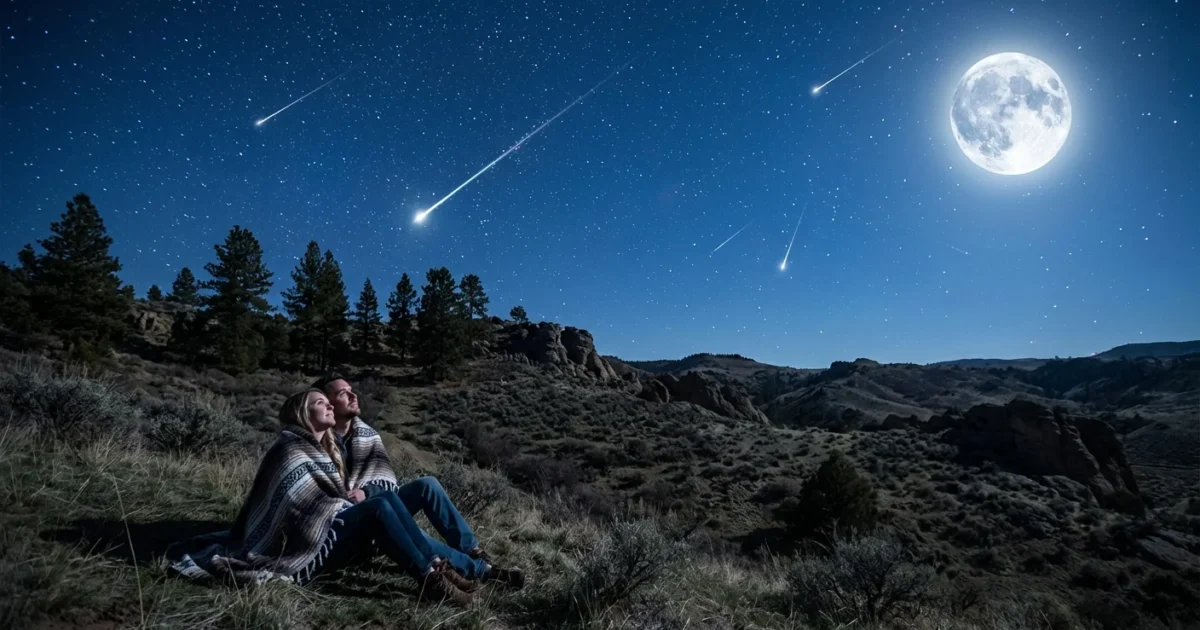
The sky is active tonight. The Quadrantid meteor shower is hitting its brief, sharp peak, and a big Wolf supermoon is rising to meet it. Expect fewer faint streaks because of the bright moonlight. But do not write the night off. This shower can still throw bright fireballs that slice right through the glow. I am watching the first long streaks now in the northern sky. They are rare, but they are bold. ✨
What is happening above you tonight
The Quadrantids are fast bits of space rock burning up in our air. They come from a dusty stream left by the object 2003 EH1, likely a dead comet that now looks like an asteroid. Earth cuts through this stream each January. Most showers ramp up slowly. Not this one. The Quadrantids spike for only a few hours, then fall off quickly. That sharp peak is why this night matters.
The Wolf supermoon is the first full Moon of the year. It looks a little larger and brighter than average because the Moon is slightly closer to Earth right now. That extra brightness floods the sky with light. It washes out dim meteors. Bright fireballs still punch through.
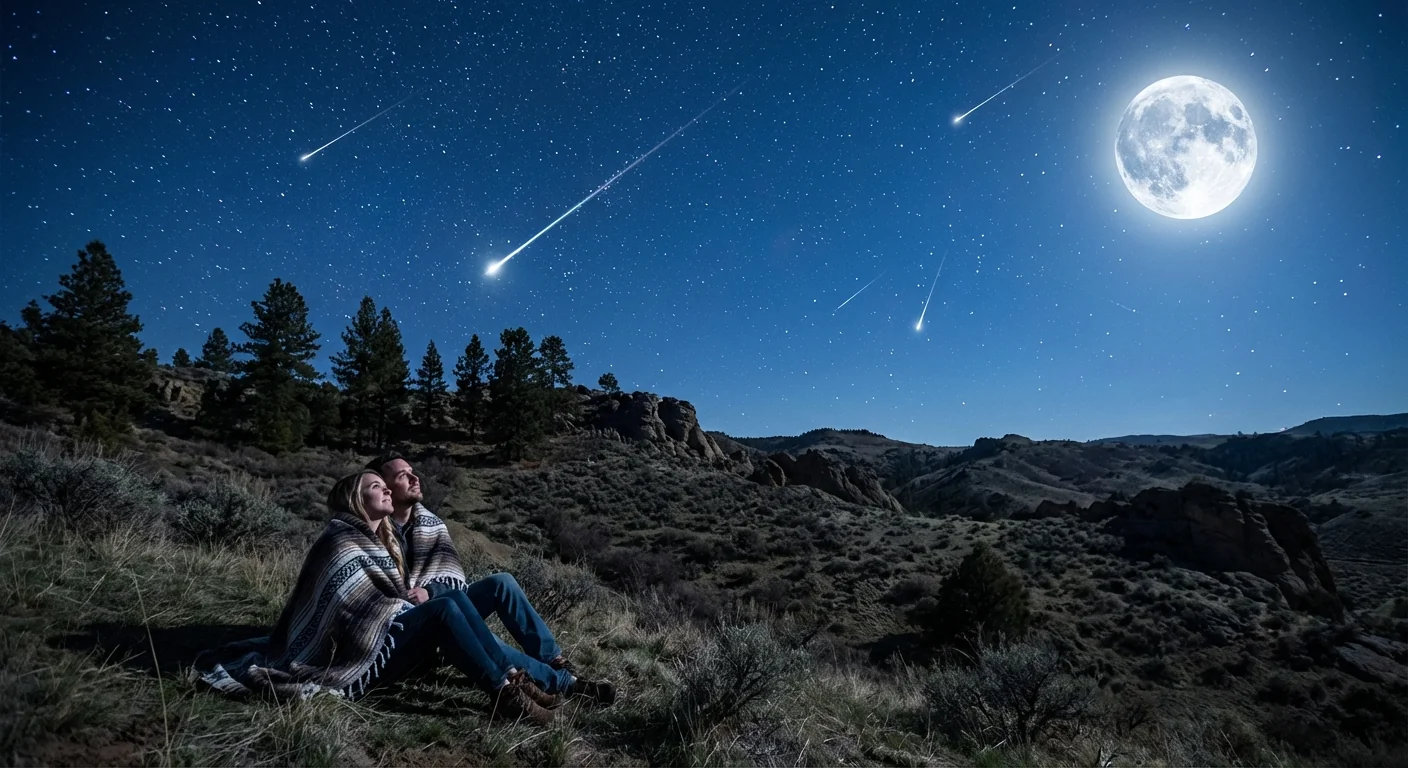
Best odds arrive after midnight and improve toward dawn, local time, when the radiant climbs high and rates peak.
When and where to look
Aim for the hours after 1 a.m. until twilight. The radiant sits in the northern sky near the old star pattern Quadrans Muralis. Think of the space between Boötes and Draco, close to the Big Dipper. You do not need to stare at that exact spot. Meteors can appear anywhere. Look 45 to 90 degrees away from the radiant to catch longer streaks, and try to keep the Moon out of your field of view.
The Moon will be bright all night. Put it behind a building, a wall, or a tree. That simple move lifts your contrast and gives your eyes a fighting chance.
Let your eyes adapt for 20 to 30 minutes. Skip your phone. A quick glance at a screen can erase your night vision.
What to expect, honestly
Under a dark, moonless sky, the Quadrantids can reach 60 to 100 meteors per hour at the peak. Tonight, the supermoon will cut that down. In many places you may see a handful to a few dozen an hour near the height of activity. The exact number depends on your local sky, haze, and light pollution. Do not chase a perfect number. Focus on patience and comfort. Bright, blue white fireballs are the prize. Some will leave glowing trails that hang for a few seconds.
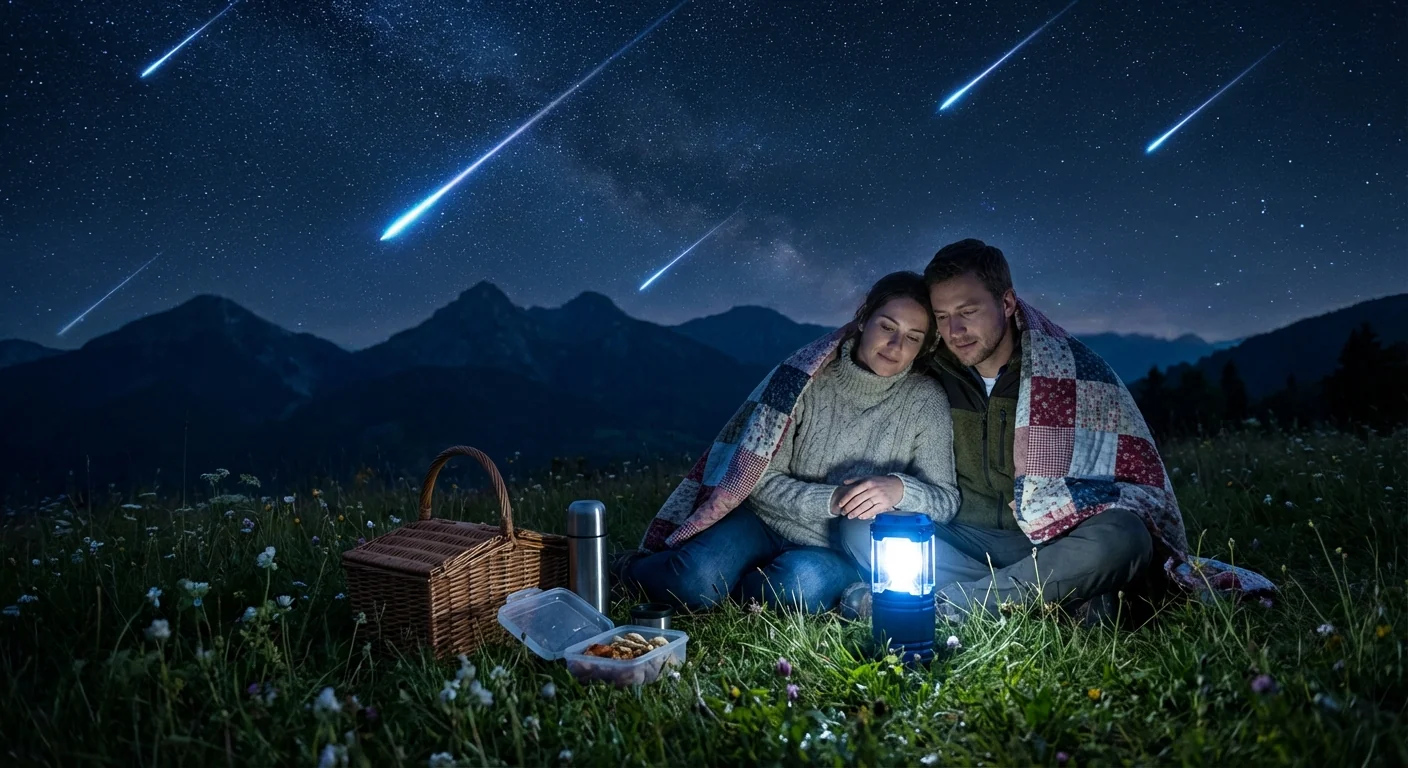
Quick setup that pays off
- Find a dark, wide view, with the Moon blocked.
- Dress in layers, head to toe, and bring a thermos.
- Lie back in a chair, or on a pad, to see more sky.
- Keep lights off, and give it at least an hour.
It is cold and late. Watch for ice, carry a light for walking only, then keep it off while viewing. Tell someone where you are going.
The science you get to watch
Every streak is a tiny rock hitting the upper atmosphere at tens of kilometers per second. Friction heats the air and the particle, which then glows and vaporizes. The Quadrantids are rich in hard, rocky grains, which helps explain the bright fireballs. Radar and video networks use this shower to probe the upper atmosphere. When thousands of meteors streak through, they leave thin ionized trails. Scientists track those trails to measure winds near 90 kilometers up. The shower also tells us how comet like bodies evolve into rocky asteroids. By mapping the stream each year, researchers refine models of debris in near Earth space. That work guides satellite operators, who plan for risk during dense streams, and it informs better shielding for spacecraft.
Final word before you head out
Set clear expectations. The Moon is loud tonight, but the sky still has a show to give. Go late, get comfortable, block the Moon, and let time work for you. Even a few bright Quadrantids can turn a cold night into a small memory you will keep. Look up, breathe, and wait for the next streak to write its quick line across the dark. 🌕