
Breaking: NASA is weighing emergency options after a medical concern aboard the International Space Station. I can confirm the agency is assessing contingency paths now. Flight controllers are monitoring the crew and preparing to brief the media today. Station operations continue while teams work through a clear decision process.
What we know right now
NASA has identified a medical concern on orbit. The agency says all options are on the table. That phrase has a specific meaning in human spaceflight. It covers care on board, enhanced remote support, and the possibility of an early crew return if needed. The exact condition has not been disclosed, which is standard during an active event.
Expect limited personal medical details today. NASA protects astronaut medical privacy, even during high-profile events.
How NASA manages health in microgravity
Space changes the body. Fluids shift toward the head, which can cause pressure and congestion. The immune system can act differently, and dormant viruses can reactivate. Bones and muscles weaken without regular exercise. A simple illness on Earth can play out in new ways in orbit, which is why NASA trains for this.
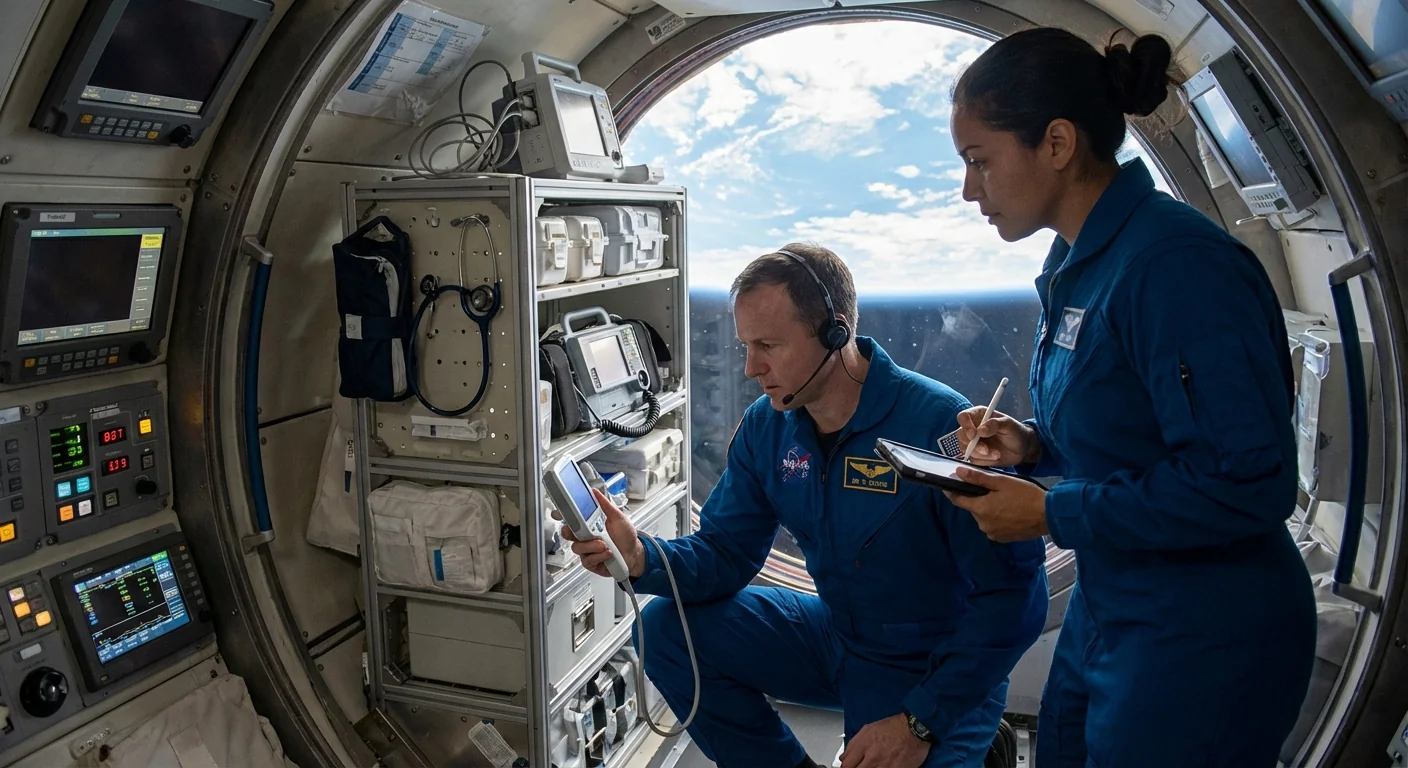
Every ISS crew includes a Crew Medical Officer, a non-physician astronaut with deep medical training. They carry out protocols with a robust onboard kit. The station has tools for vital signs, blood oxygen, ECG, and ultrasound. Real-time ultrasound guided by a flight surgeon on the ground can reveal internal issues, from fluid buildup to organ changes.
Telemedicine, but for space
Space-to-ground medical support is constant. Flight surgeons sit in Mission Control, connected by voice and data. They can review photos, sensor readings, and even ultrasound video in near real time. The station also carries medications for pain, infection, allergic reactions, and more. Most issues are treated in place. The team only escalates when risk outweighs the benefit of staying on orbit.
What “evaluating all options” means
In practice, that line triggers a disciplined checklist. Teams run medical, engineering, and trajectory reviews in parallel. Here is what that likely includes right now:
- Stabilize and treat on board, then reassess at set intervals
- Increase medical telemetry and schedule extra consults with flight surgeons
- Prepare a docked crew vehicle as a lifeboat, with seats and supplies assigned
- Model deorbit opportunities, landing weather, and recovery assets
This is not guesswork. NASA and its partners rehearse these branches before every expedition. The station can move from routine ops to undocking prep within hours, if the case demands it.
Early return is rare, but it is a planned capability. Every crew has a dedicated seat in a docked vehicle for this reason.
The decision to come home early
Bringing astronauts home early is a risk trade. Staying on orbit avoids the stress of reentry. Returning early gains fast access to Earth hospitals. The call depends on how well the patient responds to care, and on timing. Orbital mechanics limit when a spacecraft can undock and target a safe landing zone. Weather at splashdown or landing sites must also cooperate.
If the decision is made, the timeline looks tight but orderly. The crew configures the station for their absence. Ground teams configure communications, tracking, and recovery ships or helicopters. The returning spacecraft powers up, goes through checks, and closes hatches. After undocking, a deorbit burn commits the vehicle to entry. Touchdown or splashdown follows within hours.

The vehicles in play
The station always has crew return vehicles docked, assigned as lifeboats. These can be a commercial capsule or a Russian spacecraft, depending on the current complement. Each seat is matched to a specific astronaut, with pressure suit and life support gear staged in advance. The ground recovery teams are on alert during any contingency, ready to retrieve crew and transfer them to medical care within minutes.
What to watch in today’s briefing
The science and the strategy meet on days like this. Listen for concrete signals that the decision tree is moving.
- Has the crew member stabilized after onboard treatment, or do symptoms persist
- Are return vehicles being configured and assigned, or only reviewed as a precaution
- What deorbit windows are under consideration, and what weather constraints apply
- Will station operations shift to a reduced workload while the team evaluates
NASA will also outline how international partners are supporting the response. Expect mentions of medical consult cycles, ground team staffing, and recovery readiness.
Why this matters
This is why space agencies drill. Microgravity turns simple health problems into complex puzzles. The ISS is both a lab and a lifeboat, built to give crews options when minutes and orbits count. Today’s briefing will show how a mature program uses science, training, and engineering to protect people in space. I will continue to track the decision points through the day, and report as the plan comes into focus.