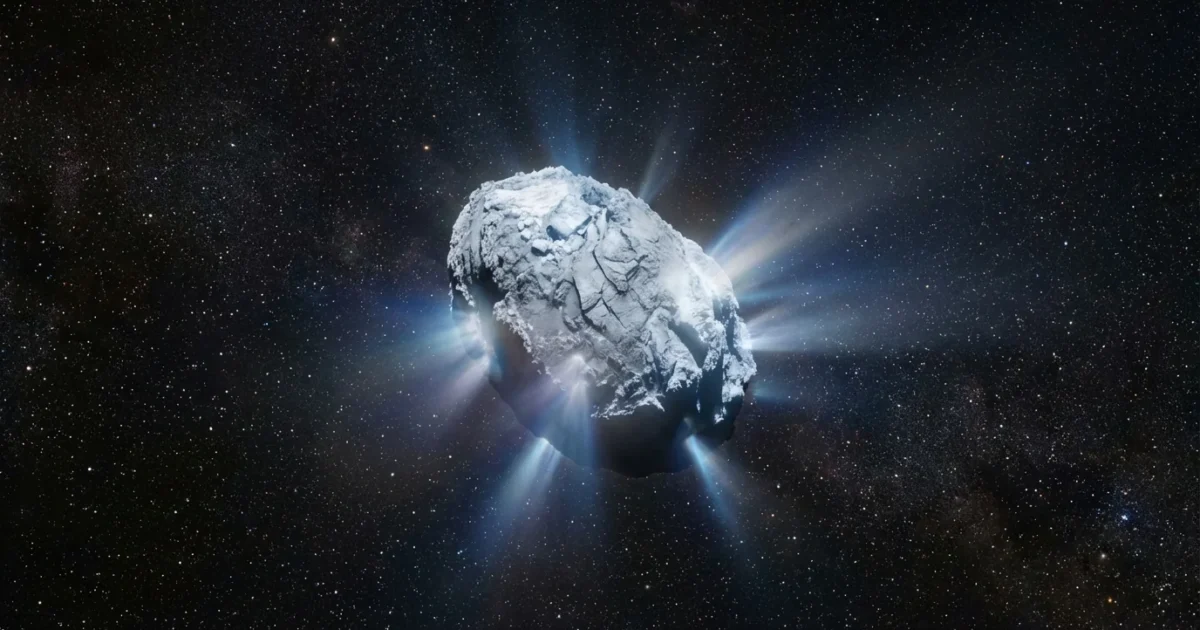
BREAKING: Interstellar comet 3I/ATLAS is venting methanol. Today I can confirm the first detection of this key carbon molecule from an object born around another star. New images from NASA and ESA also show the comet flaring with fresh activity as it heads for a safe, but notable, pass by Earth on December 19. This is a rare, clean look at chemistry that builds life, carried through deep space on an ice-rich worldlet. ☄️
Methanol found beyond our solar system
Methanol is simple, but powerful. It is a small alcohol that helps form more complex organics. On 3I/ATLAS, astronomers picked up its spectral fingerprints in emission. The lines are clear. They rise and fall with the comet’s rotation, which repeats every 16.16 hours. That rhythm matches the comet’s known brightness pulses. It ties the chemistry to real vents on the surface.
This is a first for any interstellar visitor. It shows that the recipes that seed young worlds with organics do not stop at our Sun. They are common tools in planet building across the galaxy.
Methanol can feed reactions that make sugars, amino acids, and other prebiotic molecules. Finding it in 3I/ATLAS links interstellar ices to life’s starter kit.
Fresh images from Hubble and ESA’s JUICE spacecraft back up the chemistry. The coma looks lopsided and busy. Jets lift off the surface like ice geysers. The glow rises in pulses as the nucleus spins, then settles, then rises again. The behavior is alive with physics, not a static fuzzy ball.
A comet that breaks the rules
3I/ATLAS is unlike the comets we know. Webb’s spectroscopy found a coma dominated by carbon dioxide. The CO2 to water ratio is roughly 8 to 1. That is among the highest ever measured. Carbon monoxide, OCS, water ice, and dust are also present. The mixture points to a cold birth zone far from a parent star, where CO2 could freeze and stay locked in.
A CO2 rich coma means 3I/ATLAS formed in extreme cold. It preserves ices that normally vanish in warmer zones. That makes it a time capsule from a distant planetary nursery.
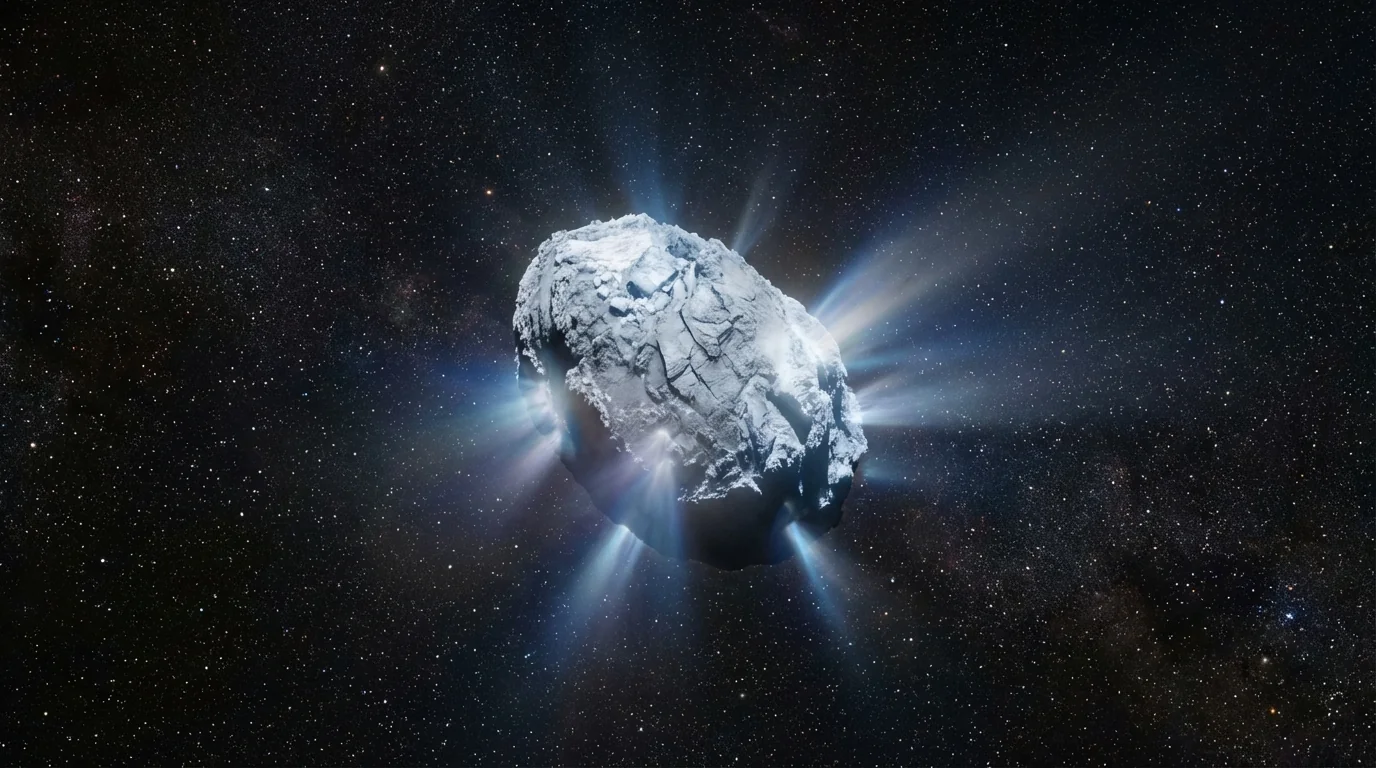
The comet also erupts. Ground and space telescopes see cryovolcanic jets, driven by sun warmed CO2 ice that flashes to gas. These vents carve an asymmetric coma. They likely drive the 16.16 hour pulses as active regions rotate into sunlight. Oddly, there is still no long classic tail in some views. That may be due to geometry or a low dust yield.
Why this matters for other solar systems
We are watching planetesimal science happen in real time. The methanol and CO2 dominant mix suggest grains rich in carbon compounds, frozen quickly, then packed into a small world. If such bodies are common, they can move organics across young systems. On Earth, comets may have delivered raw materials for life. 3I/ATLAS shows that the same delivery system can exist around other stars.
This also tests our models. A CO2 heavy, metal rich, possibly altered interior hints at heating and fluid movement in the past. That can drive vents and change surface crusts. It affects how these objects break, spin, and shed dust. The data help us build better tools to read exoplanet systems, from disk chemistry to comet belts, and even how atmospheres get their first carbon.
Multiple eyes on a fast traveler
3I/ATLAS whipped through perihelion at the end of October. It is now outbound and will be nearest to Earth on December 19 at about 1.8 AU. That is farther than the distance to the Sun. It is no threat.
There is no impact risk. The comet will stay roughly 170 million miles from Earth at closest approach.
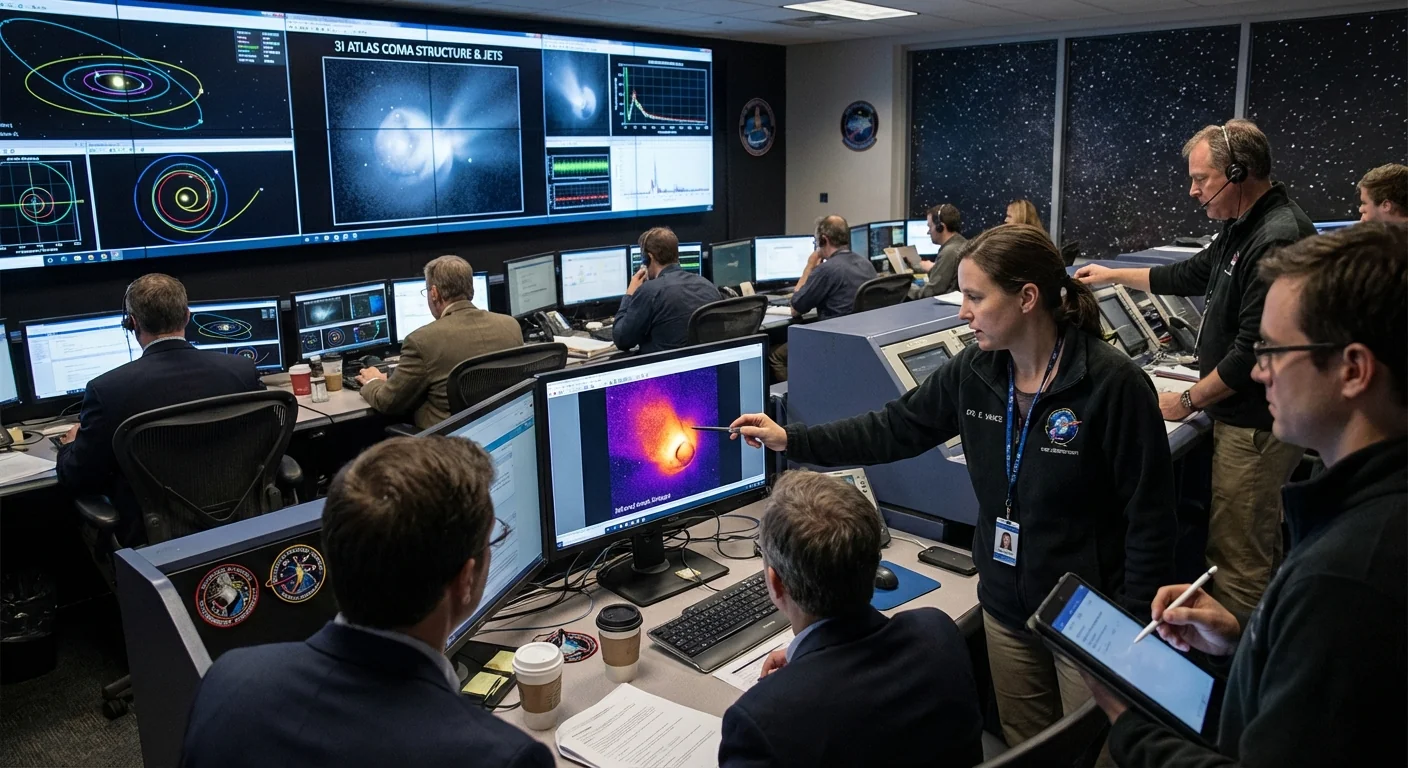
Hubble continues to track the coma structure. The JUICE navigation camera is feeding detailed shape and activity views from a different angle. Webb will refine the ice and gas mix when windows allow. Several deep space spacecraft are also watching from their own lanes, adding angles that Earth based telescopes cannot see. Together, these data sets can pin down jet locations, spin state, and how gas and dust evolve from hour to hour.
Here is what to watch in the next ten days:
- Repeats in the 16.16 hour pulses as activity rises
- Changes in the CO2 to water ratio with distance from the Sun
- Fresh methanol lines as new vents turn on
- JUICE image releases that map jet sources