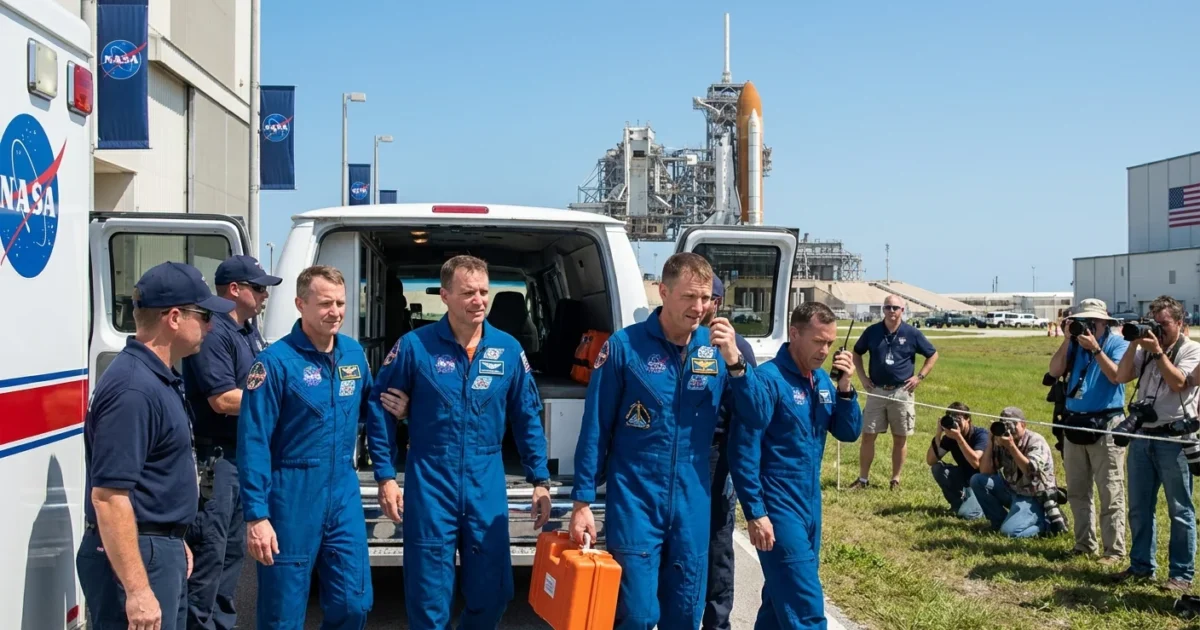
I just watched a rare evacuation unfold in orbit. NASA ordered an early ride home from the International Space Station after a crew medical issue. The four astronauts undocked, dropped out of orbit, and splashed down in the Pacific. Recovery boats reached the capsule minutes later. The crew is out and headed to medical checks on shore. 🚀
Breaking: A fast, safe return from orbit
The crew left earlier than planned because one member needed care back on Earth. NASA has not shared details about the condition. The agency made it clear that health and safety came first.
The capsule separated from the station, fired its engines to slow down, and aimed for a precise reentry corridor. Parachutes opened on time. The splashdown was on target, and recovery teams moved in fast with trained medics onboard.
All four astronauts are back on Earth after a prompt medical return. NASA did not disclose the medical issue.
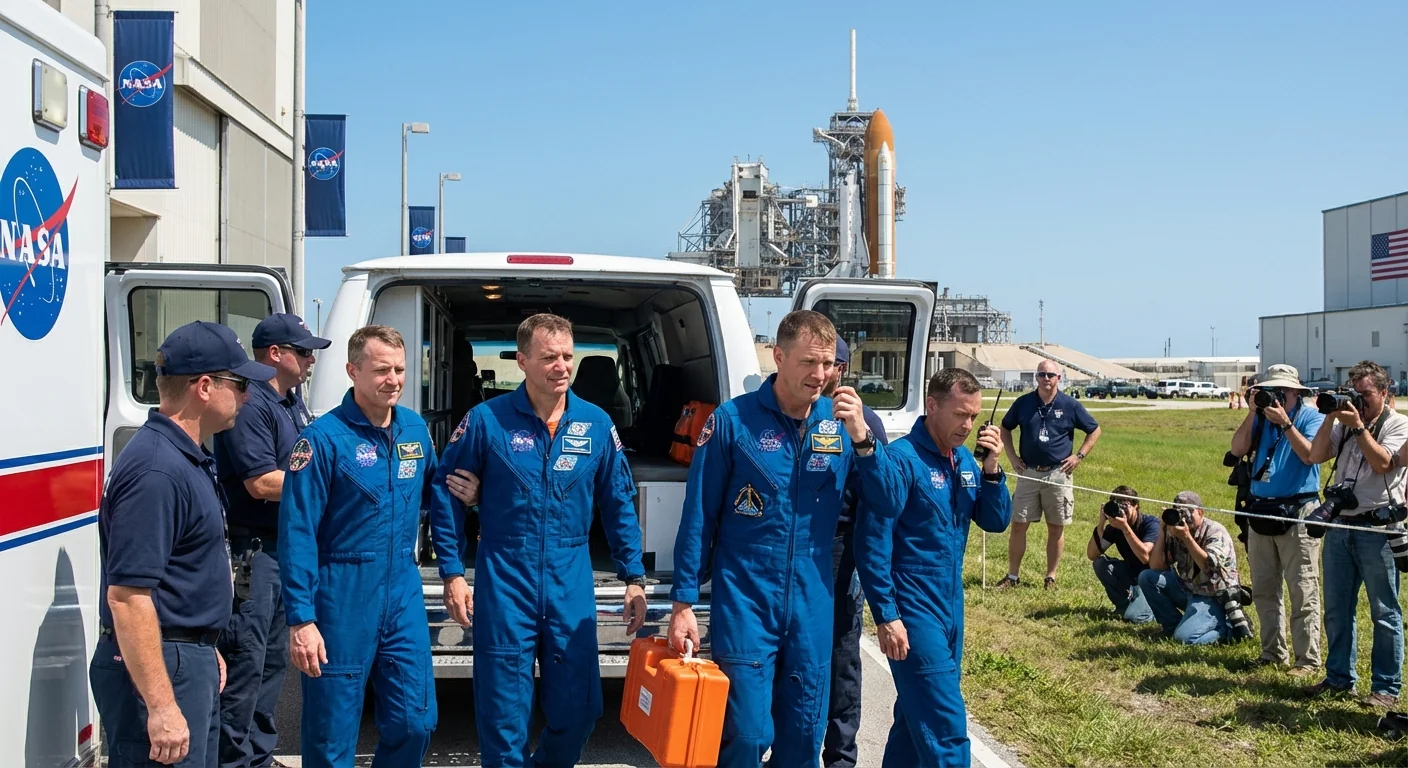
This was not routine, but it was expected. Every expedition carries a ready-to-go escape plan. Today, that plan worked as designed.
How the evacuation unfolded
NASA trains for this exact moment. The station keeps a docked spacecraft on standby, loaded with supplies and checked daily. The crew can be in seats in minutes if needed.
Here is what the timeline looks like in an emergency:
- Mission control calls for an early return and runs a go or no-go poll.
- Astronauts secure experiments and close station hatches.
- The capsule undocks and backs away to a safe distance.
- The deorbit burn lowers the orbit to intersect the ocean landing zone.
- Reentry heats the capsule, then parachutes deploy for splashdown.
- Recovery boats lift the capsule and begin medical handover.
Inside the capsule, science meets medicine
The crew capsule carries medical kits, vital sign monitors, and oxygen. The patient can be secured in a seat and monitored through descent. The cabin is pressurized and climate controlled. Communications allow doctors on the ground to advise the crew in real time.
Reentry adds stress, so planners keep loads within safe limits. The capsule follows a guided path that keeps heat and g-forces in check. Parachutes deploy in stages to slow the fall and protect the crew.
The deorbit burn is a controlled engine firing that slows the spacecraft. Slower speed means the orbit drops, which sends the capsule into the atmosphere at the right place and angle.
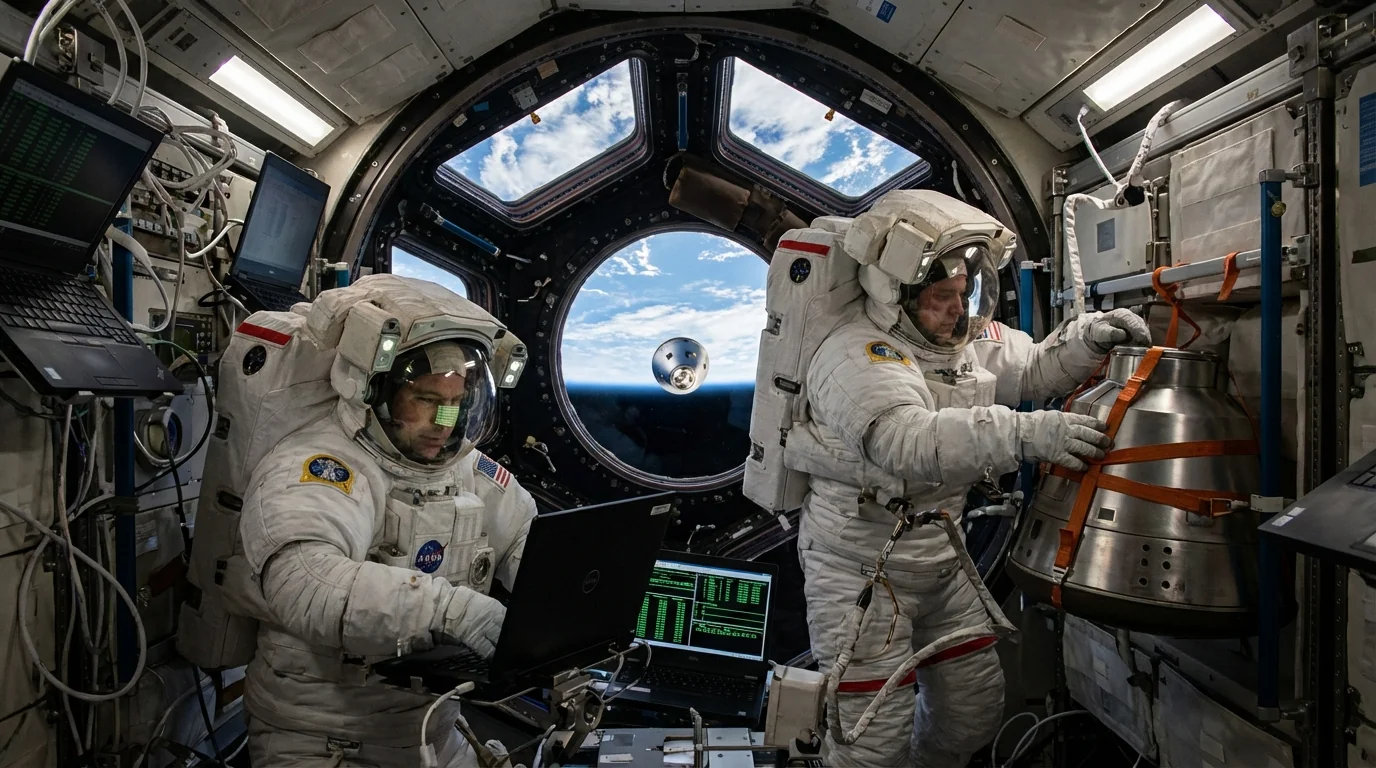
Why this matters for science and safety
NASA has not said what triggered the return. In microgravity, small problems can grow fast. Body fluids shift upward. Hearts work differently. Bones shed calcium. That can raise the risk of kidney stones. Infections behave differently in space. Even a minor injury needs careful handling when you cannot walk into a clinic.
Emergency return is the safety net for low Earth orbit. It lets doctors bring a patient to advanced care within hours. Today proved that the system can move from decision to splashdown with speed and precision.
The science onboard the station depends on people. They run labs that study protein crystals, materials, plant growth, and human health. An early departure means some experiments pause or switch to automated modes. Cold storage protects samples. Many payloads can be tucked into safe state and restarted later.
What changes on the station now
The station will run with fewer hands for a time. That shifts the daily plan. Routine maintenance rises in priority, and non-urgent tasks slide to later. Robotics steps in where possible. Canadarm2 and free-flying helpers can handle inspections and some cargo work.
- Some experiments will pause until the next crew arrives.
- Maintenance and safety tasks move to the front of the line.
- Ground teams will rework the schedule for the coming weeks.
- The next crew rotation may adjust to close the gap.
Lower crew size means more careful planning. Safety and critical systems stay protected. Research continues where it can.
This is not the first time the station has bent but not broken. Redundancy and training keep it steady. The labs, power systems, and life support are designed to run through surprises.
The road ahead for deep space crews
Low Earth orbit allows quick returns. The Moon does not. Mars will not for sure. That is why NASA tests medical care in space now. Crews practice remote ultrasound with ground doctors. They test compact lab tools, simple sterilization, and smart checklists. They gather data on how bodies change in space, then they design countermeasures.
Future missions will need more autonomy. Crews will stabilize patients for days, not hours. Capsules will need richer medical kits and smarter software. Today’s evacuation is part of that learning. The procedures worked, the vehicle performed, and the team proved they can move fast when it matters.
The station will adjust, as it has for more than two decades. The crew that came home will get care and recovery time. The next mission will launch with new data and sharper procedures. Space is unforgiving, but preparation pays off. Today, it did.