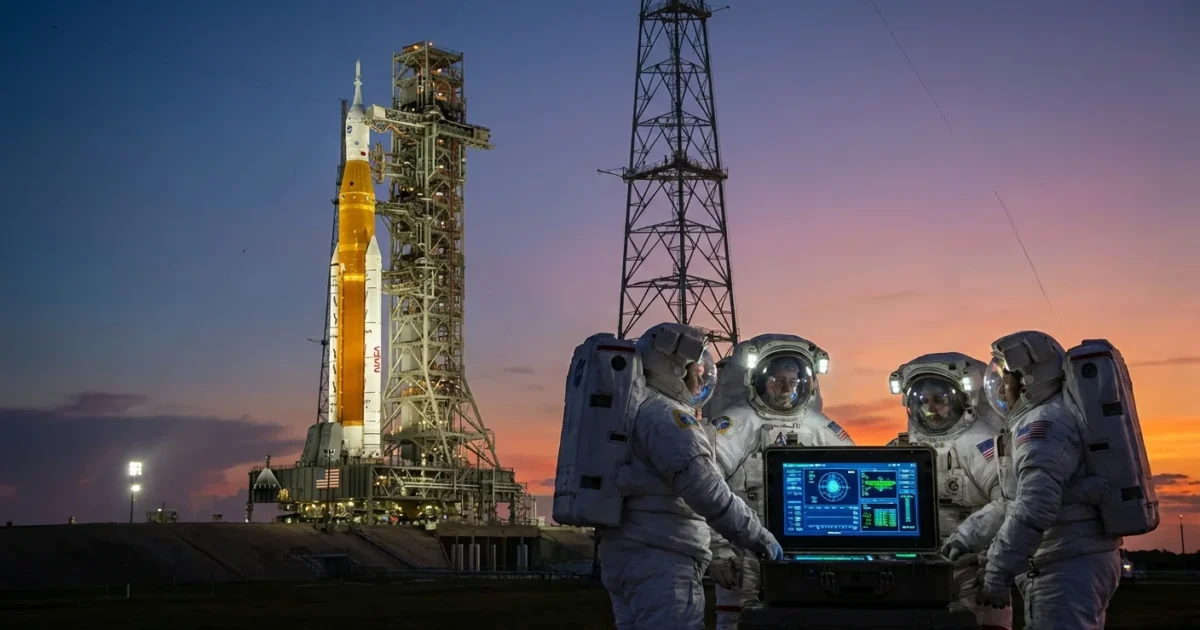
Breaking: Artemis II Rolls to the Pad, But NASA Is Not Ready to Name a Launch Date
The Rocket Is Moving. The Calendar Is Not.
The next crewed trip around the Moon just took a big step. NASA’s Space Launch System began its slow crawl to the launch pad for pad operations and tests. The Artemis II crew says they are ready. The vehicle is not ready to launch yet. That is the key.
Artemis II will fly four people on a lunar loop. No landing this time. The mission will last about 10 days. It will prove the rocket, the Orion spacecraft, and the life support needed for deep space.
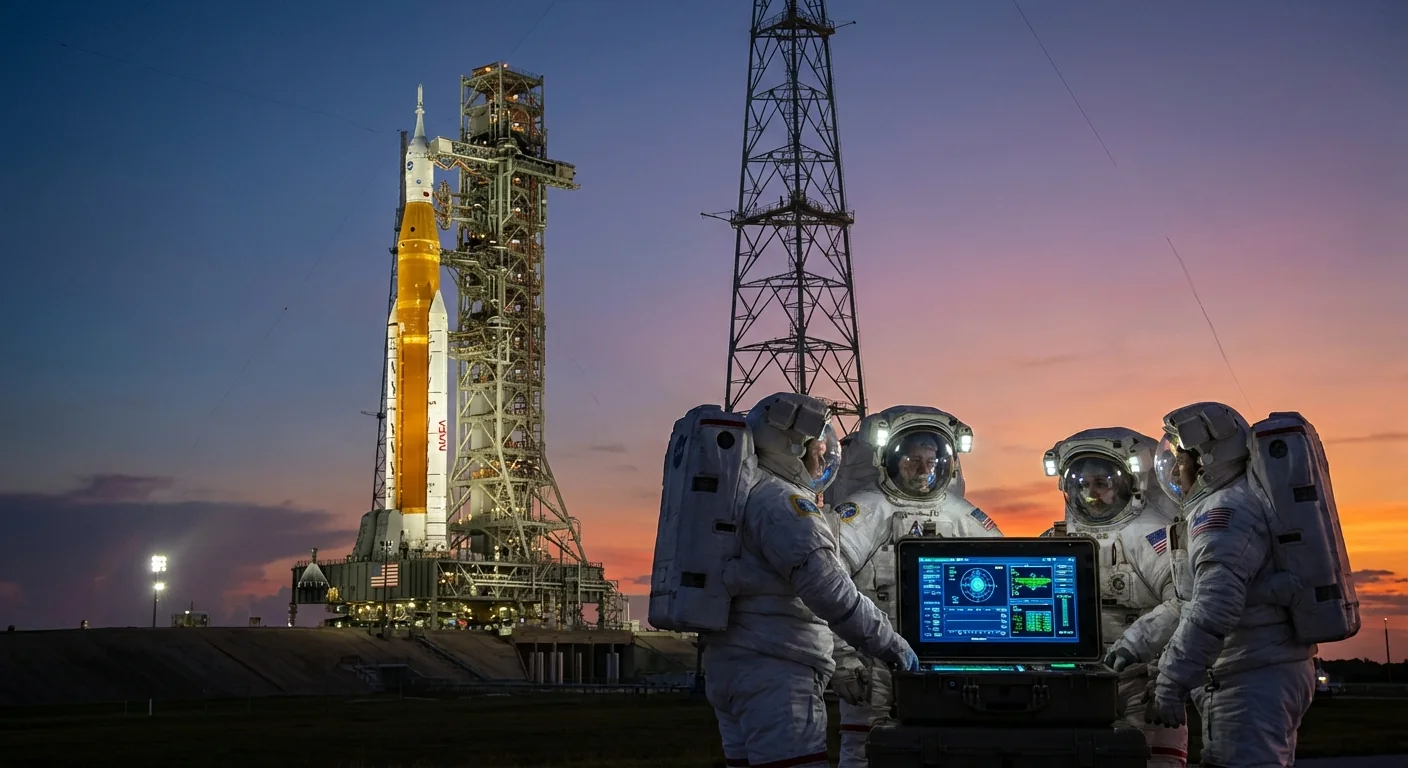
A rollout to the pad is not a launch date. It is the start of final testing at the pad.
What Today’s Rollout Really Means
Moving to the pad lets teams test the full stack in its true flight setting. Cables and umbilicals connect. The ground systems talk to the rocket and the spacecraft. This is where small issues show up. This is also where they get fixed.
A major event ahead is the wet dress rehearsal. That is a full fueling test. Tanks are loaded with super cold propellants. Controllers run the countdown close to zero. They watch valves, sensors, and software. They practice holds and recycle steps. A clean wet dress gives confidence for launch day. A messy one buys more time for fixes.
Why There Is Still No Launch Date
NASA will not pick a date until the vehicle and the ground pass hard checks. Several items must close first. Orion’s life support must run end to end with crew-like loads. Avionics and flight software must be locked and verified. The thermal protection system must clear its final certifications. Guidance and communication links must work from pad to deep space.
Range and weather rules also matter. A crewed lunar flyby needs a precise window. The team needs a day with the right Moon geometry and safe abort paths. Backup days must exist. That is why you will hear a target period first, not a single day.
Artemis II is a crewed lunar flyby. It will not land on the Moon. This mission is about proving systems for the landing mission that follows.
The Checklist Before NASA Picks a Date
Here is the sequence that has to work before a launch date sticks:
- Pad power up and integrated systems checks, including command, telemetry, and range safety.
- Wet dress rehearsal with full cryogenic loading and near-zero countdown.
- Orion life support run-for-record, with cabin atmosphere control and emergency modes.
- Flight software final load and closed-loop simulations of ascent and trajectory burns.
- Formal reviews, including the Flight Readiness Review, then the Launch Readiness Review.
Any one of these can uncover a problem. If that happens, the team stands down, fixes it, and tries again. That is how you fly crews safely.
What Artemis II Will Prove In Space
The crew, Reid Wiseman, Victor Glover, Christina Koch, and Jeremy Hansen from the Canadian Space Agency, will ride SLS to orbit. Orion will climb to a high Earth orbit. The team will check life support, navigation, and communications. Then they will fire the main engine toward the Moon. The path is a lunar flyby that swings them around and back to Earth.
Here is what that proves for future landings:
- Life support can sustain a crew far from Earth.
- Deep Space Network links can handle voice, video, and data at lunar distances.
- Navigation works when star trackers and sensors see deep space, not just Earth.
- The heat shield can take a blazing, high speed reentry.
The reentry will be fast, about 11 kilometers per second. That is much faster than a return from low Earth orbit. It pushes the heat shield to the level needed for the next missions. If it performs well, the landing mission will have a strong green light.
Why The Stepwise Plan Matters
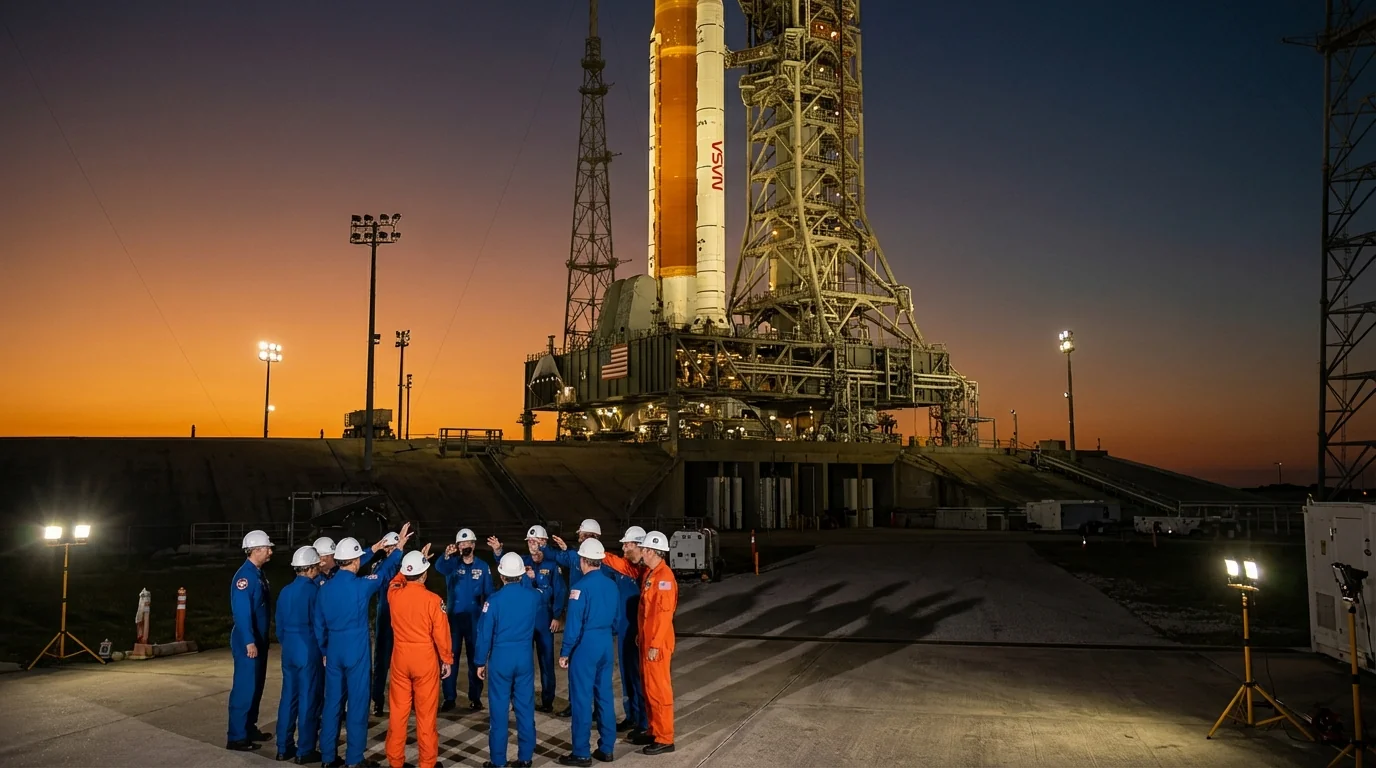
Big leaps in spaceflight are built from small, proven steps. Apollo used this playbook. Artemis is doing the same. Prove the rocket. Prove the ship. Prove the life support. Only then try the landing. This approach lowers risk for the crew and for the program. It also protects the science and technology that follow, like building a base, testing new power systems, and learning how to live away from Earth for months.
When NASA does name a date, expect a launch period with backup days. Weather and range rules can move the exact day by 24 to 48 hours.
What Happens Next
In the coming days, look for pad test results and the outcome of the wet dress rehearsal. If teams see clean data, a target launch period will follow. If they find issues, they will fix them at the pad or roll back inside. The goal is simple, fly the crew only when the hardware says yes.
Artemis II is finally standing tall in the open air. The Moon is in the plan, but the clock will not start until the tests line up. When they do, the first crewed voyage of the Artemis era will have its date, and a new path to the Moon will open.