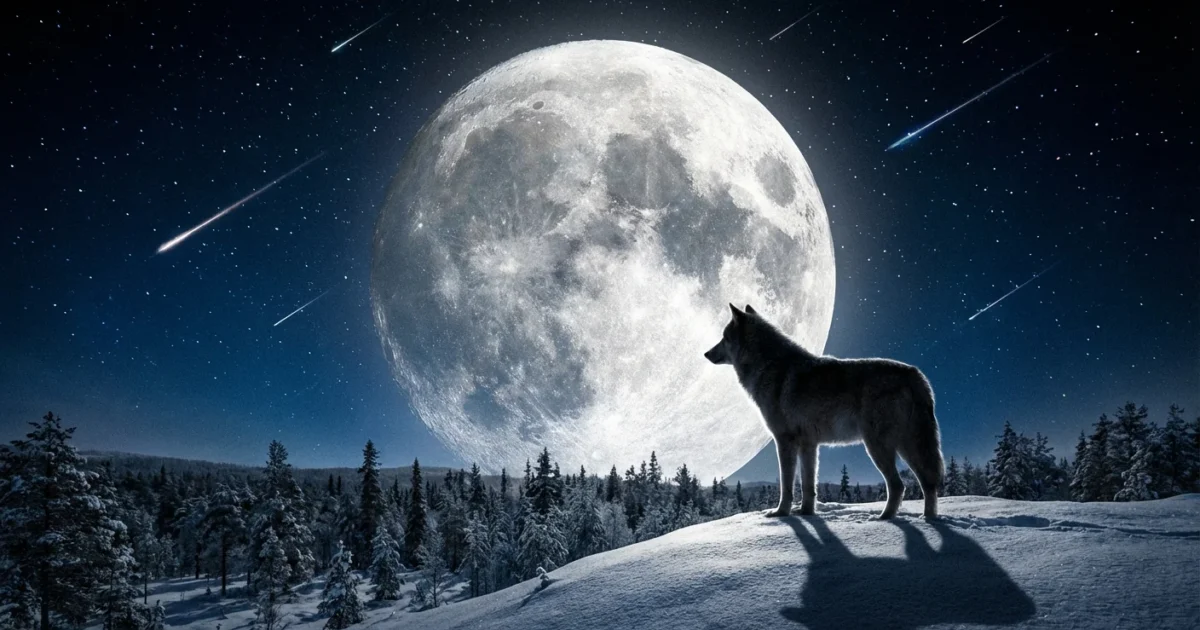
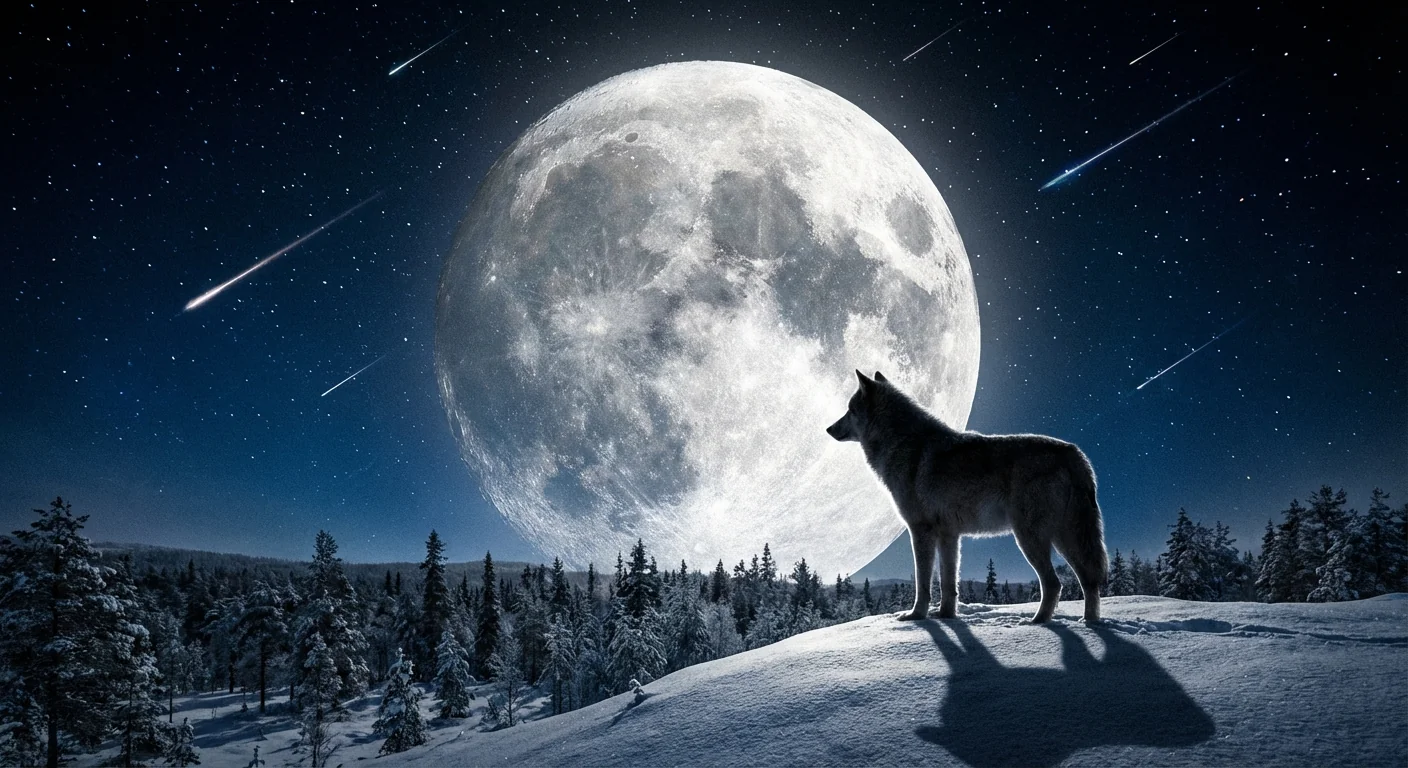
The year’s first full Moon just rose bigger and brighter than usual, and it brought company. January’s Wolf Moon arrived as a supermoon, filling the sky with silver light while the fast, fierce Quadrantid meteor shower tries to break through. The result is a double feature that is stunning to watch, and tricky to read. Here is what you are seeing, and why it matters.
Why this full Moon looks so big
A supermoon happens when the Moon is full near its closest point to Earth. That point is called perigee. At perigee, the Moon can look up to about 14 percent wider and about 30 percent brighter than a far away full Moon. Your eyes and cameras feel that jump.
There is also a brain trick at work. Near the horizon, the Moon looks huge next to buildings and hills. This is the Moon illusion. The Moon itself does not change size over one evening. Your mind does the scaling.
If the Moon looks giant near the horizon, try this. Hold a small coin at arm’s length and compare. It stays the same size all night.
This extra brightness has real effects on Earth. The ocean responds to the pull. Supermoons often bring slightly higher high tides, especially when the Sun, Earth, and Moon line up. Coastal observers will watch the next few tide cycles closely.
Quadrantids meet the Wolf Moon
The Quadrantid meteor shower peaks in early January. It has a sharp, short burst that can reach about 60 to 120 meteors per hour under very dark skies. The meteors come from a rocky stream linked to a small body called 2003 EH1, likely the remains of an old comet.
Tonight, the blazing Moon raises the background glow. That washes out many faint streaks. Still, the Quadrantids have a signature move. They can throw bright fireballs that punch through the glare and leave smoke trails. Expect fewer total meteors, but be ready for sudden, bold ones.
The radiant, the point meteors seem to come from, sits near the constellation Boötes. It climbs higher after midnight. That is why the pre dawn hours often deliver the best rate, even with moonlight.
Face away from the Moon, block it with a building or tree, and give your eyes 10 to 15 minutes to adapt. Fireballs can appear anywhere in the sky.
How to see it and shoot it
You can catch two acts tonight. The Moon at rise or set gives dramatic views with foreground landmarks. The meteor shower is better later, when the radiant is high.
- Watch moonrise for scale and color. Return after midnight for meteors.
- Find the darkest spot you can. Keep the Moon out of your direct view.
- Dress warm, bring a chair, and look up for at least 30 minutes.
- For photos, lower exposure, steady the shot, and include a foreground.
Smartphones can handle the Moon if you tap to focus and drag exposure down. For meteors, use a tripod, a wide lens, and a few seconds per frame. Short exposures reduce moonlit washout. Aim away from the Moon. Keep shooting, patience pays.
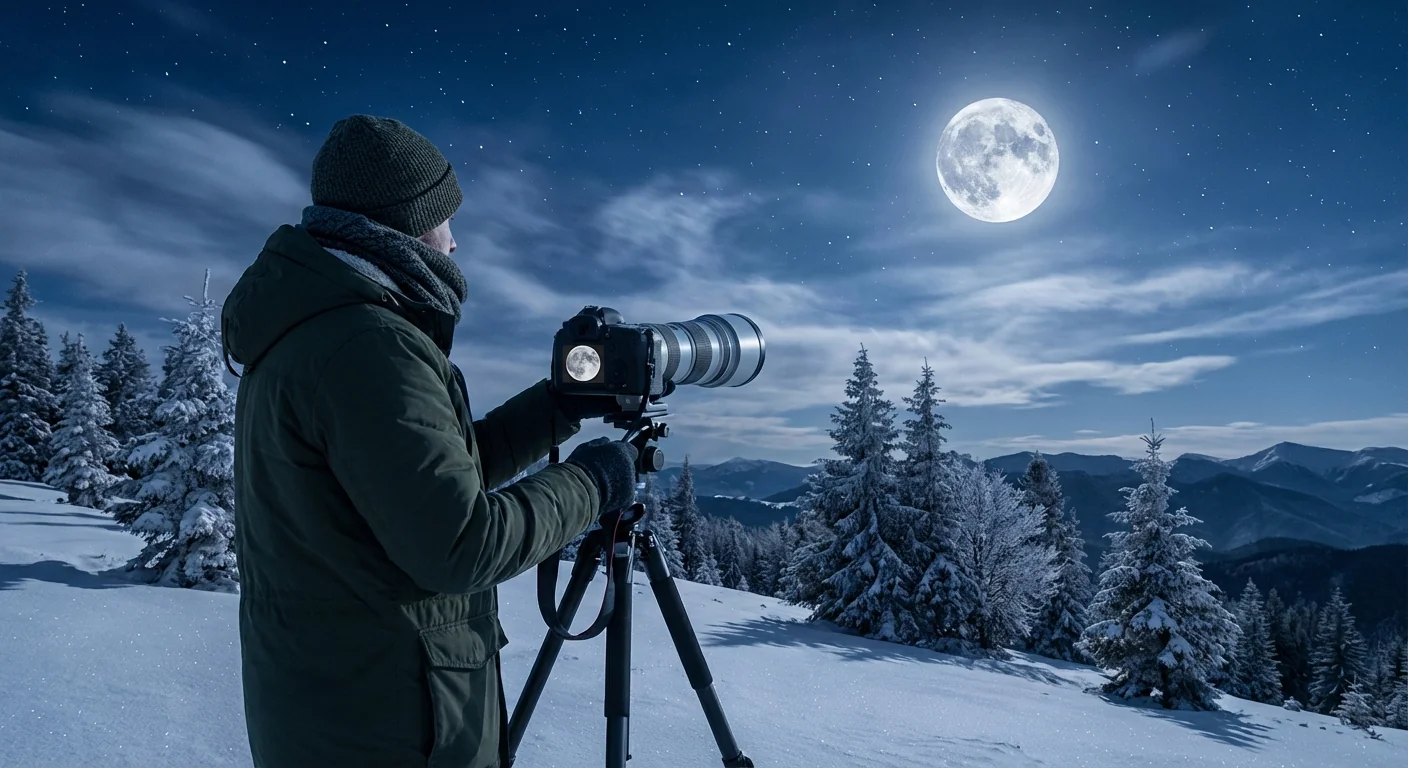
Moon glare can trick your camera meter. If your Moon looks like a white blob, cut exposure until you see craters at the edge.
The science behind the glow
This night is more than a pretty sky. A supermoon is a clean, public lesson in orbits. The Moon’s path is an ellipse, not a circle. That is why we get perigee and apogee. The difference in distance drives the change in size and brightness you notice.
The light also tells us about our air. A bright Moon makes halos and colored rings when ice or tiny drops fill the sky. Those patterns reveal the size of particles and the layers of moisture overhead. Meteor watchers use the Moon as a backlight to judge sky clarity in real time.
On the ground, tide gauges will log the gentle boost linked to this perigee full Moon. Coastal crews track these peaks to plan work, watch for flooding in low spots, and test early warning tools. Even simple backyard notes help. Count meteors, note the time, and compare what you see to darker nights later this month. That contrast shows how sky brightness shapes what we can detect, a key idea in all kinds of night science.
A bright start to the year
Tonight’s Wolf Supermoon steals the stage, and that is fine. It lights up city skylines, snow fields, and winter trees. The Quadrantids fight on, tossing the occasional bright fireball across the glare. If you time it right, you can see both stories unfold. Look early for the Moon, then look late for meteors. The year in space begins with a lesson in light, gravity, and patience. 🌕✨