Breaking: The night sky is not waiting. 2026 opens with a bright, close full moon, then piles on eclipses and meteor showers. I have the playbook. When to look up, where to stand, and how to see more than a blur. Think of it as the year the sky runs like an industry, steady output, big set pieces, high impact.
The Wolf Supermoon Starts the Clock
Early January brings a Wolf supermoon. A supermoon happens when the Moon is full near perigee, the closest point in its oval path around Earth. The Moon swings about 50,000 kilometers closer at perigee than at apogee. That small change makes it look a little larger and a bit brighter. The boost is modest, yet easy to feel when the Moon rises low, warm, and huge above the horizon.
The perigee effect is pure orbital mechanics. The Moon’s orbit is not a perfect circle, it is an ellipse shaped by gravity from Earth, the Sun, and even Jupiter. At perigee, sunlight hits the lunar surface the same way, but the shorter distance increases the light that reaches us. Expect strong tides along coasts near the full Moon. They respond to the combined pull of the Moon and Sun.
[IMAGE_1]
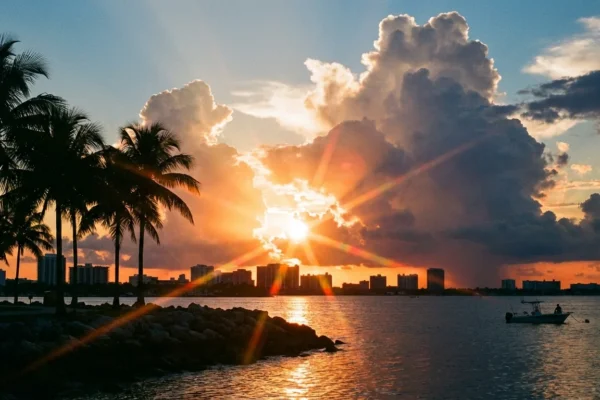
For the best supermoon view, catch moonrise. The horizon gives you landmarks, and your brain’s size cue makes the Moon feel huge.
The 2026 Checklist
This is a busy sky. Several supermoons, at least one blue moon, and a string of lunar eclipses lock in a full calendar. The major meteor showers, the Perseids in August and Geminids in December, return with power. Moonlight will help or hurt each event, depending on phase.
- Early January, Wolf supermoon, bright, near perigee.
- Late summer, Perseids peak, fast meteors from Comet Swift Tuttle’s debris.
- At least one lunar eclipse, total or partial, visible in many regions.
- A blue moon later in the year, the second full Moon in a single month.
- December, Geminids, rich, steady meteors from asteroid 3200 Phaethon.
A blue moon is not blue. It is a calendar quirk. Months are longer than the Moon’s 29.5 day cycle, so some months hold two full moons. That second one grabs the label.
Lunar eclipses are the opposite of full Moon spotlight. Earth slides between the Sun and the Moon. Our planet’s shadow paints the Moon red as sunlight filters through air and dust in our atmosphere. That red glow is the color of sunrises and sunsets bent into space.
Lunar eclipses are safe to view with your eyes. Solar eclipses are not. Never look at the Sun without certified filters.
Why Meteors Fall On Time
Meteor showers are clockwork because Earth crosses stable streams of debris every year. Comets shed dust and tiny pebbles as they heat up near the Sun. Asteroids can shed material too. When Earth plows through a stream, bits hit our atmosphere at tens of kilometers per second. Friction heats the air around each grain, making the streak we call a meteor.
The Perseids fly fast and often leave trains, glowing trails that fade over seconds. The Geminids are different. They are born from an asteroid like body, 3200 Phaethon, and often appear bright and chunky. Moon phase matters. A bright Moon washes out faint meteors. This year, watch the calendar and pick the darkest nights near the peaks.
Light pollution also matters. Skyglow from cities raises the background. Fewer stars appear, and faint meteors vanish. Dark, open ground is your friend. High altitudes help, dry air helps, and patience helps most of all.
[IMAGE_2]
Science You Can Use
You do not need a telescope for any of this. You need timing, location, and a plan.
- Check local rise, set, and peak times for your location.
- Pick a site with a clear horizon and low light. Parks and hills are great.
- Watch the weather. Clouds are the only true showstoppers.
- Give your eyes 20 minutes to adapt. Use a red light to protect night vision.
- For meteors, lie back and cover a wide slice of sky.
Real research builds on nights like these. Meteor counts from the public help refine stream models. Observers record eclipse brightness, which tracks dust in Earth’s atmosphere. Photographers capture lunar features at perigee, which improves mapping and public outreach. Coastal planners note spring tides around supermoons, then compare them to flooding reports. Even satellite operators watch meteor shower forecasts, since small particles can raise risk for spacecraft.
The Fine Print That Matters
Blue moons mark our calendar, not the Moon’s physics. Supermoons are beautiful, yet they do not trigger quakes or storms. Tides do rise higher near perigee and full Moon, so low lying areas should take note. Meteor showers reward patience. Rates are averages, bursts come and go. Eclipses obey geometry. If Earth’s shadow misses you this time, the next one may not.
The 2026 sky is full, but it is not rushed. Each event has a shape, a rhythm, and a best seat. Plan your time. Bring a friend. Bring warm layers. Bring a notebook. These moments connect you to the motions that run our world, the quiet industry of the cosmos that never clocks out.
Conclusion: Look up early, and keep looking. The year opens with a close, bright Moon, then widens into shadow, sparks, and color. This is your checklist, your map, and your nudge to step outside. The show is free, the science is real, and the best instrument is your own eyes. 🌕✨