

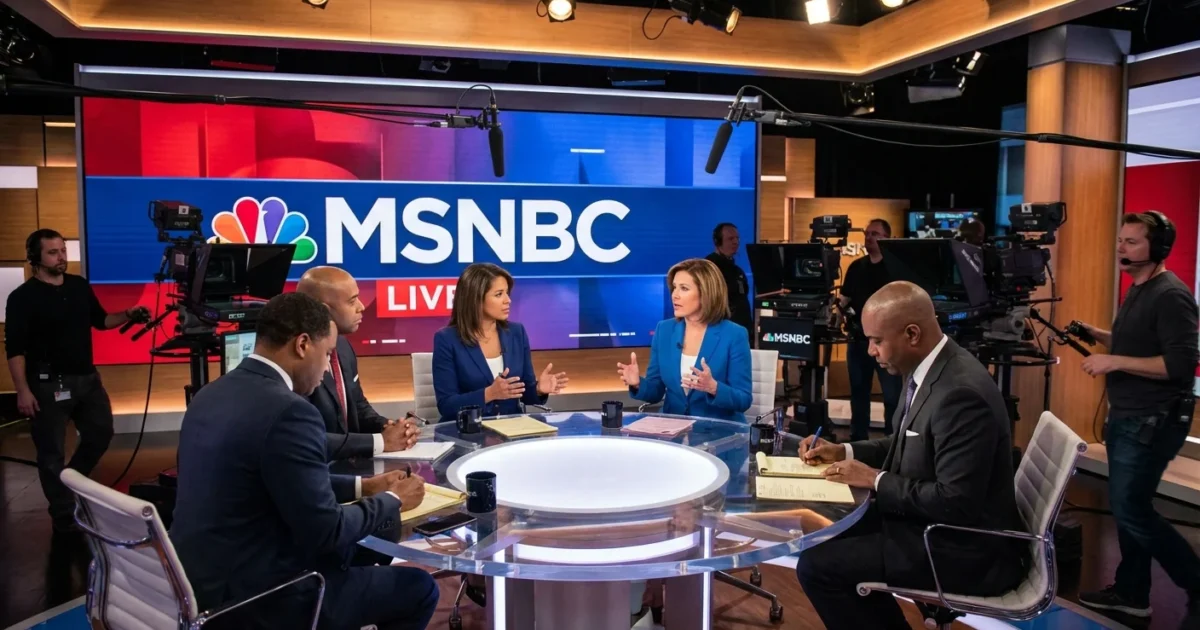
MSNBC cuts ties with veteran analyst Matthew Dowd after remarks about conservative activist Charlie Kirk. The move lands with force in a tense media climate. It is a clear signal on how far live political commentary can go on a major cable network. And it lands as campaigns and political groups watch every word on air. ⚡
What happened
Dowd, a longtime strategist and former ABC News figure, had been appearing on MSNBC as a political analyst. During a recent on-air segment, he made comments about Charlie Kirk, the founder of Turning Point USA. Those remarks were described inside the industry as odd and out of bounds for a straight analysis role. The network opted to part ways with him.
This is not a small personnel decision. Dowd is a known quantity in politics and TV. He brings a strategist’s eye and a history in both parties. Removing him signals a firm line. It also puts other contributors on notice. Words matter. Live TV has no edit button.
Why this decision matters
MSNBC is not shy about having a point of view in primetime. But its daytime and analysis brands still rest on standards, precision, and restraint. When an analyst shifts from evidence to attack, the network risks legal headaches and brand damage. Viewers expect strong arguments. They do not expect personal swipes that feel unmoored from facts.
For executives, the calculus is simple. Keep the conversation sharp, clean, and defensible. That protects the brand. It also protects the journalism that anchors news blocks and special coverage.
On-air analysis is not a free pass. It is a promise to inform, not inflame. Networks enforce that promise to guard trust and reduce legal risk.
The partisan fight around it
This episode will be weaponized. Republicans will call it proof that MSNBC polices speech only when it helps their image. They will argue it hides a deeper bias while punishing a pundit for saying the quiet part out loud. Expect GOP committees and allied groups to fold this into fundraising lines and media hits.
Democrats will make a different case. They will say the network held a clear line and enforced standards. They will argue that analysis must be grounded in evidence, even when it targets a conservative star. They will claim this is what accountability looks like.
Both frames aim at the same battlefield, trust. Voters are sorting news sources by tribe. Moves like this harden that sort. Campaigns see opportunity in the split. Media becomes a foil as much as a forum.
Near term, expect several shifts behind the scenes:
- Tighter guest vetting for volatile segments
- More lawyer review on hot-button topics
- Smaller booking pool for culture war debates
- More taped interviews where needed context can be added
Policy and newsroom standards
This is not a government action. It is a private editorial decision. Cable news has no fairness rule that forces balance. What it does have are corporate standards, defamation law, and advertiser pressure. That trio shapes the boundaries on what gets said, and who gets to say it.
Lawmakers will still try to make hay. Hearings and letters often follow media flare-ups. The point is not regulation. The point is narrative. Each side wants to claim the mantle of truth and fairness, then push the press to reflect it.
For journalists and analysts, the message is direct. Bring receipts. Separate opinion from fact. When speaking about named figures like Charlie Kirk, tie claims to reporting, not vibes. Viewers can tell the difference.
When you watch a heated segment, note three things. What facts are cited, what is inference, and what is insult. Trust the voices that stay rooted in the first two.
What to watch next
MSNBC will likely rebalance panels where Dowd appeared. Watch for a steadier mix of legal minds and beat reporters in segments on activist groups and election law. The network will want to show rigor without losing edge.
Dowd has options. He can return to campaign consulting, write, or join another outlet that leans into sharper commentary. His next stop will say a lot about the market for provocative analysis this cycle.
The bigger story is the chilling effect. Analysts across networks will think twice before riffing past the facts. That may narrow the on-air window for messy, real-time debate. It may also raise the floor for substance. Both things can be true.
Conclusion? This decision draws a bright line in a gray area. MSNBC protected its brand and set a standard that will echo across the industry. In a cycle defined by trust, that choice could prove as consequential as any single segment.

