
BREAKING: Europe has just widened the meaning of Schengen. Today, I can confirm the European Parliament approved a new military Schengen framework that clears the path for fast movement of troops and equipment inside the EU. At the same time, Cyprus moves toward joining the civilian Schengen Area, and a biometric Entry Exit System picks up speed. Border policy is now about defense readiness, digital checks, and citizen rights, all at once.
What military Schengen changes today
This is a major legal and practical shift. The new framework removes internal military customs and routine border stops for military movements that meet common standards. It creates one digital procedure for transit approvals and sets strict time limits for decisions. Ministries will have to answer in hours or days, not weeks.
Member states will still control their territory. They can refuse transit on national security grounds. But the default flips. Movement is presumed to go ahead once safety and liability conditions are met.
The legal core is simple. One route plan. One permit recognized across borders. One set of rules for heavy loads, hazardous cargo, and escorts. Transport ministries, defense staffs, and customs are placed on the same clock.

Why now
The vote comes with defense risks rising at Europe’s borders. Leaders want to fix known bottlenecks, like bridges that cannot carry tanks, or customs offices that stop convoys at night. The new framework ties military mobility to the same network logic used for civilian transport. It also aligns with host nation support duties under EU and NATO formats. The message is speed with lawful oversight.
Sovereignty, law, and what citizens should expect
No EU country loses control of its borders. The law sets a floor for cooperation, not a ceiling. States can add safety rules if they are necessary and proportionate. Police and gendarmes will still manage convoys on public roads. Environmental and road safety laws stay in force.
What changes is predictability. Local authorities get early notice. Compensation and liability rules become uniform. Civilian traffic plans must now account for military surge windows. Expect more night moves and more use of rail to reduce road impact.
- Expect standard permits, faster decisions, clear liability, and predefined corridors
Courts keep their role. Any refusal must be reasoned. It is open to judicial review under national law and EU law. Data on planned movements will be protected under public security rules. Still, accountability will matter, especially if a convoy causes damage or injury.
If you live near a border or rail hub, sign up for local notice systems. Emergency managers will share convoy schedules that affect traffic and services.
Cyprus prepares for Schengen entry
Cyprus is working to join the Schengen Area. That means full participation in the no internal border checks system for civilians. On the island, this raises hard questions. The Green Line has special rules that manage movement between the government controlled south and the Turkish Cypriot north. Those rules do not vanish on day one.
Once admitted, the external Schengen border regime will apply to points of entry into the Republic of Cyprus. The Green Line will keep a special status under EU law until a political settlement. Checks there will need to align with Schengen security standards without closing daily life. That balance is delicate.
Travelers should expect more formal identification checks at key crossing points and ports. Air carriers and ferry operators will face tighter document controls. The state must also show that its border databases connect to Schengen systems safely and accurately. Civil liberties groups will watch for proportionality. Businesses will press for clarity so trade and tourism do not suffer.
Biometric Entry Exit System, your rights at the border
The Schengen Entry Exit System is replacing passport stamps for non EU nationals. It records a facial image and four fingerprints. It stores time and place of entry and exit. Rollout is phased now, with full use planned by April 10, 2026.
For travelers, this means kiosks, short enrollment steps, and automated checks against overstay limits. For border guards, it means faster detection of identity fraud and repeat overstays. Lines may grow at first, then shrink as systems stabilize.
Data protection is a live issue. Biometric records will be kept for a set period, then deleted if no overstay or alert exists. Access is limited to border and law enforcement authorities under strict rules. Individuals have rights to information, correction of errors, and redress. National data protection authorities can hear complaints.
At enrollment, make sure your name and document details match your ticket and visa. Small errors can trigger delays or refusals.
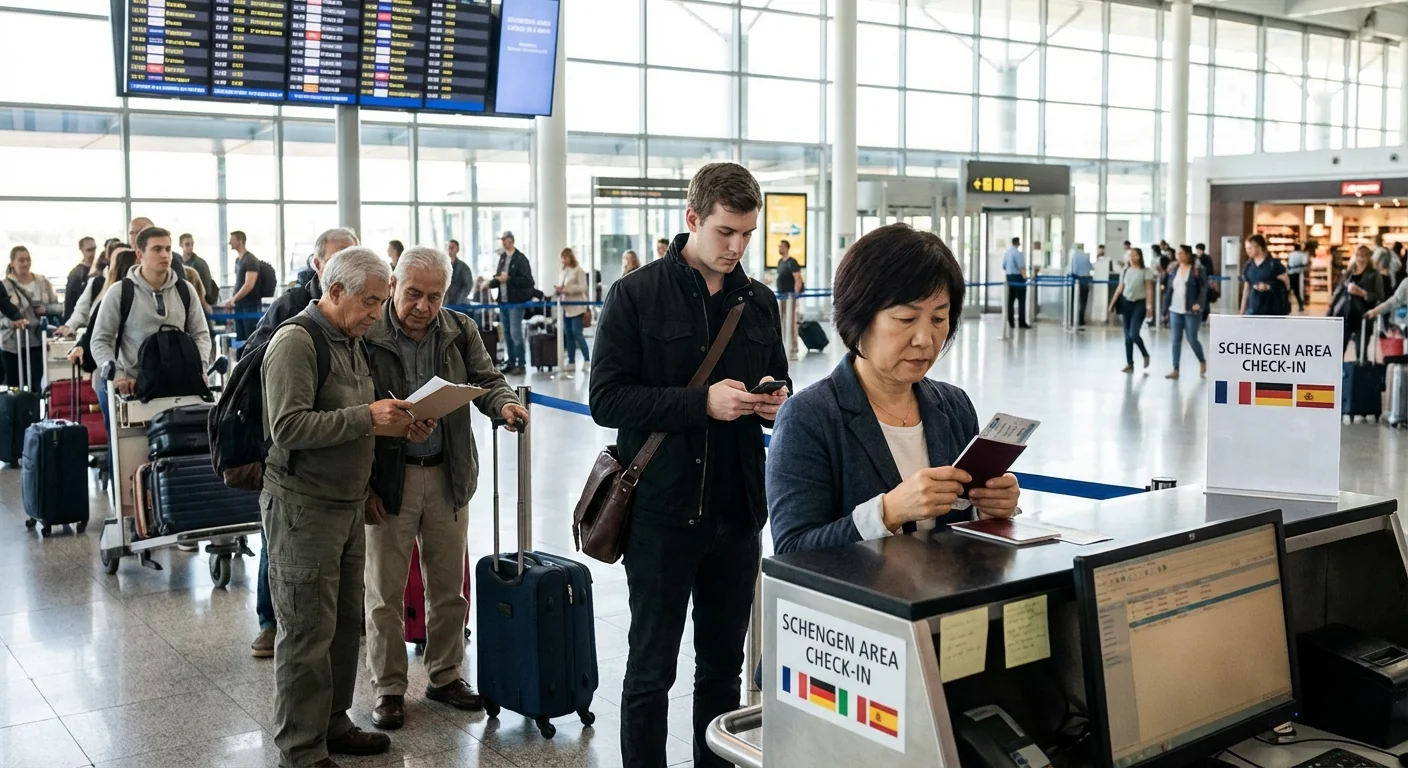
What airlines and airports must do
Carriers must check that travelers have enrolled when required. Airports and seaports must field working kiosks and clear signage. Member states must run public information campaigns in several languages. Failure here creates queues, not security.
The bigger picture
Schengen began as a promise of free civilian movement. Today it is also a security and border management project. Military mobility rules, Cyprus’s accession work, and biometric border checks point to one direction. Faster decisions, digital systems, and shared responsibility.
The legal stakes are real. Speed cannot erase rights. States must give reasons, keep data safe, and allow review. Citizens, travelers, and businesses should prepare for change, and insist on fairness as Europe rewires how it moves, defends, and welcomes.