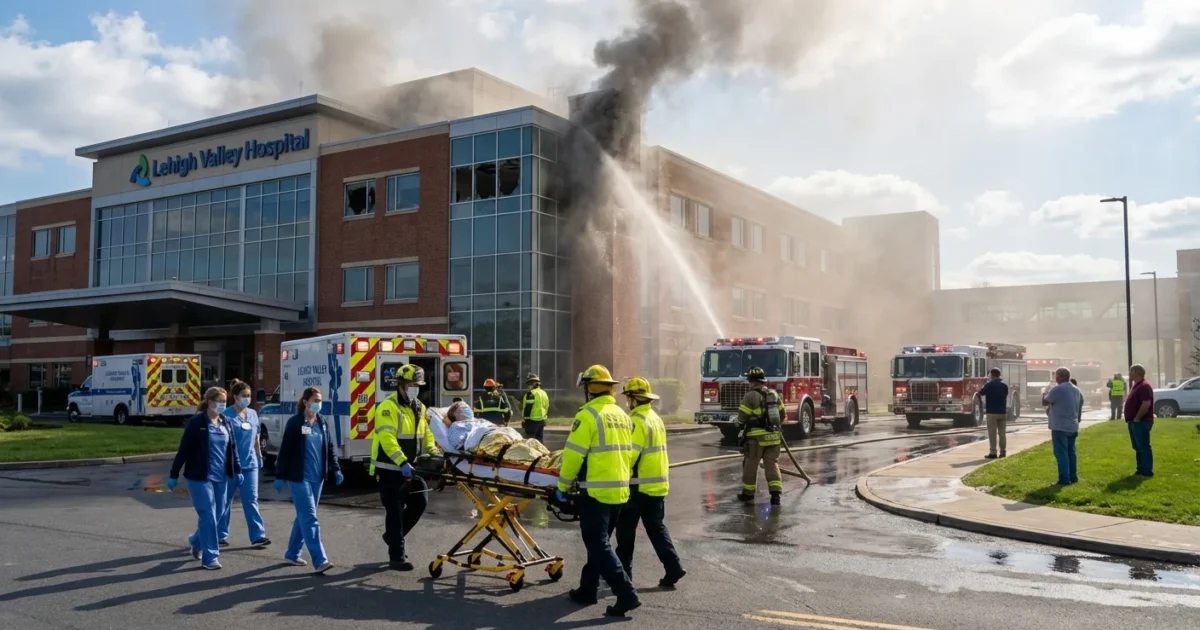
BREAKING: Fire Triggers Full Evacuation At Lehigh Valley Hospital, Dickson City. Patients Moved, Investigations Underway
Sirens cut through the afternoon in Dickson City as smoke rose from Lehigh Valley Hospital, Dickson City. Within minutes, staff and firefighters began moving patients out, one unit at a time. Nearly 80 patients were transferred to other facilities. The evacuation was swift and disciplined. The fire is now contained, and the cause is under active review. Roads around the campus remain limited. Visitation at this campus is paused until officials clear the site.
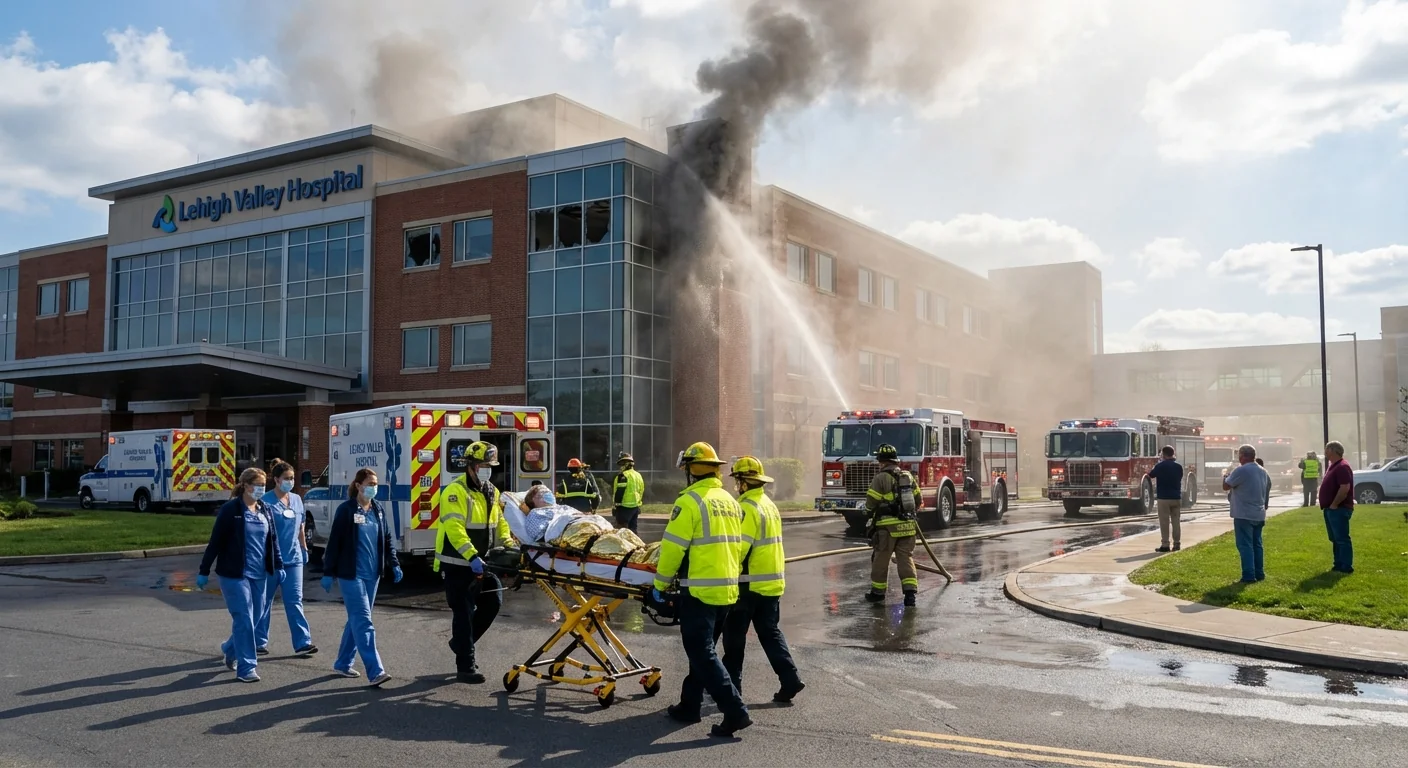
What Happened, And Why The Response Worked
The hospital activated its incident command system, a playbook used by health facilities and public safety teams. That brought firefighters, EMS, police, county emergency management, and hospital leaders under one structure. They divided tasks, set up transport routes, and assigned staging areas for ambulances. That coordination matters. It keeps hallways moving and prevents delays in care.
Crucially, patient transfers followed established agreements with other hospitals. Those agreements, called mutual aid or transfer protocols, are required under federal rules for hospitals that take Medicare and Medicaid. They make sure an accepting doctor says yes, beds exist, and records travel with the patient.
The blaze prompted temporary service disruptions at the Dickson City campus. Outpatient visits are postponed. Traffic is being redirected near the hospital to give room to responders.
If you have a loved one who was a patient today, you have the right to know where they were transferred and how to reach their care team.
The Law Kicked In: Safety Standards And Patient Rights
Hospitals must keep patients safe during fires. They follow national life safety codes, maintain alarms and sprinklers, and run drills. Pennsylvania also licenses hospitals and can inspect after major incidents. Today’s evacuation shows those rules in action. Staff moved people with oxygen, infants, and intensive care patients without chaos. That is the test regulators expect.
Two core patient rights applied today.
First, care must continue. The federal emergency care law, known as EMTALA, requires hospitals to stabilize patients and arrange safe transfers. Even during a fire, the duty to protect patients does not pause. A transfer is legal only if a receiving hospital agrees and the move is safer than staying put.
Second, privacy still matters. HIPAA allows hospitals to share information with family and other providers for treatment and safety. Hospitals can release a patient’s location and general condition to family if it helps reunite and care for the patient. Sensitive details remain protected.
Ask for the name of the receiving hospital, a contact number, and a copy of discharge or transfer papers once available.
Government Response And What Comes Next
Local authorities can restrict access to the area for safety. Expect temporary road closures, detours, and limits on returning to the building. Workers also have rights. OSHA standards require safe conditions during cleanup and recovery, including proper masks, ventilation, and training.
Investigators will focus on origin and cause, fire protection systems, and whether alarms and suppression worked as designed. The hospital must document the event, how the evacuation unfolded, and what went right or wrong. State health officials can request a corrective action plan and may review equipment testing logs, staff training records, and prior fire drills.
If the facility declares a limited emergency status, regulators can grant short term waivers to keep care going at alternate sites. Insurers, including Medicare and Medicaid, typically cover medically necessary transfers prompted by a facility hazard. Patients should not be billed for transport that was required for their safety.
Do not try to access the campus until officials lift restrictions. Interfering with an active investigation or emergency zone can lead to penalties.
What Patients And Families Should Do Now
- Call the hospital’s main line or patient information desk for transfer details.
- Bring identification before visiting a receiving facility.
- Ask how to get medications, personal items, and medical records.
- Confirm how follow up visits will be rescheduled.
If you were scheduled for care at the Dickson City campus, your rights include timely notice of changes, a comparable appointment, and access to your records within a reasonable time. You can request your records in paper or electronic form. If you lost a device or personal item during the evacuation, file a property claim with hospital security or patient relations. Keep receipts and a simple timeline of events.
If Your Care Was Interrupted
- Contact your doctor to confirm new care plans.
- Refill prescriptions now, not later. Pharmacies can call the receiving hospital if needed.
- Document any urgent needs, such as oxygen supplies or wound care, and ask for written orders.
Accountability And The Policy Lesson
Today showed the value of planning. The region’s hospitals had transfer agreements ready. EMS agencies shared radio channels and staged equipment. That is what federal and state policy demands. It saved time and protected lives.
Accountability begins tonight. Fire officials will determine cause. Health regulators will assess compliance. The hospital’s insurers and risk managers will review losses and continuity plans. If negligence played a role, civil liability may follow. If systems worked as designed, Pennsylvania has a model to study and strengthen.
Conclusion
A hospital fire tests a community. Dickson City met that test with speed, order, and respect for patient rights. The next phase is clear. Restore services safely. Share facts with families. Learn every lesson, then harden the system for the next crisis. Lives depend on it.