Chopsticks on Christmas: Why Chinese Dining Rooms Filled America’s Holiday Table
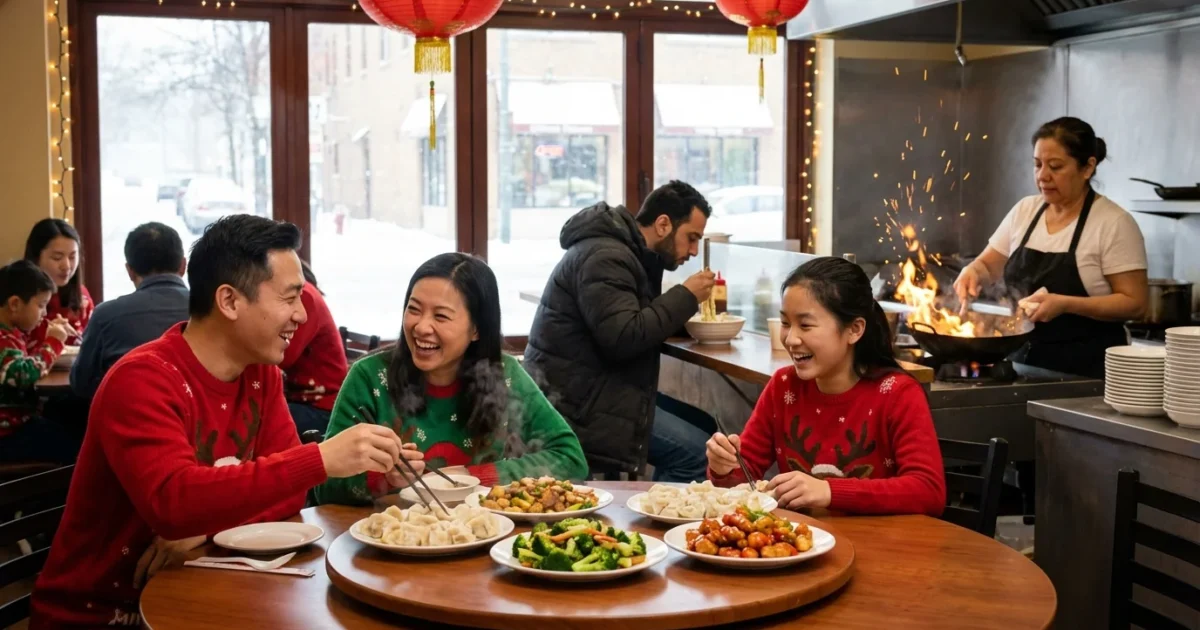
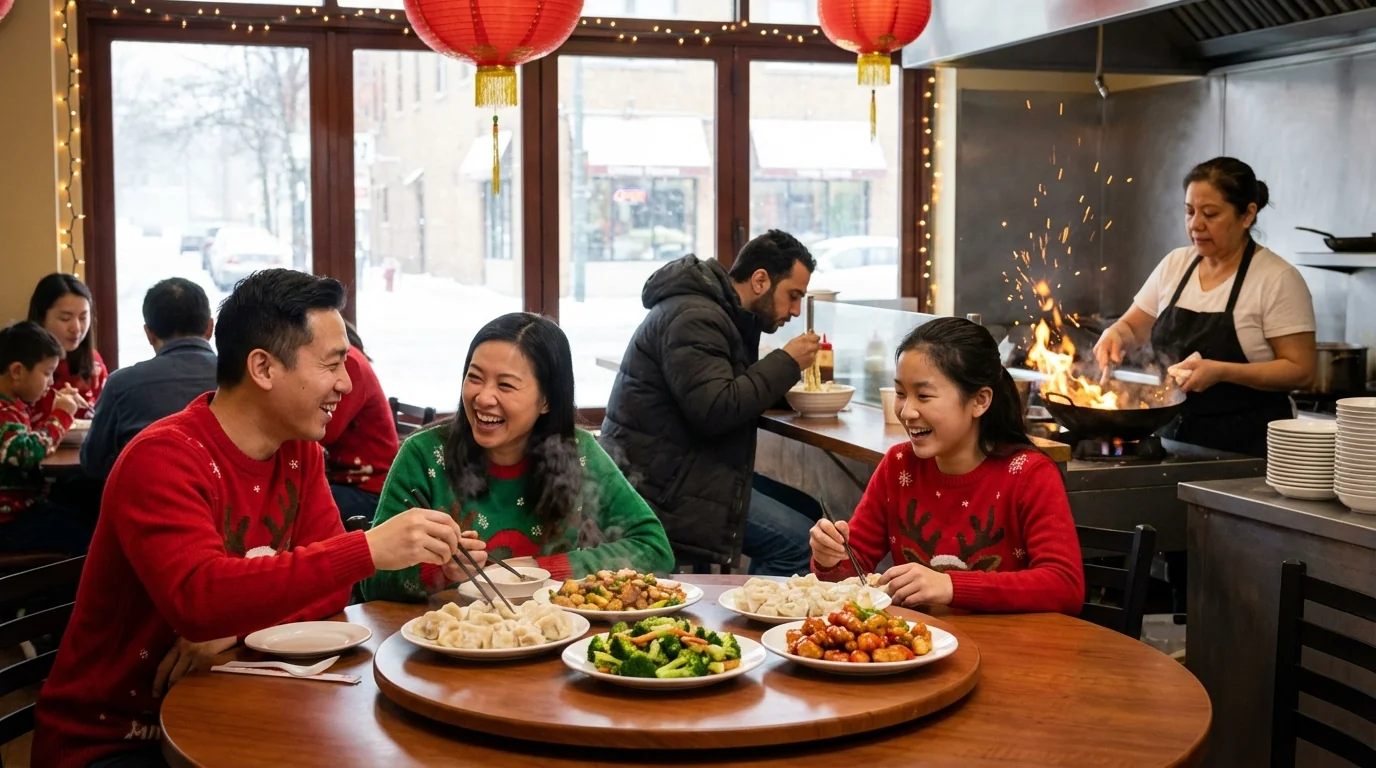
The lights were on. The woks were roaring. While much of America went quiet on Christmas, Chinese restaurants became the country’s open kitchen. I witnessed packed dining rooms, nonstop takeout, and chefs moving with balletic speed. Families in sweaters. Solo diners finding warmth. Nurses grabbing late plates after shift. The open sign meant more than service, it meant welcome.
The Scene on Christmas Day
From Queens to the San Gabriel Valley, the story was the same. Red lanterns glowed over full round tables. Servers hustled out lazy Susans loaded with roast duck and whole steamed fish. A steady line formed at the register, paper bags shining with hot sesame oil.
Owners told me the day felt like a festival. The phone rang without pause. Orders stacked high, from scallion pancakes to triple orders of fried rice. Staff leaned on muscle memory, and the rhythm never broke. It was loud, joyful, and deeply organized.
This is not a novelty night. It is a service, a habit, a comfort. People who do not mark the holiday still want an occasion meal. People who do celebrate want a break from the oven. Chinese restaurants know how to feed both, fast and gracious.
Call ahead for a table, and pre-order whole birds or large-format dishes. Kitchens plan better when you do.
A Century in the Making
The tradition is old, and it is American. In early 1900s cities, Jewish and Chinese communities shared blocks and bakeries. Chinese dining rooms had open doors, few religious symbols, and big tables that said stay a while. The menu welcomed curiosity. Chop suey and egg rolls eased new diners in, then bolder dishes followed.
That spirit endures. You do not need the right sweater or a secret handshake to fit into a Chinese dining room on December 25. You need an appetite and a little patience. Tea arrives. A child points at the lobster tank. A grandmother shows a teen how to work the rice bowl and spoon. The room becomes one table.
What We Ordered, And How Kitchens Deliver
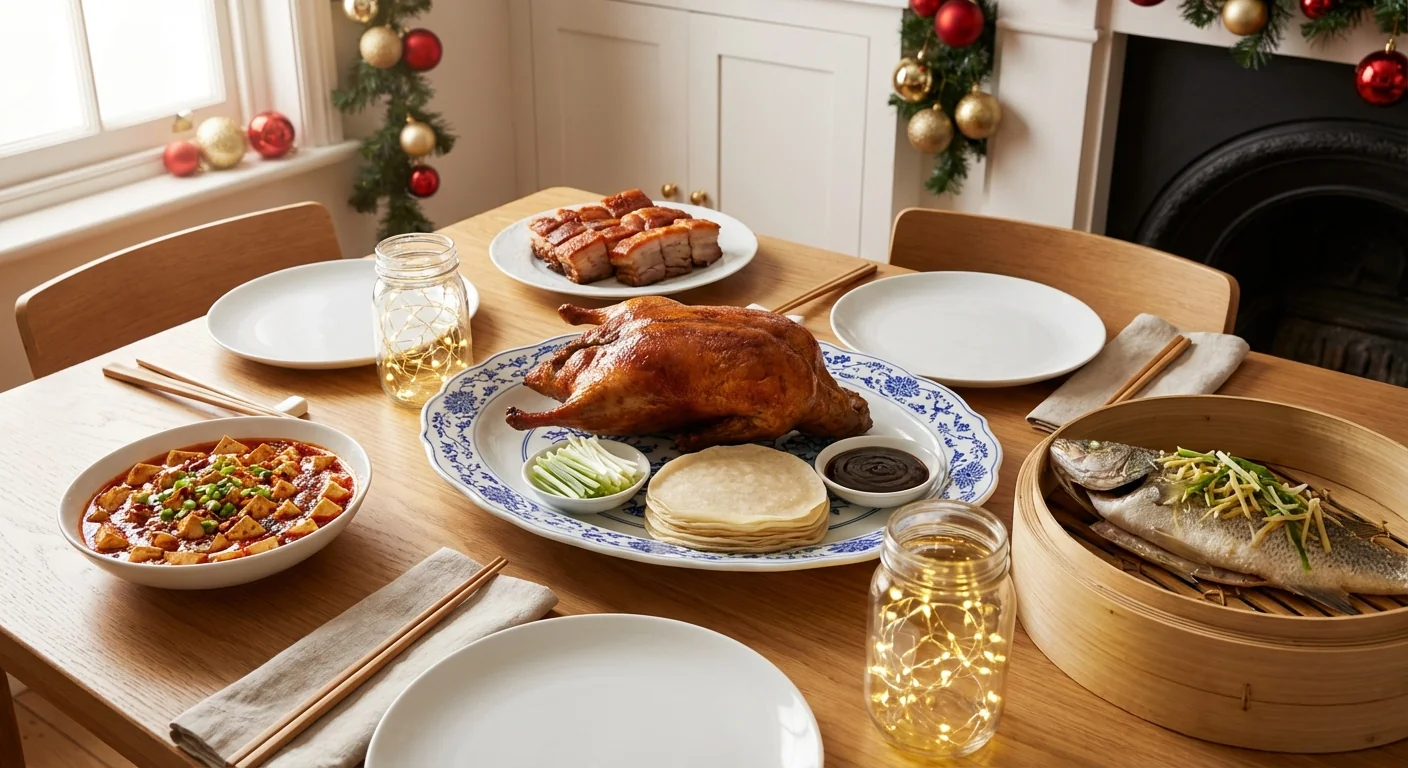
This is a day for shareable dishes and steam that curls into the night air. Roast Peking-style duck, with glossy skin and pancakes that stick to the fingers. Mapo tofu, spicy and silky, scooped over rice. Stir-fried greens that snap with garlic. Walnut shrimp, sweet, creamy, and celebratory. The wok fire is the city’s unofficial hearth.
Back of house, the choreography matters. Line cooks stack orders by heat, then by travel time. Drivers get soups secured, lids taped, bags double checked. Dine-in tables move to family style, plates landing together so no one waits.
- Peking-style duck, a centerpiece with pancakes, scallions, and hoisin
- Whole steamed fish, ginger, scallion, soy, a wish for luck
- Mapo tofu, fiery comfort that feeds a crowd
- Cantonese roast pork, crackling edges, sticky glaze
Leftovers That Sing
The day after, the fridge tells a story. Cold lo mein calls out. Half a tub of rice waits for a second life. This is where home cooks jump in.
- Ten-minute ginger scallion noodles: Warm oil in a pan. Add sliced scallions and grated ginger. Sizzle until fragrant. Toss in leftover noodles with a splash of soy and a pinch of sugar. Finish with a spoon of chili crisp, then serve hot.
Fried rice shines on day two. Dice any extra roast meats. Heat a pan, add oil, then rice, then the meat. Push rice aside, scramble an egg, fold it in. A little soy, a dash of white pepper, and you are done. Crisp leftover egg rolls in an air fryer at 350 for five minutes. They wake up fast.
The Business Reality, In Plain View
Let’s be clear. Yesterday was not slow. Many owners told me it was one of their strongest days of the year. Dining rooms filled early. Takeout surged through the evening. That revenue matters for independent, often family-run businesses. Staff plans for it, and the community benefits from a reliable holiday option.
The guest mix is changing too. Alongside the classic Jewish Christmas crowd, I saw multigenerational families from many backgrounds. Travelers from airport hotels. Hospitality workers who serve all month and finally get to be served. The room felt like a cross section of America, only hungrier.
These crews work hard on a day when most rest. Be kind, be patient, and tip like it means something, because it does.
Why It Endures
Chinese restaurants succeed on Christmas because they solve for mood and logistics. The food is fast, sharable, and layered with meaning. The space is casual, but you can dress it up with a whole fish and a Tsingtao. The kitchens are open when others are dark. And the tradition keeps building, one hot dumpling at a time.
Yesterday, the neon signs cut through the cold. Steam rose from bamboo baskets like small fireworks. The country ate, together and apart, and found comfort in a room that never asked for anything but an order and a seat. The doors will close tonight, but the memory sticks, warm and bright. See you next December 25. 🍜