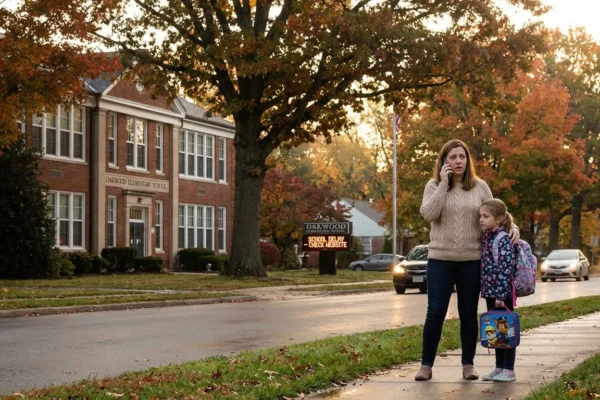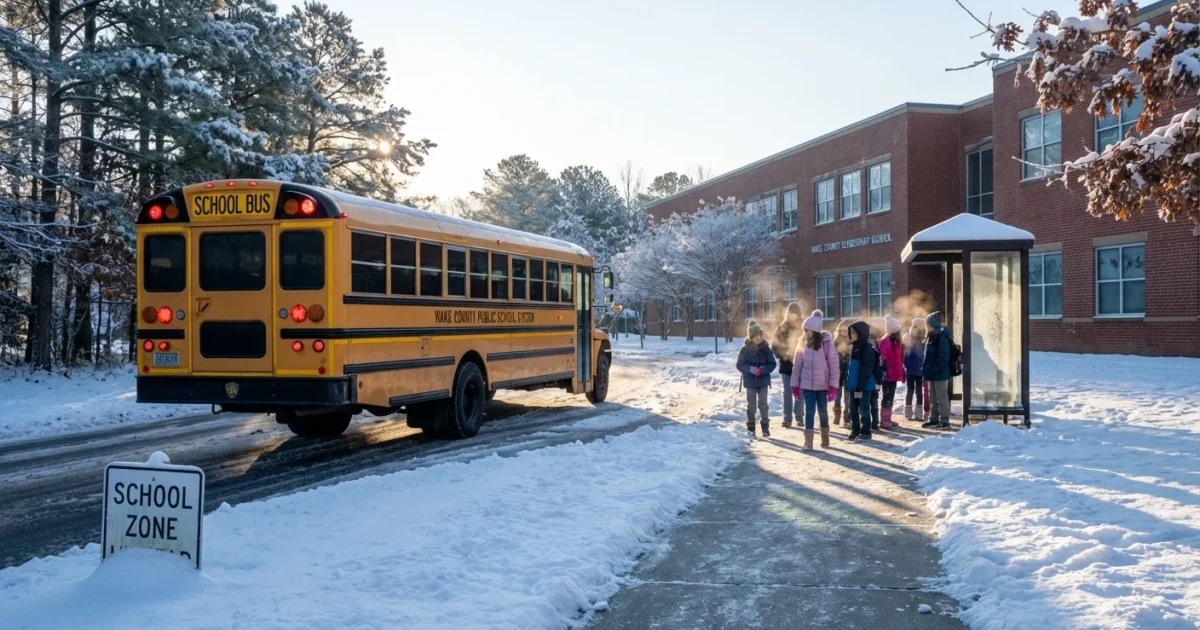
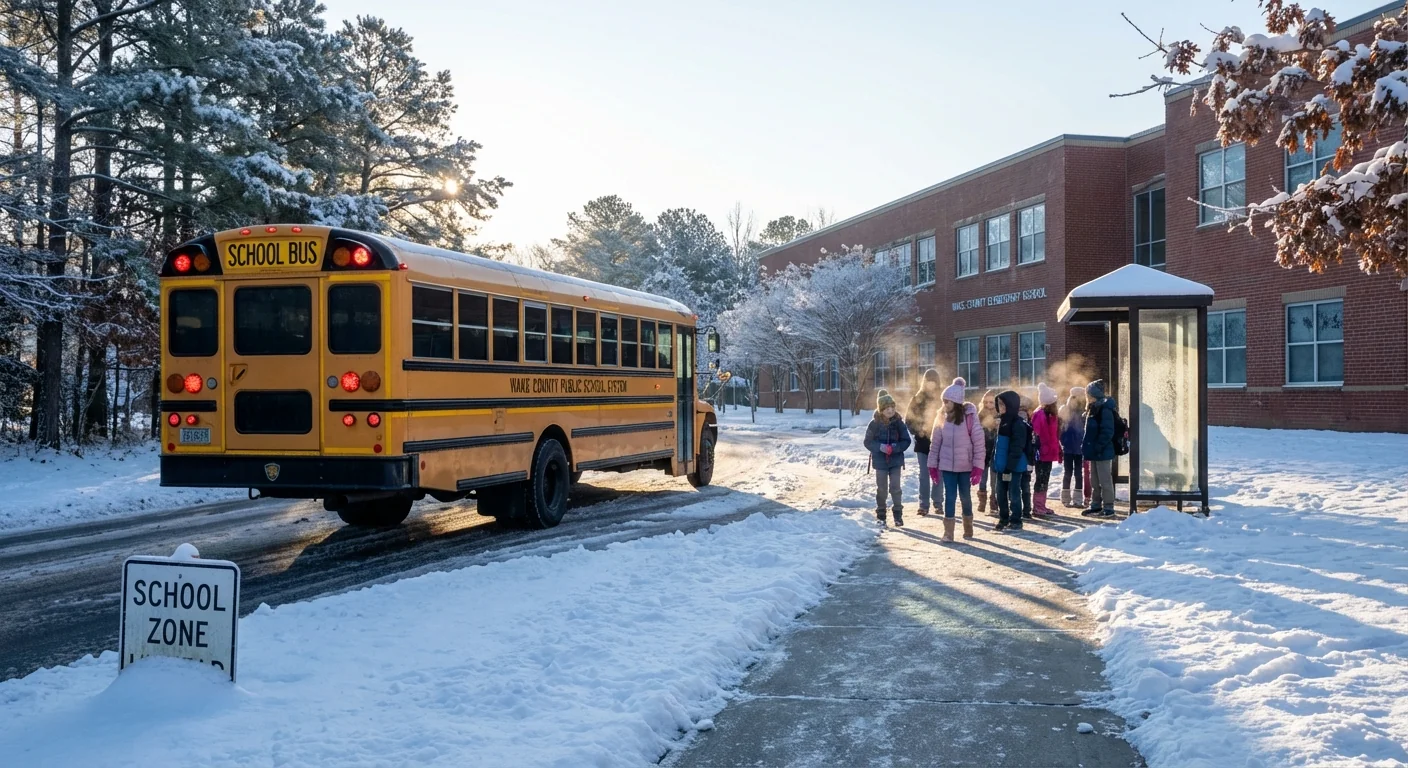
Wake County schools shut down in-person classes on Monday as ice glazed roads and bridges across the county. Buses could not run safely, and after-school programs were also canceled. The district is weighing remote learning, make-up days, or banked time for the lost day. Families and staff should prepare for updates today as crews continue to assess roads and campuses.
Roads remain slick in shaded spots and on bridges. Do not drive to schools or bus stops until the district says it is safe.
What happened and what comes next
Monday’s call was about safety first. Temperatures stayed below freezing through the morning, and the risk at bus stops was real. The district is now reviewing two short-term options. One is a quick pivot to remote learning for the next weather day. The other is to use banked time built into the calendar. A call on Tuesday operations will come as soon as road tests and campus checks finish.
This one icy day shows the strain on a fast growing system. Wake County has added students every year, and many schools are full. A new enrollment plan for 2026 to 2027 will move some students to balance buildings. Four new schools opened this fall, including Felton Grove High and three new elementary schools. These sites already help, but growth in the south and west part of the county is intense.
Deeper pressure behind a single snow day
Weather closures are harder when systems are stretched. Wake County still has more than 200 million dollars in deferred HVAC work. That means some classrooms run hot in August and cold in January, which hurts learning and forces emergency fixes. Maintenance crews are racing to keep older units running.
Money is tight. This year brought a freeze on 8.1 million dollars in federal aid, plus earlier hits to mental health and teacher recruitment grants. The working operating budget for 2025 to 2026 is about 2.28 billion dollars, with 19 million in cuts to balance. These numbers are not abstract. Fewer dollars limit spare buses, backup drivers, and hotspot devices. All three are crucial on weather days.
Closures expose the system under the surface. Capacity, HVAC health, and stable funding decide how fast a district can pivot and teach.
What families can do right now
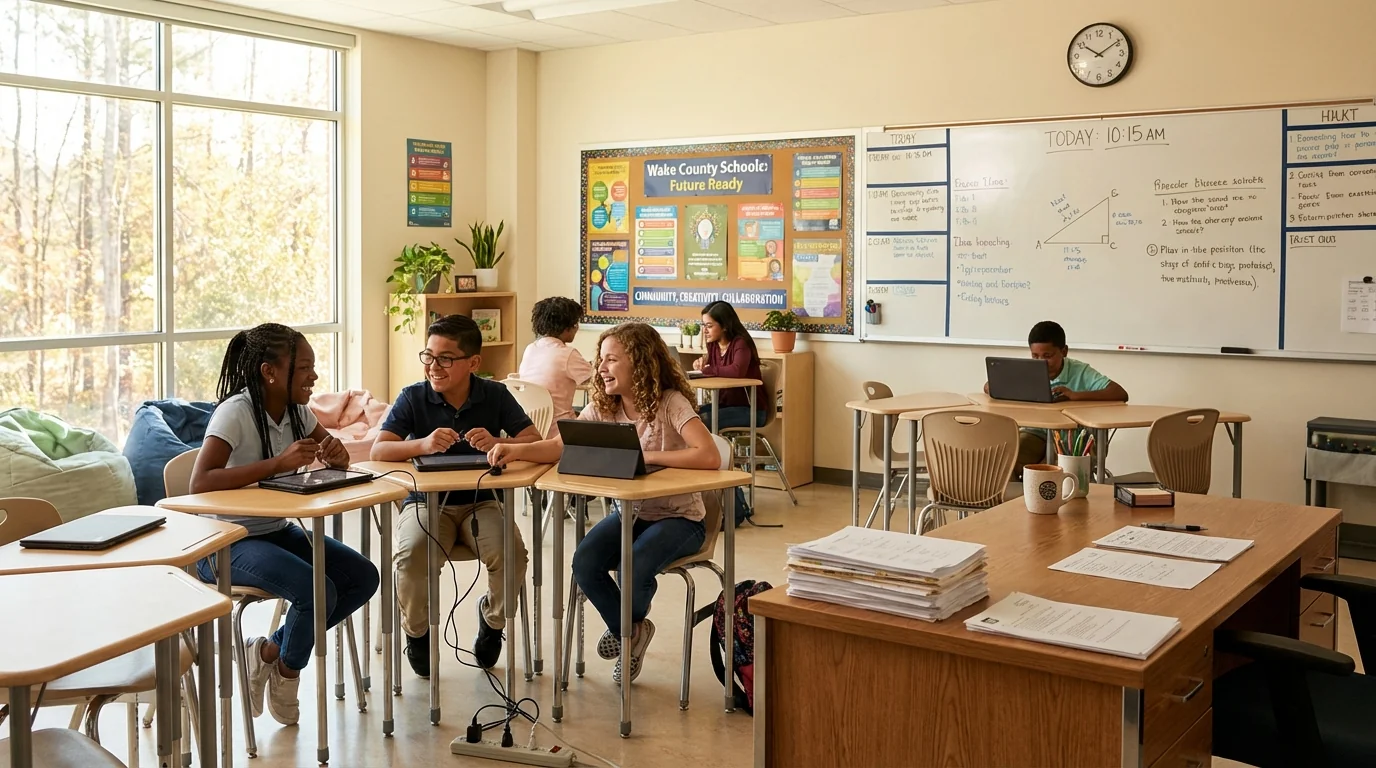
If the next day shifts online, keep learning simple and steady. Aim for short blocks of reading, math, and movement. Teachers will post clear tasks if remote learning is called. If not, use the day to review and reset.
- Read for 20 minutes, then write a short summary
- Practice math facts or one problem set
- Watch one recorded lesson or science demo
- Organize the backpack and planner for the return
Charge student devices now, check the Wi-Fi, and gather paper copies for students who learn better offline.
Jobs impact and career opportunities
School closures also reveal where the local education job market is moving. Wake County needs more people who can keep a large district running in all conditions. The following roles are in steady demand, and hiring picks up when growth and weather collide.
- Bus drivers and mechanics, CDL required for drivers
- HVAC technicians with EPA 608 or similar certification
- IT support staff for devices, networks, and remote learning
- Substitute teachers, aides, and child care staff
If you want a fast path into stable work, start with credentials that match these jobs. For drivers, the CDL permit plus paid training can get you to the wheel within weeks. For HVAC, community college programs and apprenticeships lead to high-wage roles that matter on day one. For IT, CompTIA A Plus or Google IT Support can open school help desk jobs. For classroom roles, a substitute license and experience as a teaching assistant can lead to residency programs and full licensure.
Career tip for high school students. Ask your counselor about dual enrollment in HVAC, IT, or education courses. These credits save money and time, and they fit into graduation plans. Seniors can also seek paid internships with facilities or technology teams. That experience turns into full-time offers by summer.
What needs to change to prevent the next scramble
The district can reduce future disruptions by hardening the basics. Modernize HVAC across the oldest campuses. Expand the bench of drivers and mechanics with higher starting pay and bonuses tied to safety days. Build a repeatable snow day playbook, with automatic device checkout and hotspot routes. Lock in a clear banked time policy every fall, so families know the first three weather days stay instructionally whole. Partner with local colleges to grow pipelines in HVAC, IT, and special education. These steps keep schools teaching when the weather will not cooperate.