BREAKING: Syracuse school closings trigger real-time test of new two-hour delay plan
Winter hit early and hard in Central New York. Heavy snow on December 2, followed by slick roads on December 4, pushed districts across Onondaga, Oswego, Madison, and Oneida counties to cancel or delay classes. I have confirmed that Syracuse City School District is now using its new two-hour delay pilot to keep learning going and students safe.
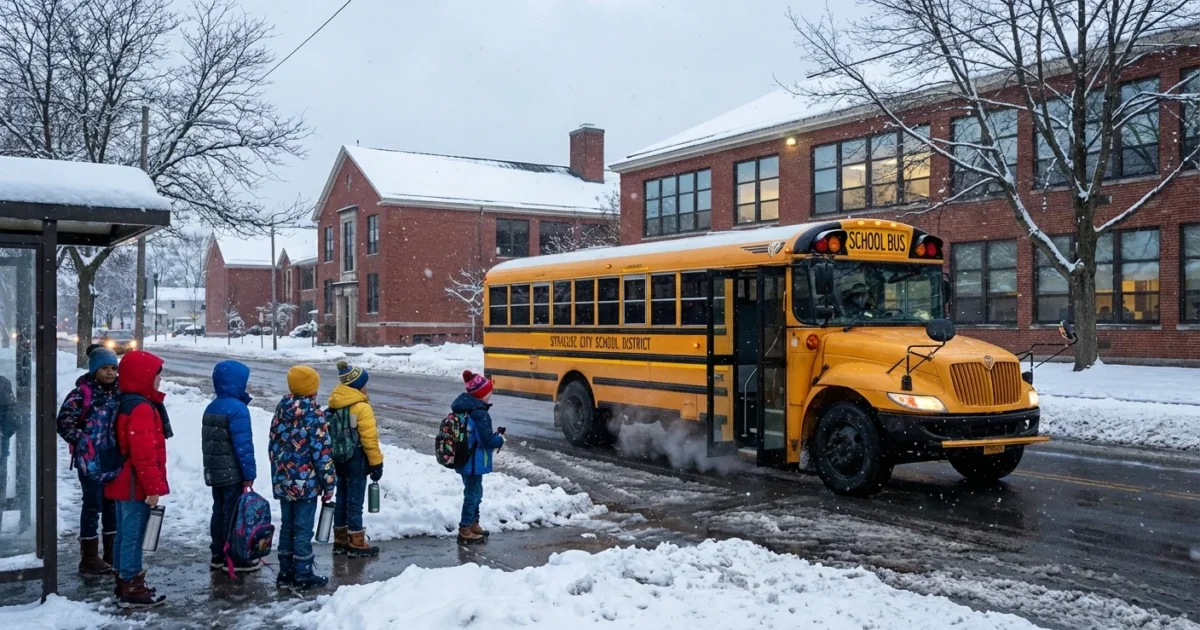
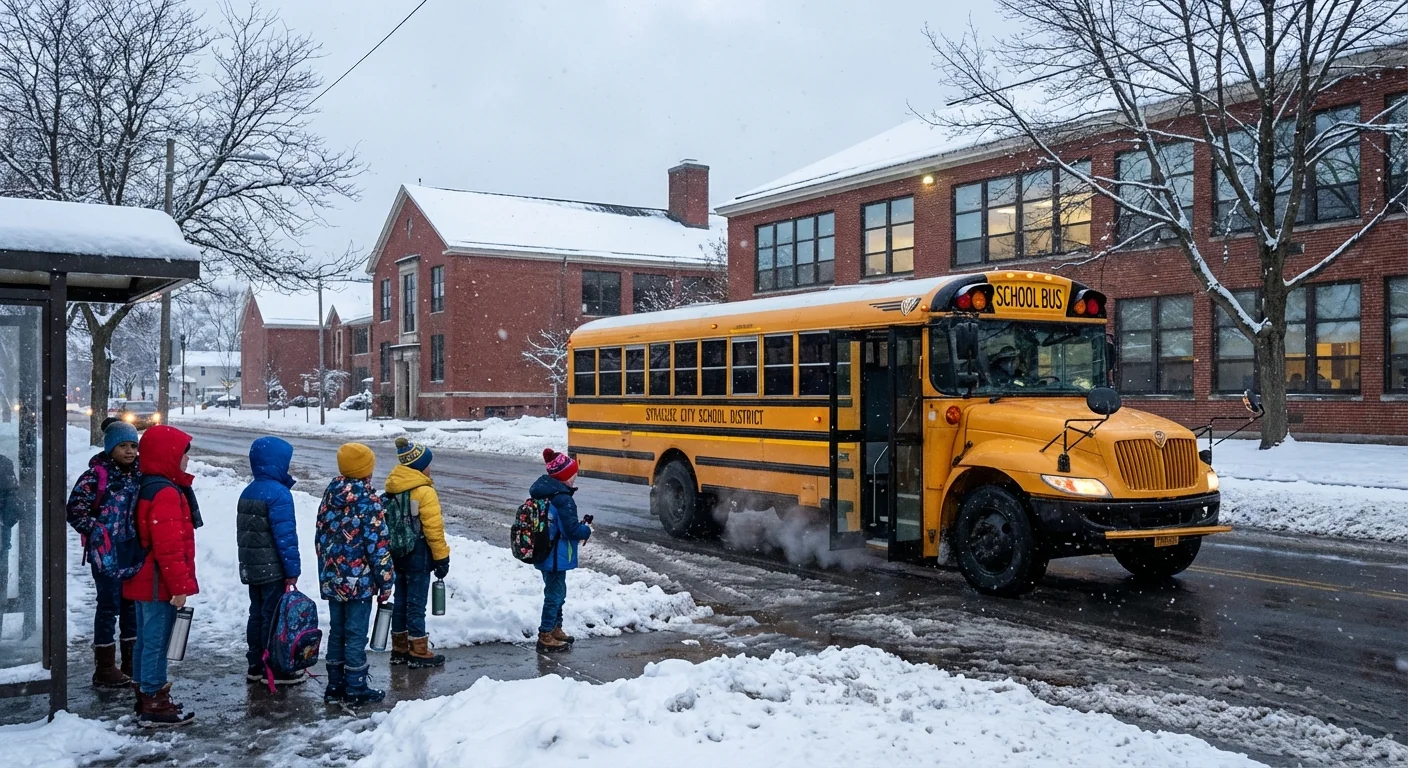
The pilot is simple in design, but bold in impact. Pre-K through 8th grade students report two hours later with adjusted bus routes. High school learning shifts online during delays, with two exceptions. Elmcrest and McCarthy at Beard students report in person on the two-hour delay schedule.
How the two-hour delay works
District officials tell me the delay call will come by early morning, based on road and sidewalk conditions. If a delay is set, elementary and middle school families should expect their usual bus stop, just two hours later. Teachers report later too, then run shorter blocks to preserve core instruction.
High school students log in from home during the delay window. Classes run on a condensed schedule that fits the shortened morning. Attendance still counts. This approach uses the remote learning systems built since 2020, including video classes and digital assignments.
Charge devices the night before, and save key files offline. Snow can knock out power or Wi-Fi without warning.
Early results, and what I am hearing
These early December storms are the first big test of the pilot, which launched November 14. Teachers tell me they are relieved to keep momentum in core subjects. Parents report less stress, since younger students still go to school and older teens stay off icy roads.
Bus dispatchers I spoke with say staggered starts reduce the risk of early morning crashes. The longer runway gives city plows time to reach side streets. High school staff also report higher first period engagement online than on past full closure days. The message is clear, fewer total shutdowns, steadier learning.
Icy sidewalks remain a hazard, even with delays. Families should plan extra time for safe walking to bus stops.
Transportation and equity check
The pilot helps drivers and dispatchers smooth out the morning. Still, equity issues need constant attention. Some teens lack strong home internet, and hotspots do not work well in every neighborhood. The district must keep loaner devices, mobile hotspots, and phone-based call-in options ready.
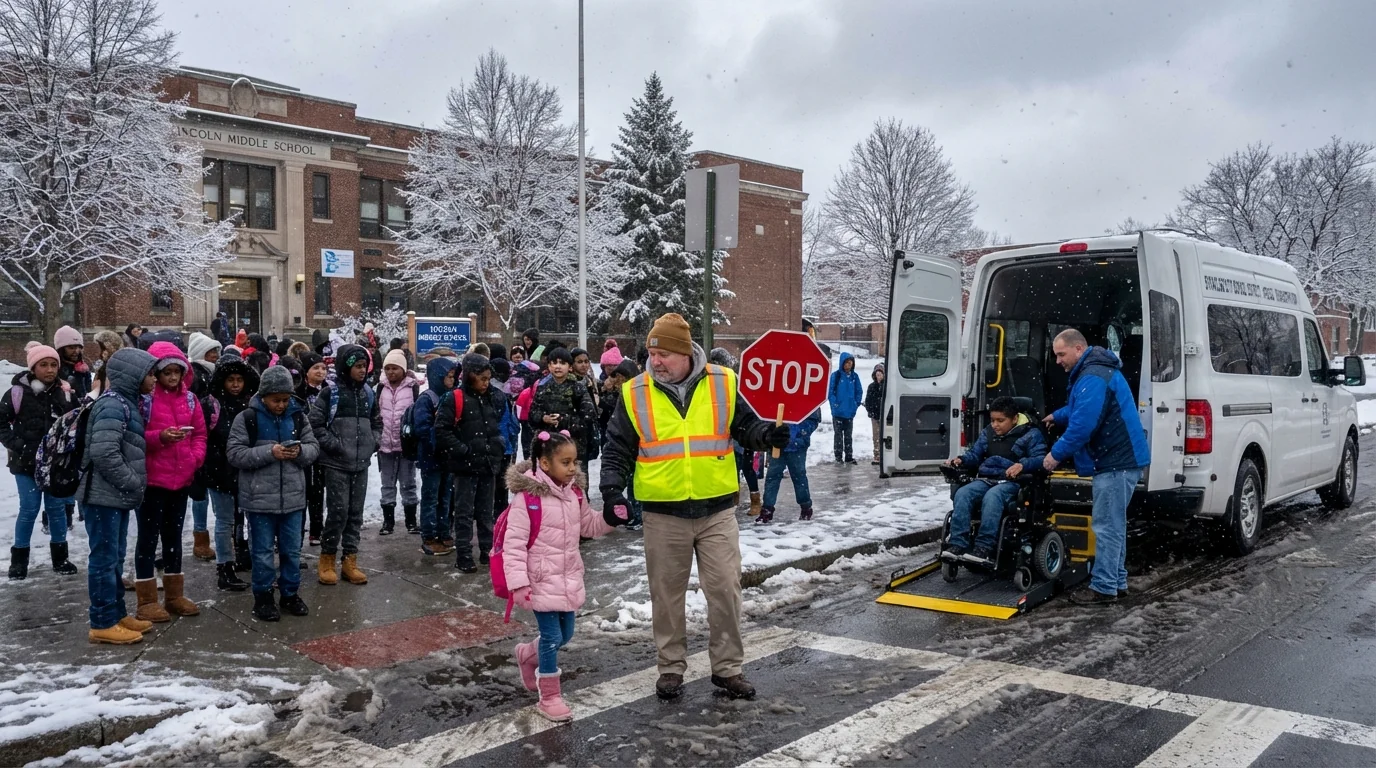
For younger students, the later start can squeeze morning services. Special education transportation needs close coordination on delay days, so no one is left waiting. Crossing guards and building staff also shift hours, which takes careful staffing. I am monitoring these choke points closely, because a plan is only as strong as its access.
What this means for work and careers
School schedules ripple through the local job market. Hourly workers, healthcare staff, and retail teams all plan around drop-off and pick-up times. A reliable delay, instead of a full closure, keeps more parents on shift. That helps employers hold coverage and reduces last-minute callouts.
The pilot also expands the need for flexible talent. Districts will lean on substitute teachers who can teach both in person and online. Bus companies will prize drivers comfortable with dynamic routes. Tech support roles for schools gain importance on weather days, which can be a path into full-time IT work. For teens, this is real-life practice in time management and remote collaboration, two skills hiring managers value in every field.
Make delay days work for learning and resumes
Snow days used to be a free pass. Delay days are different. You can still build skills while staying safe.
- Students can use the quiet morning to review notes, polish a resume, or finish a FAFSA section.
- Teachers can record short lesson overviews, then use live time for feedback and questions.
- Parents can set a 20 minute check-in block to confirm logins, due dates, and bus pickup.
- Employers can offer a one hour start buffer for parents of younger students.
A quick note for teen drivers
If streets look slushy, do not drive. Virtual attendance protects you, and it protects others on the road.
The bottom line
Syracuse is rewriting the snow day playbook in real time. The two-hour delay pilot is not perfect, but it is practical. It keeps little kids in classrooms, teens off risky roads, and learning on track. It also respects the workday, which matters for families and the regional economy. I will keep tracking outcomes as more storms arrive, and I will report where the model needs fine tuning next.