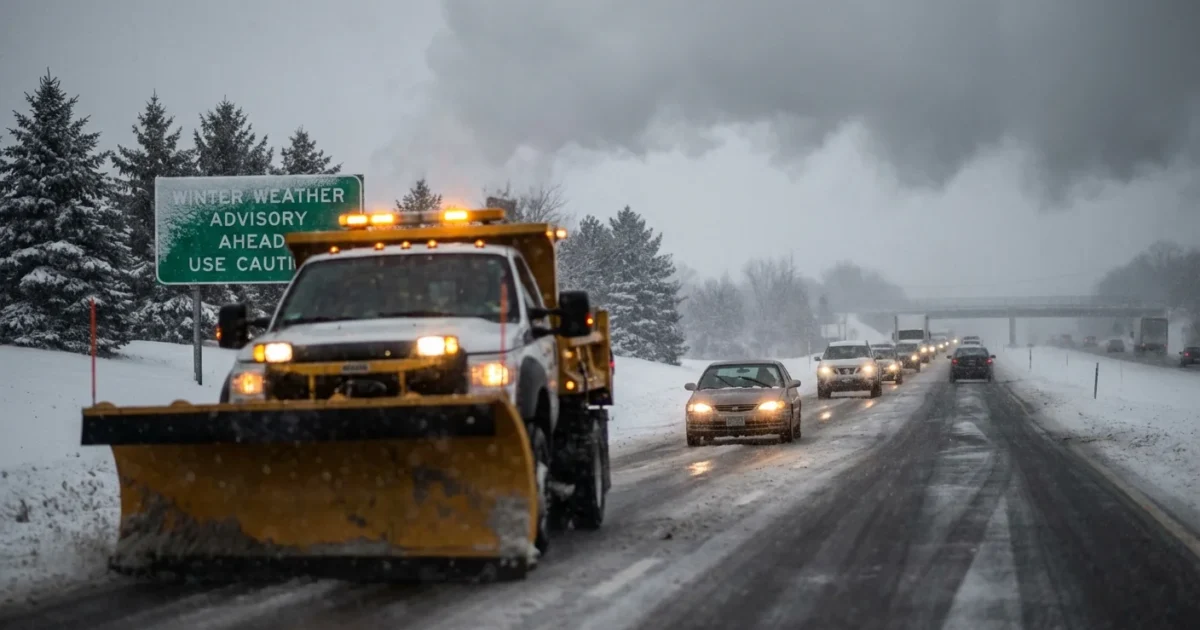
Ohio snaps into snow emergency levels as Winter Storm Fern slams the state. I am tracking conditions across dozens of counties this hour. I am seeing ice-glazed ramps, wind blown lanes, and plows fighting to keep main corridors open. Travel is difficult, even where the snow looks light. Visibility drops fast as gusts whip fresh powder back onto the road. ❄️
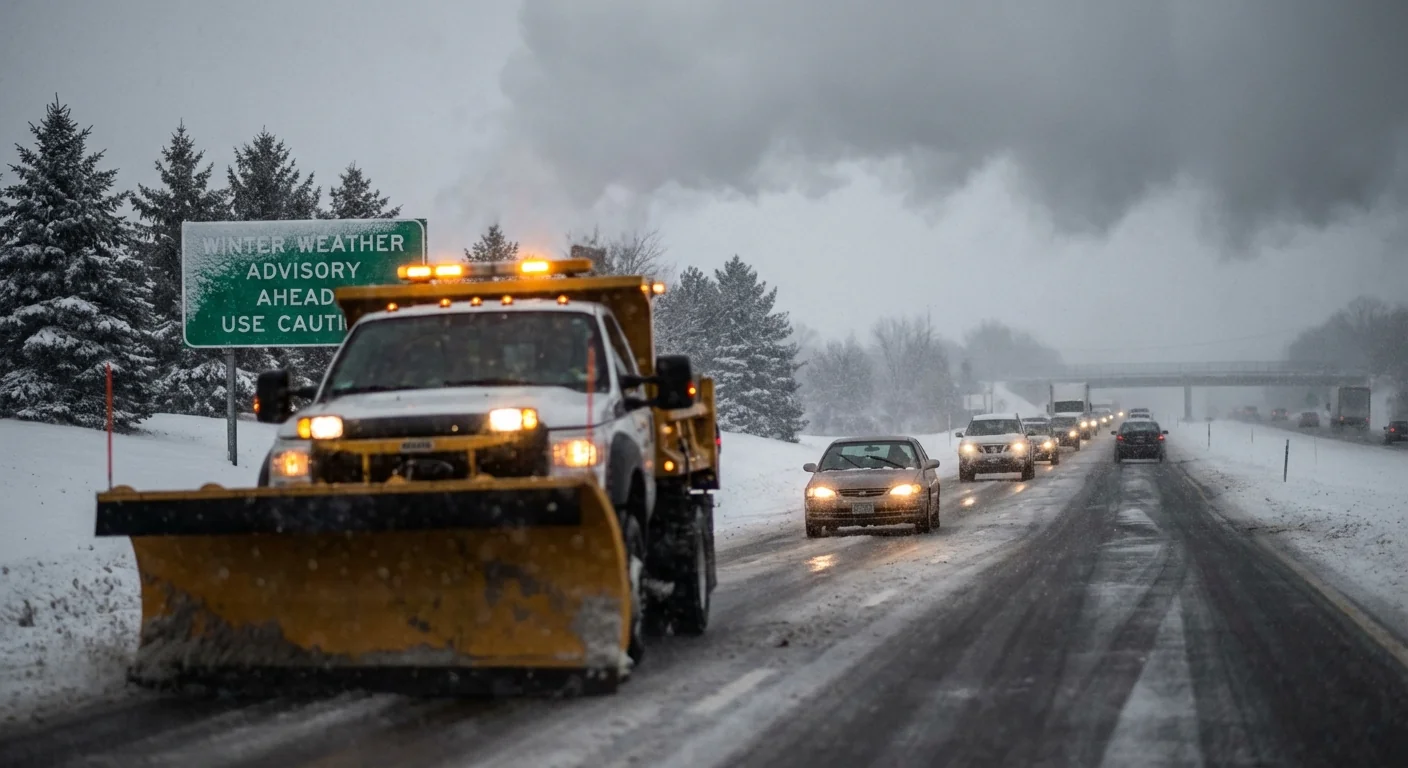
What the snow emergency levels mean right now
Ohio uses a three step system, set by county sheriffs. Levels can change quickly as bands shift and winds pick up. Here is how to read the alerts you are seeing:
- Level 1: Roads are hazardous. Drive slowly and leave extra space.
- Level 2: Only necessary travel is advised. Check with your employer.
- Level 3: Roads are closed to nonemergency travel. You may face a citation if you drive.
Level 3 means do not drive unless you are emergency personnel. Deputies can stop drivers who ignore the order.
Each county acts on its own timeline. I have confirmed new levels this morning in counties ringing Cincinnati, along with pockets north toward I 70. The sharpest impacts sit where lake effect moisture and Fern’s cold conveyor overlap. Expect uneven conditions from one county line to the next. If you must move, plan for a longer trip. Watch for black ice at bridges and exits.
Why Fern is punching above its weight
Fern is not the biggest snowmaker by depth, yet it is disruptive. The storm’s track hugs a strong temperature boundary. Air near the surface is at or just below freezing. That is prime for heavy, wet flakes that stick to pavement and freeze hard. It is also prime for road salt to work slowly.
A tight jet stream is steering narrow, intense snow bands across the state. These bands pivot, stall, then re fire. That is why your street can go from clear to covered in minutes. Behind the main shield, winds pick up. Blowing and drifting refill plowed lanes and hide slick patches. Plow crews can clear a stretch, then lose it again as Arctic air drains south.
This pattern fits our warming climate. Warmer air holds more water. When a cold shot arrives, it can wring out deep, water rich snow. The Great Lakes are running warmer than historic averages for late January. That adds moisture to passing systems. We get fewer total snow days in many winters, yet the heaviest bursts can hit harder. Planning now is not hype. It is resilience.
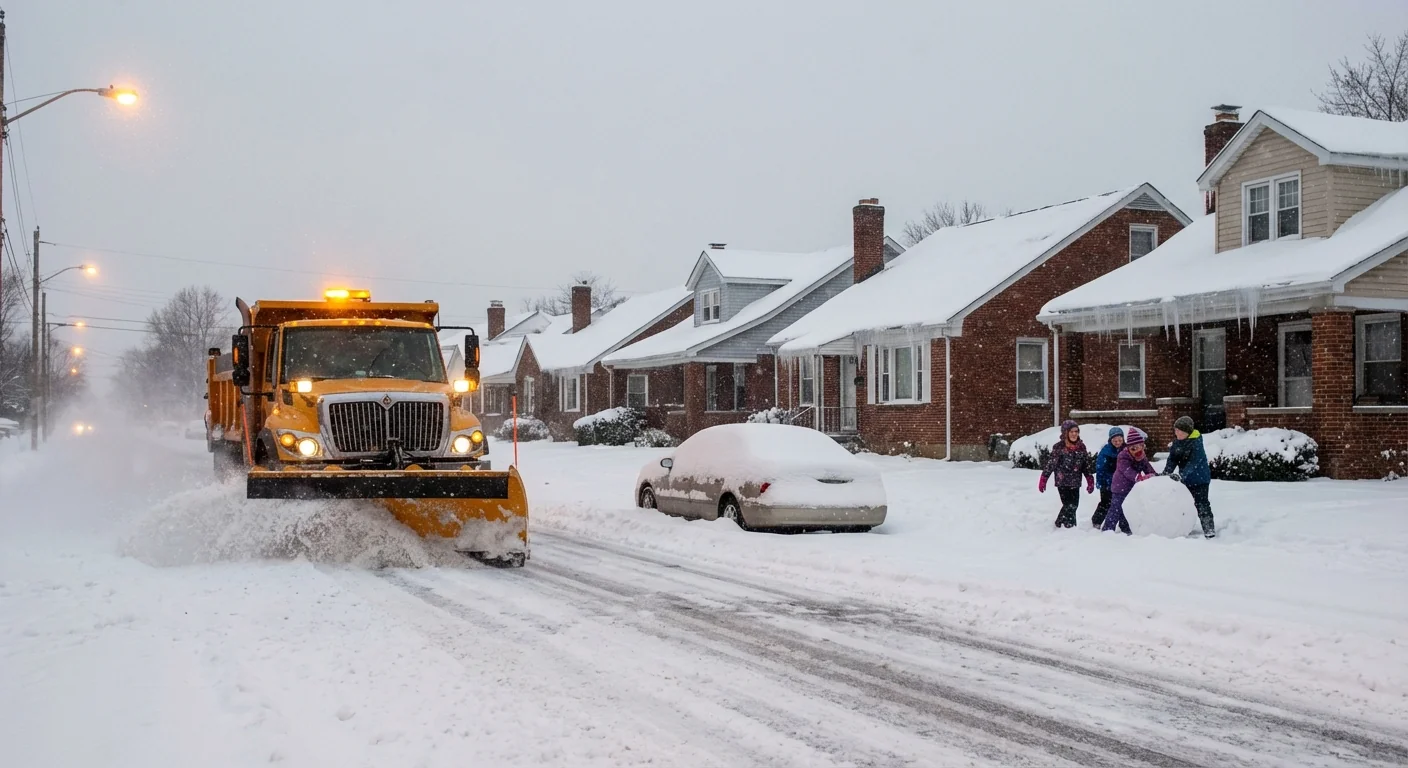
Move smart, protect crews, and protect waterways
Salt and brine help today, but overuse feeds pollution in streams come spring. That salt does not vanish. It builds up in soil and rivers. Cities across Ohio are shifting to brine pre treatment, smarter spreaders, and beet juice mixes that lower the effective melting point. That reduces the total salt load while keeping traction.
You can help. Shovel early and often to limit salt use. Use sand or kitty litter for grip on your walk. Clear storm drains so meltwater can flow. If your car idles, cut the engine while parked. Small choices add up when thousands of us make them.
If you must drive, carry this kit: phone charger, warm layers, ice scraper, small shovel, sand or kitty litter.
On the road
Give plows room. Do not pass a working plow. Treat every green light like a yield if you cannot stop safely. Keep your tank at least half full. Tires lose pressure in cold air, so check them before you roll. Slow down on ramps and overpasses. These freeze first and thaw last. 🚗
Where to get updates as levels shift
County sheriffs set and update the emergency levels. Go straight to your county sheriff’s website or official feeds for the current status. Use Ohio 511 for a live map of road conditions, closures, and camera views. NOAA Weather Radio will push warnings even if your phone battery dips. Employers, schools, and city offices will post their own closures. Do not assume your county matches the one next door.
- Check your county sheriff for level changes
- Use Ohio 511 for conditions and cameras
- Monitor alerts on your phone and radio
- If unsure, do not travel
Check on older neighbors. A cleared sidewalk and a quick call can prevent a fall or a cold related emergency.
The bottom line
Fern is a fast mover with sharp teeth. The snow emergency map is patchy today, yet the risk is statewide. Hazardous roads, quick drop visibility, and stubborn ice will last through cleanup. Respect the levels. Drive only if you must. Help crews do their work by staying off the roads and by using less salt at home. This is how we stay safe and keep Ohio’s water, air, and roads in better shape for the next storm.