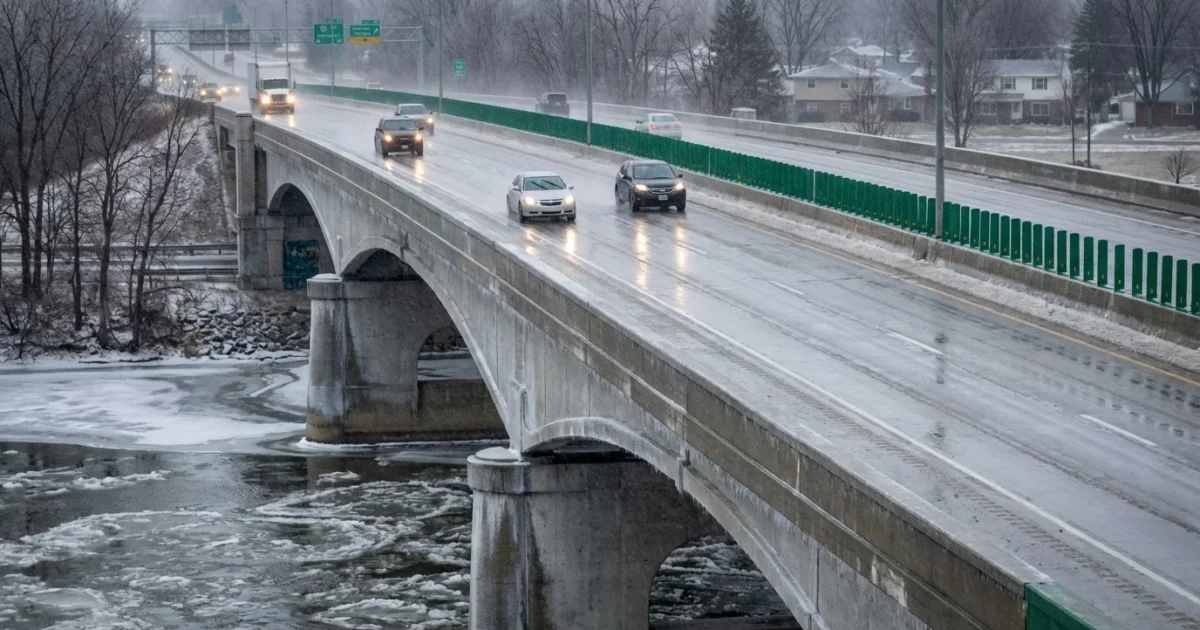
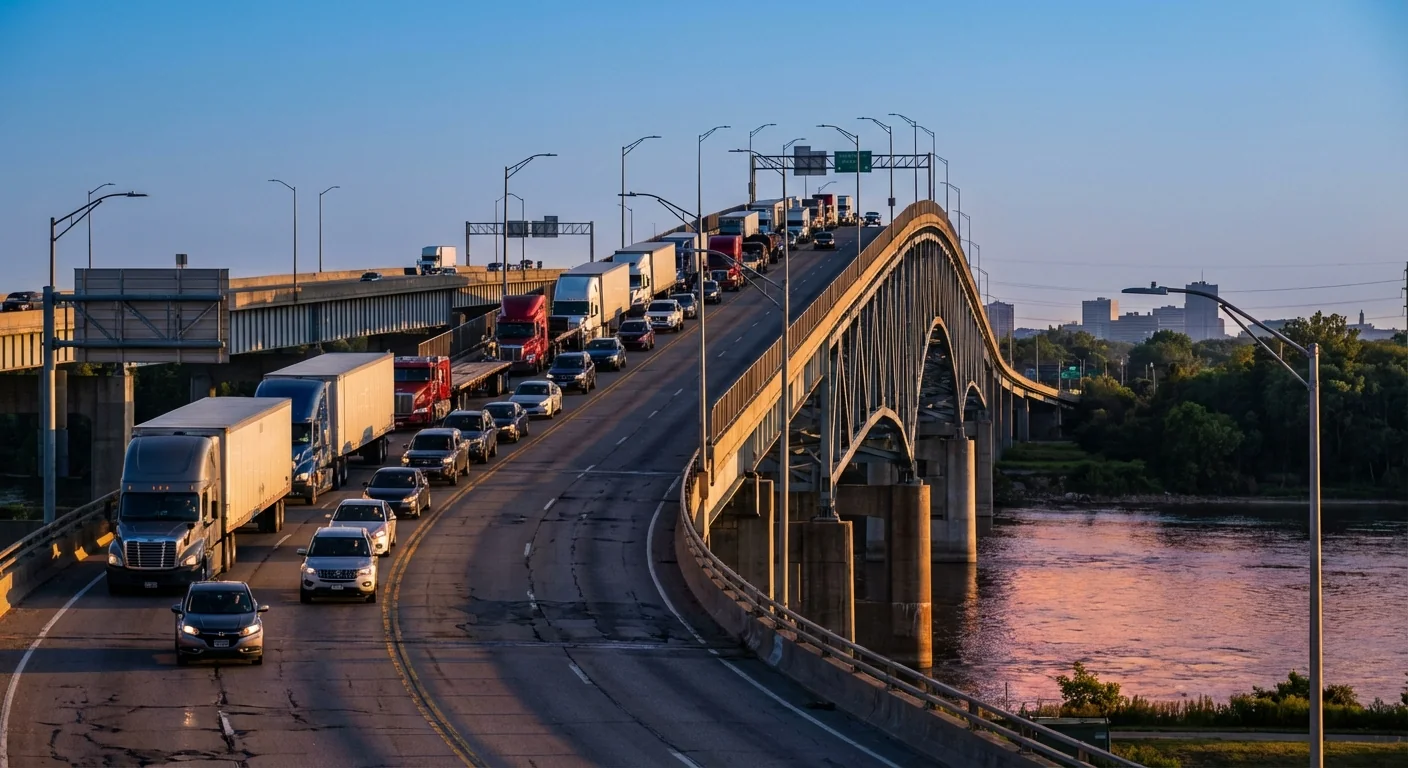
Breaking now: Freezing rain is glazing the Zilwaukee Bridge on I-75, turning the high deck slick within minutes. Travel over the Saginaw River is slowing, with patchy ice building as temperatures hover near freezing. This bridge is a critical north to south link for commuters and freight. When it ices, the ripple spreads across mid Michigan.

What is happening on the Zilwaukee Bridge
A shallow layer of warm air aloft is feeding freezing rain and sleet into the region. Supercooled droplets hit the cold bridge deck and freeze on contact. That creates a thin, glassy glaze. You cannot always see it. But you will feel it when you brake or turn.
Thunder has rumbled in parts of southeast Michigan with this round. That signal points to strong, narrow bands that can drop heavy icing in a short time. On a high bridge, that is a dangerous setup.
Icy glaze is likely on elevated bridges through tonight. Expect sudden slick spots, even after treatment.
Why bridges ice first, and faster
Bridges lose heat on all sides. Cold air wraps the deck above and below. Ground roads hold heat longer, but bridge concrete cools quickly. That is why warning signs say bridges ice before roads.
Freezing rain makes this worse. The glaze forms a smooth skin that reduces tire grip. Add light winds over the Saginaw River and the deck cools even more. One squall can turn wet into ice in seconds. That is the Zilwaukee risk window right now.
Response on the ground and travel impacts
State crews are out with salt and brine. Treating continues between waves so the first contact of ice melts fast. Expect rolling slowdowns and lane pacing at times, especially on the climb to the crest. Dynamic signs on I-75 will update speeds and hazards as conditions change.
Freight carriers are staggering loads to avoid the worst hours. A short delay here may save hours of detour later. When the Zilwaukee Bridge slows, traffic backs up into Saginaw and Bay counties. That pulls at delivery windows from Detroit to the Upper Peninsula. Airports across the state are also cycling deicing, which adds to the regional delay picture.
Safety steps for drivers and truckers
If you must cross today, plan now and move with care. Black ice can hide under a wet shine. The deck can change grip within a few car lengths.
- Reduce speed early before the rise and on the descent
- Leave at least six seconds of spacing, more for trucks
- Use gentle throttle, steering, and brake inputs only
- Avoid cruise control on any icy surface
- Check for crosswinds at the crest, watch trailer sway
Truckers, pre trip checks matter today. Confirm tire pressure, air lines, and brake temps. If you can wait out the heaviest icing band, do it.
If a skid starts
Look where you want to go. Ease off the throttle. Steer smoothly. Do not slam the brakes. Let the tires roll to regain grip. If you are in a big rig, hold your lane and correct gently to avoid a jackknife.
The bigger climate picture
This setup fits a growing winter pattern in the Great Lakes. Warmer average winters mean more days near 32 degrees. That boosts the odds of freezing rain instead of pure snow. It also adds more freeze and thaw cycles. Bridges and roads take more stress. So do drivers and logistics networks.
Climate models point to more mixed precipitation in late fall and winter for our region. That means more days like this, with thin ice layers that arrive fast. Our infrastructure, from salting plans to stormwater drains, must keep pace. High bridges like Zilwaukee will sit on the front line of that change.
What to watch next
Bands of icing will lift north through this evening as colder air nudges in. A second round is possible as the system pivots. Watch road sensors and deck temps, not just air readings. A one degree shift can decide the bridge outcome.
- Window for worst icing, late afternoon into evening
- Slow improvement overnight as colder air settles
- Another system lining up for late weekend
I will keep tracking treatment cycles, temperature trends, and any traffic pacing on I-75. If you can, push your trip outside the peak icing hours. If you must go, slow down, and give the bridge the respect it demands. The Zilwaukee Bridge carries our region. Today, we carry the responsibility to cross it safely. Stay alert and stay patient. The storm will pass, but the choices you make on the deck matter most.