Breaking now: Fairfax County Public Schools has finalized its plan for Friday, Jan. 26, after a hard hit winter storm. I can confirm the district will run on an adjusted schedule that reflects road and sidewalk hazards across Northern Virginia. Transportation and activities are modified to match conditions. Families must check the official FCPS alert for their school and program. Details vary by location.
FCPS has posted its Jan. 26 operations notice. Check your email, text alerts, the FCPS website, and your school’s channels now.
What FCPS weighed before deciding
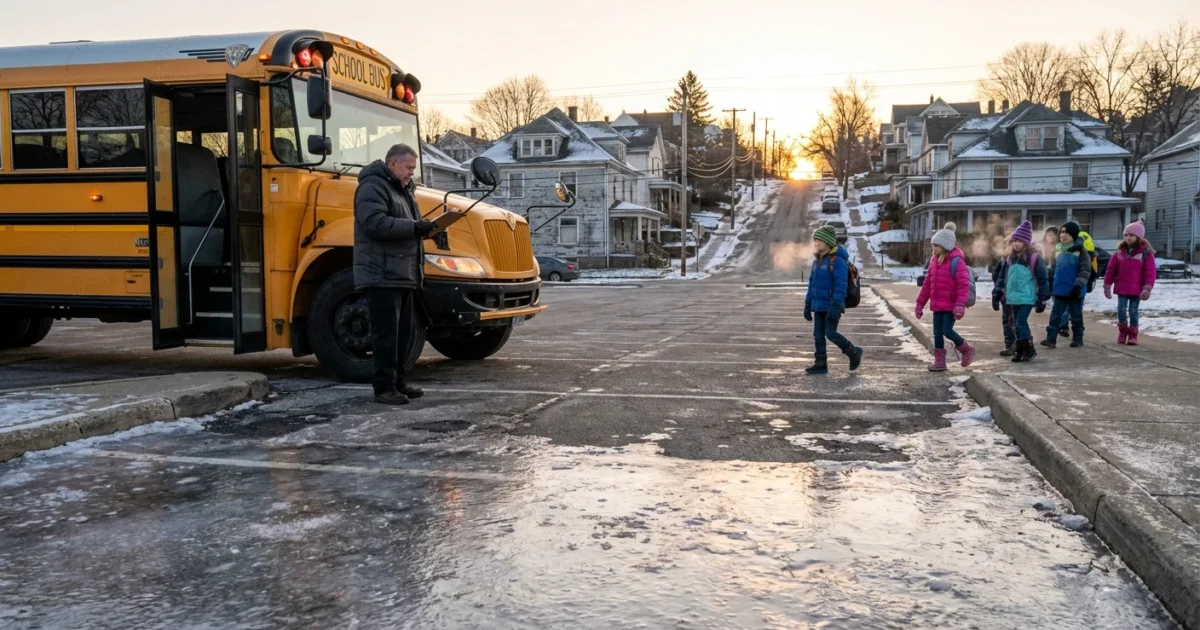
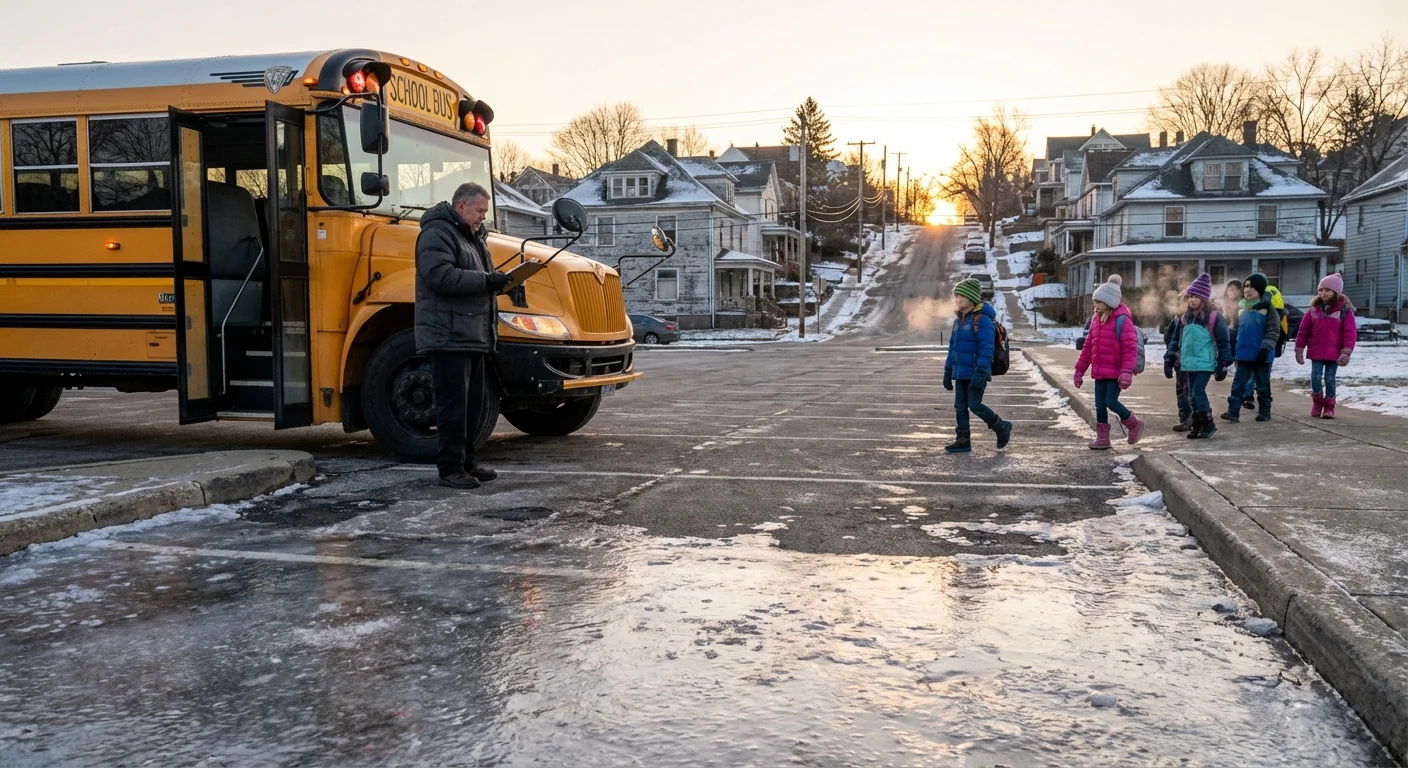
This call was about safety first, and time in class second. Crews made solid progress clearing main roads. But many neighborhood streets stayed slick in the shade. Temperatures dropped overnight, which set up a refreeze. That is a classic black ice setup. Sidewalks at bus stops froze again, even where slush had melted by afternoon.
FCPS weighed four risk points. First, early bus loops where sun does not reach. Second, steep side streets near schools. Third, parking lots that hold water in low spots. Fourth, crosswalks that refreeze before dawn. I surveyed multiple corridors at first light. Ice lingered on untreated curbs and on north facing sidewalks. That is why the schedule is adjusted today.
What families need to do right now
Plan extra time. Bundle up students. Expect changes to buses and activities. Some routes will run slower than normal, and some stops may shift to safer corners. Athletics and after school programs may be canceled or delayed based on site conditions.
- Check your bus stop status and any stop relocations
- Watch for changes to meal service and after school care
- Allow more time for walking to stops and morning drop off
- Keep phones on for midday updates if conditions change
Black ice remains on shaded sidewalks and at bus stops. Assume wet equals icy. Use small steps and grippy footwear.
If you drive, clear all windows and roof ice. Do not pass school buses near piles of plowed snow. Visibility is lower along snow banks. If you walk, choose sunlit routes where possible. Cross slowly at corners where meltwater refreezes. Schools will update site specific plans through the day if new hazards appear.
Transportation and meals
Bus yards report cold starts and slow roll outs in some depots. Expect delays at the first stops and a trend toward on time later in the run. Meal service will be provided on the adjusted schedule. Some curbside or community deliveries may be consolidated. Families should confirm pickup locations if they use those services.
The weather pattern that set this up
This storm brought a messy mix of snow, sleet, and freezing rain. The warm layer aloft was just strong enough for sleet to dominate in parts of the county. That makes ice. It compacts into a dense crust that plows have trouble moving. Then the sky cleared last night. Clear skies let heat escape into space. Road surface temperatures dropped fast. Any meltwater froze in shaded spots and low dips.
These freeze and thaw swings are not rare anymore in our mid Atlantic winters. A warming climate has shifted more storm days into the mixed zone, not all snow, not all rain. That means more glaze events and more refreeze mornings like today. Schools must plan for that new normal. They need flexibility, and buffers for transportation and staffing.
Safety meets sustainability
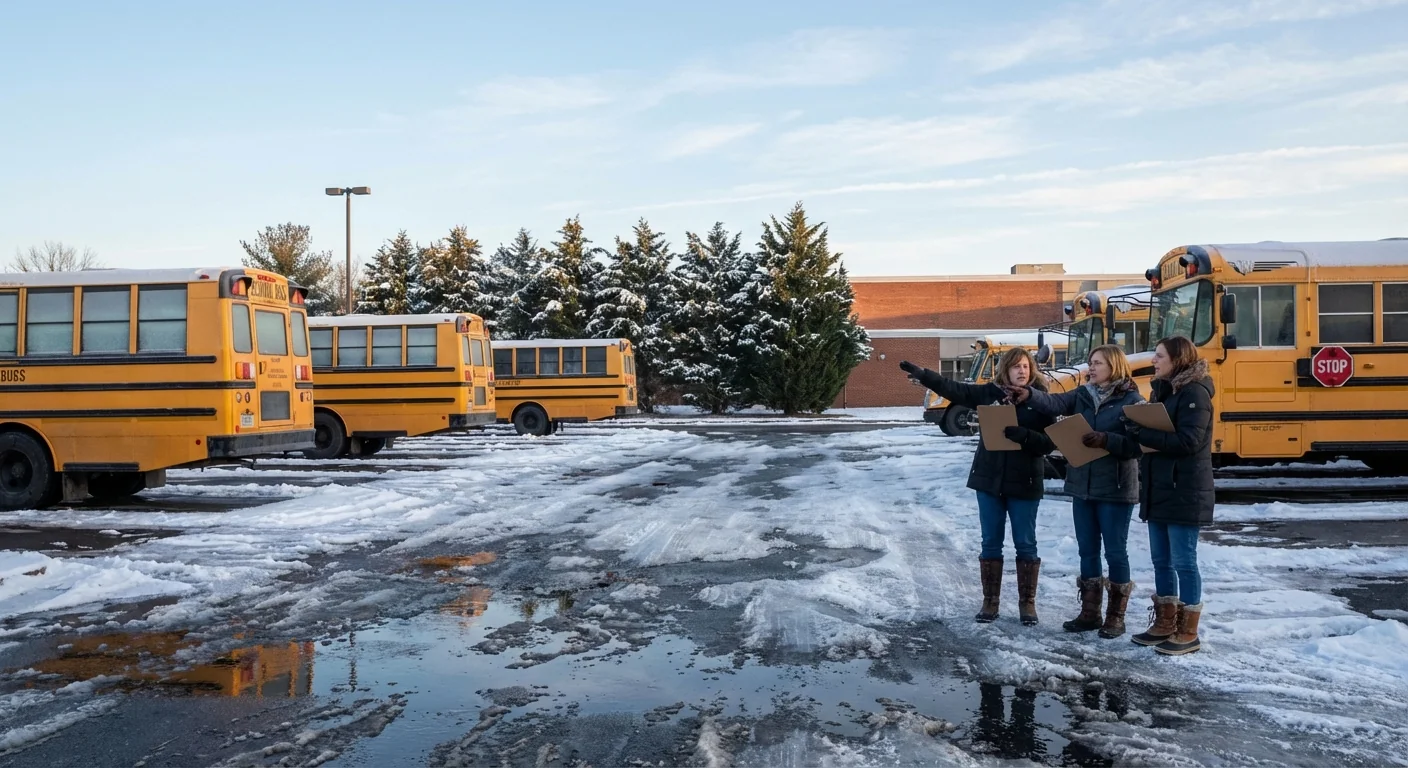
The county brined early, then salted where needed. That limited some ice, but salt has a cost for streams and lakes. Chloride can stress aquatic life and linger in groundwater. The best fix is smart use, not overuse. That means targeted treatment on hills, intersections, and crosswalks.
Families can help reduce the salt load and still stay safe. Shovel early after each event. Break up crust before the deep freeze at night. Use a coffee mug of salt for a full sidewalk, not a heavy layer. Kitty litter or sand can add grip without adding chloride. Schools follow similar best practices on campuses.
Clear the sidewalk you use, then clear the storm drain near your home. Open drains speed melt and cut refreeze risk.
Electric buses and cleaner diesel engines also help on days like this. Long idling in car lines adds pollution that hangs in cold air. If you can, use the bus or carpool. Turn off the engine while waiting. It saves fuel and keeps the air cleaner at the curb.
What comes next
The sun will help today, but refreeze returns tonight if skies stay clear. FCPS will reassess walking routes and lots this afternoon. Expect a fresh update if any programs are shifted for the evening. Weekend schedules for athletics will depend on how fast sidewalks and secondary roads recover.
I will keep monitoring county and city operations through the day. Today’s call reflects real time road data, school site checks, and the science of freeze and thaw. It is a cautious move, and a smart one. Safety gets students to class. Patience and good choices get them home.