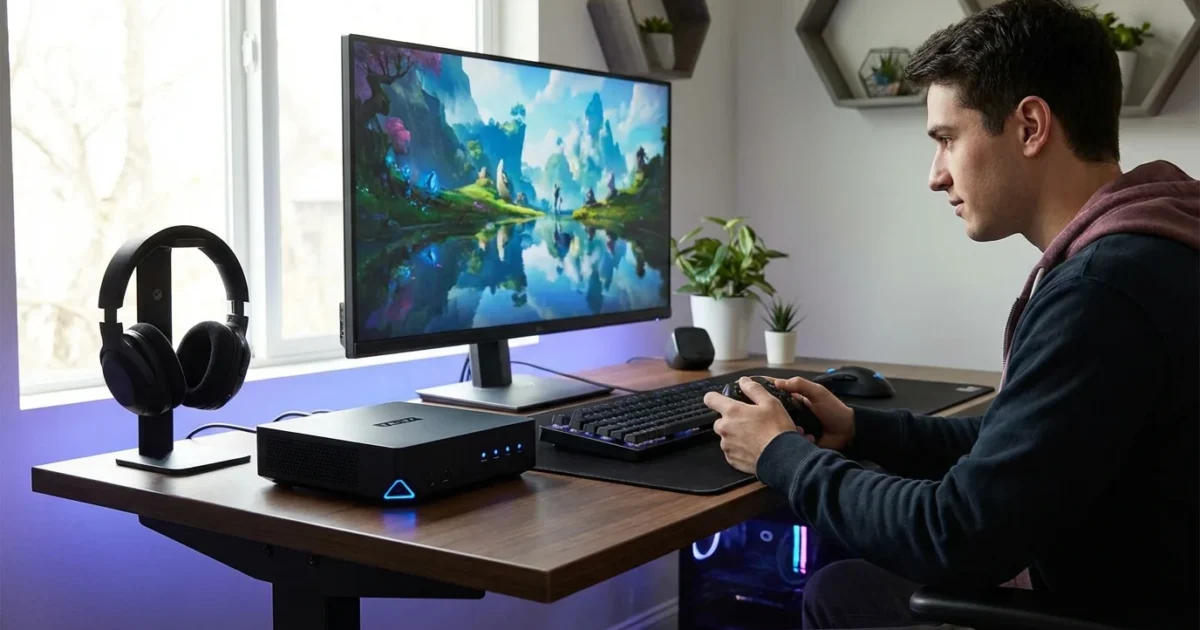
Valve is back in the living room. Today I can confirm the new Steam Machine, a compact cube PC that targets 4K gaming at 60 frames per second. It is small, fast, and built to feel like a console without giving up the soul of a PC. This is Valve’s boldest hardware move since Steam Deck, and it aims higher.
What Valve Built
The new Steam Machine is about six inches on a side. It slips beside a TV without crowding the shelf. Inside is a semi custom AMD setup, Zen 4 for the CPU and RDNA 3 for the GPU. Valve pairs that with 16 GB of fast DDR5 system memory and 8 GB of GDDR6 video memory. You can pick a 512 GB SSD or step up to 2 TB.
- Zen 4 CPU and RDNA 3 GPU, semi custom
- 16 GB DDR5 system memory, 8 GB GDDR6 VRAM
- 512 GB or 2 TB NVMe SSD options
- Compact cube design, built for the living room
Valve says this box delivers more than six times the performance of the Steam Deck. The target is clear, 4K at 60 frames with ray tracing, aided by AMD FSR upscaling. It is designed to outperform the PCs used by most Steam players today, based on Valve’s own benchmarks.
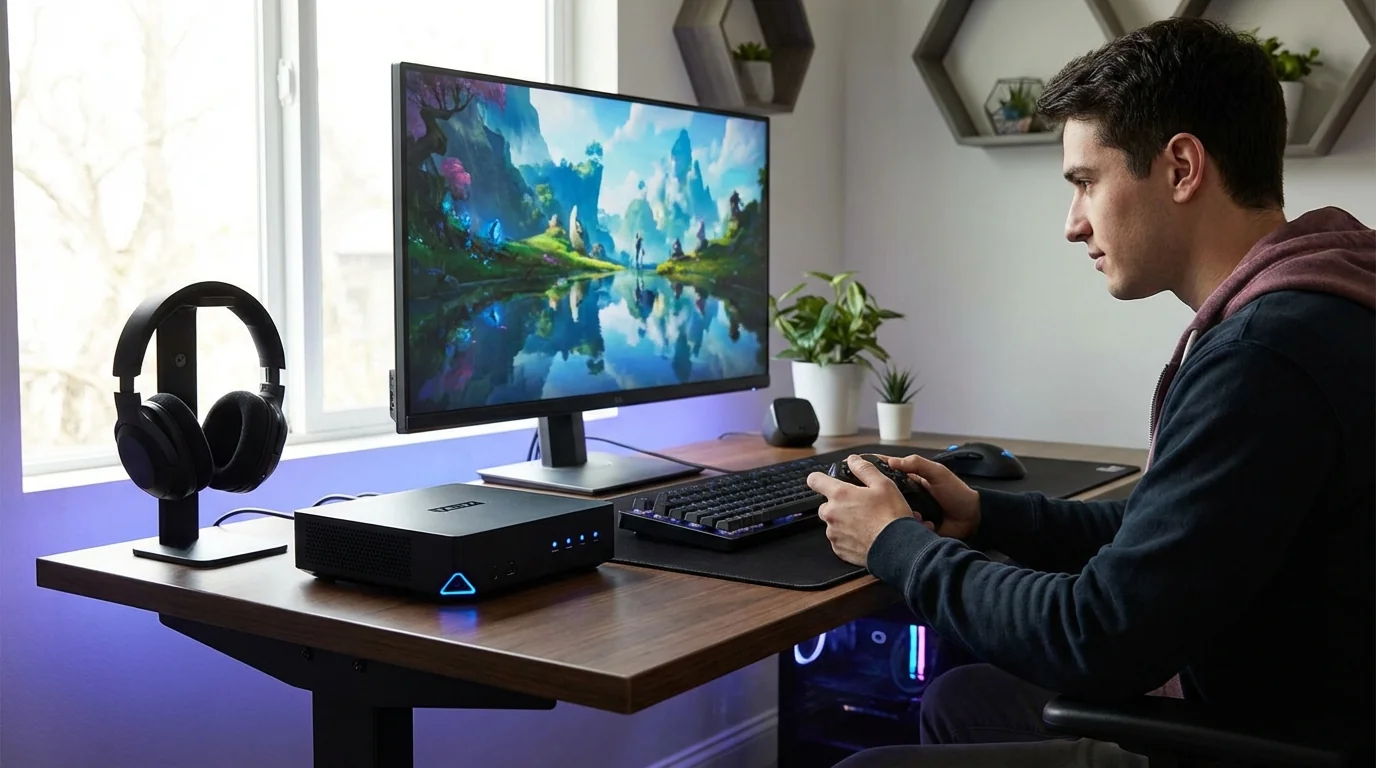
Valve is targeting 4K at 60 frames per second with ray tracing. FSR upscaling is part of the plan.
Console Simple, PC Flexible
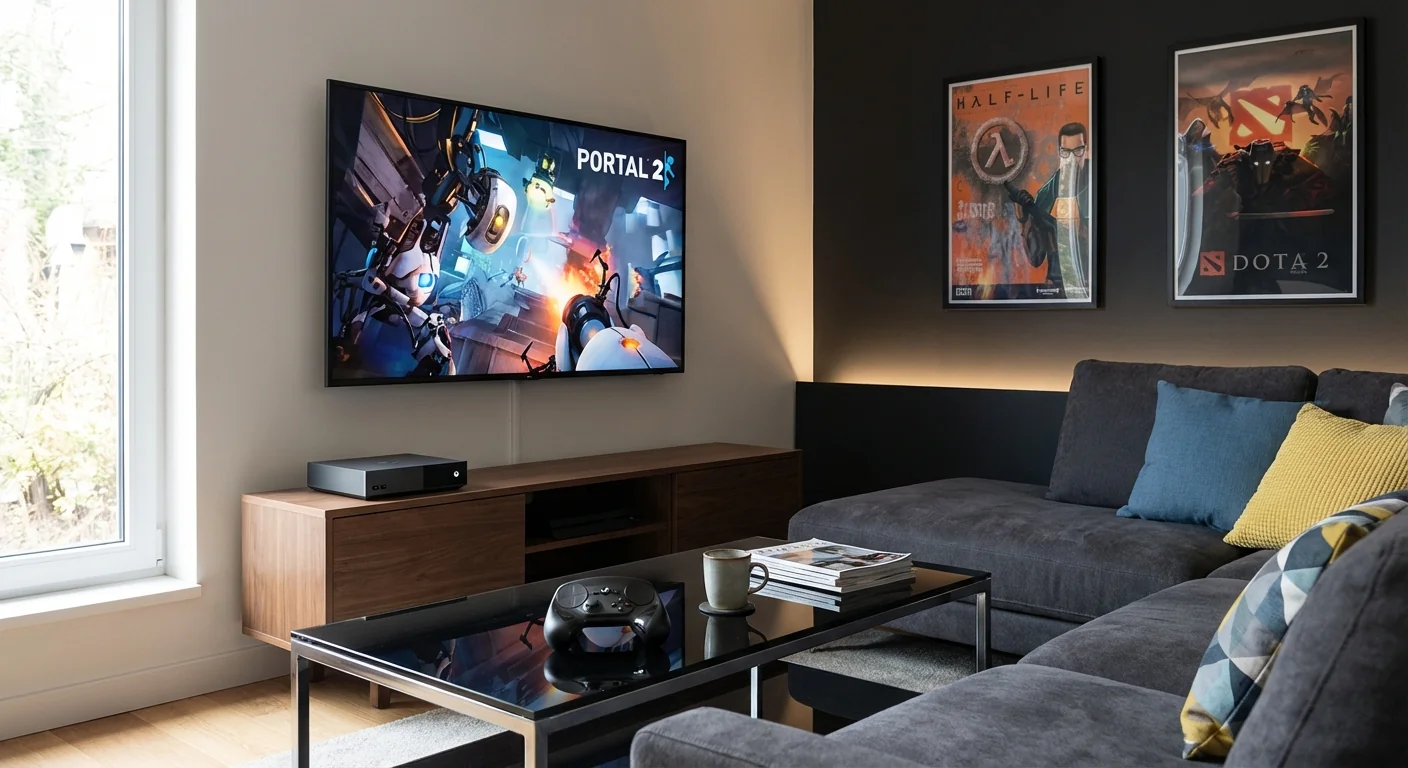
SteamOS returns to the center of the living room. Power on, sign in, and your Steam library is there. The interface is the same as Deck, tuned for a couch. A new Steam Machine Verified badge will help set expectations. If a game has the badge, it should run well on this hardware, on TV, with a controller.
Proton still does the heavy lifting for Windows games. Valve continues to improve compatibility, which matters more at 4K. The company is also exploring an Android bridge named Lepton, plus deeper support for Arm in its ecosystem. That points to a bigger plan, play anywhere, from a PC in your den to a headset on your face.
Look for the Steam Machine Verified badge before you buy. It will save time and avoid guesswork.
A Family of Devices, Not a One Off
Valve did not come alone. A refreshed Steam Controller lands with hall effect sticks for better accuracy and less drift. The layout favors trackpads for mouse like precision, and it finally feels ready for both shooters and strategy games on a couch. Valve also showed Steam Frame, a new VR headset that plugs into the same ecosystem and leans on efficient mobile silicon.
This is a first party stack again. Steam Machine under the TV, Steam Controller in hand, Steam Frame for VR. Add SteamOS and Proton, and Valve controls the whole journey from store to screen. That was the idea a decade ago. Now the hardware and software are ready to meet in the middle.
Price, Partners, and the Stakes
Valve has not named a price. The company is aiming for Q1 2026, with preorder details coming early in the year. If the base model lands near the price of a console, it changes the game. A quiet, easy box that outperforms most gaming PCs is a real threat to both mid range towers and living room consoles.
The bigger play, let third parties build SteamOS boxes again, this time with a clear spec target and a Verified program. If Valve opens the door, we could see small makers and big brands ship Steam Machine class systems. That would give PC gaming a true console style lane, and it would give developers a stable target.
4K at 60 with ray tracing will vary by game. Expect a mix of settings and FSR modes to hit that target.
What This Means for Players
For users, this is freedom with fewer headaches. You get your Steam library, couch first menus, and the option to plug in a mouse or a wheel when you want. For parents or new PC players, it looks and feels like a console. For PC veterans, it is a small box that does not compromise performance. The promise is simple, no drivers to chase, no weird launchers to tame, just sit down and play.