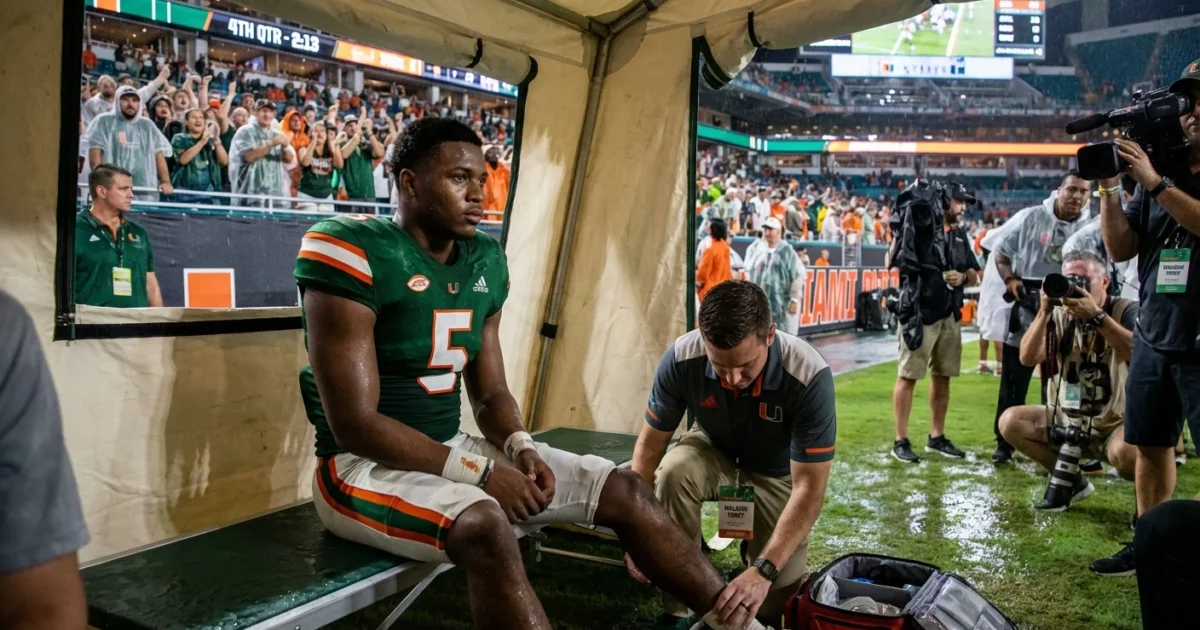
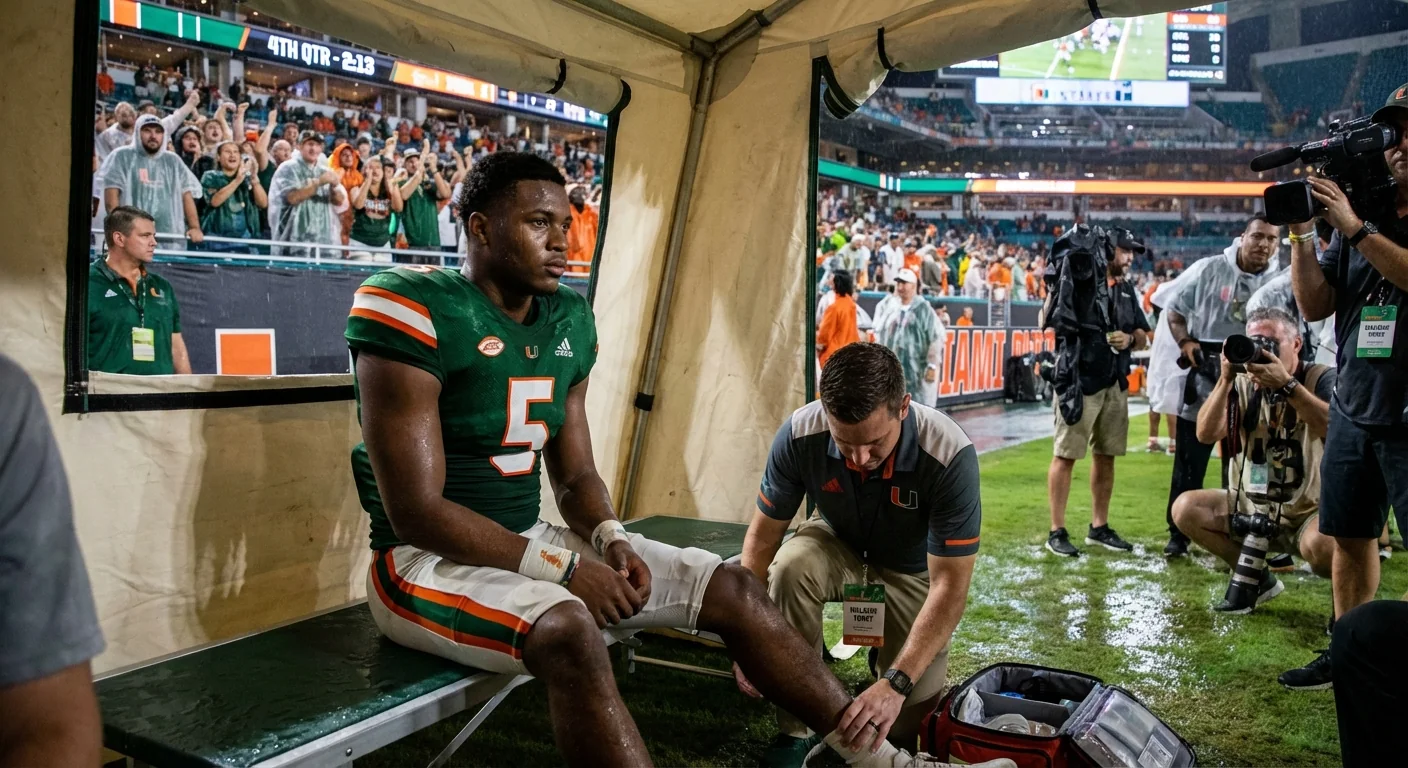
Miami’s College Football Playoff run just absorbed a gut punch. Wide receiver Malachi Toney left for the injury tent after a high hit in the Fiesta Bowl, and officials reviewed the contact for targeting. They ruled no foul. The stadium held its breath. Then the game snapped back to life with a decision that will echo well beyond tonight.
What happened on the field
Toney took a short throw in space and turned upfield. A defender closed fast and struck high, catching Toney near the head and neck. The hit jarred the ball loose momentarily, and Miami’s sideline surged toward the spot. Toney stayed down, then walked off with trainers and entered the tent for evaluation.
Officials stopped play for a targeting review. It was a long look. The call came back no targeting, and no foul. Miami players spread their arms in disbelief. Coaches asked for clarity. The game resumed, but the temperature had changed.
Miami has not issued an update on Toney as of this writing. His status is a swing factor for the Hurricanes offense, both in spacing and tempo. He stretches the field and wins on quick-game timing. Losing him alters the plan.
What targeting is supposed to be
The college rule is clear in writing, even if it often feels cloudy in the moment. Targeting is about safety. It punishes high, dangerous contact and the use of the helmet as a weapon. It also protects players who cannot defend themselves.
Here are the core triggers officials look for:
- Forcible contact to the head or neck of a defenseless player
- Launching or upward thrust into a tackle
- Leading with the crown of the helmet
- A blow that shows no attempt to wrap and tackle
To eject a player for targeting, the replay must confirm all elements. If it is not clear, the foul is not supposed to stand. That standard sounds simple. Under playoff pressure, with inches and angles deciding seasons, it becomes a minefield.
Coaches teach strike zone, eye up, and wrap. Lower the target, see what you hit, and take the head out of the tackle.
A ruling that creates more questions
On this play, the hit was high. Toney was exposed after the catch. That puts the spotlight on the defenseless-player protection, and whether the contact rose to “forcible” and to the head or neck. The replay booth said no foul. The explanation did not settle the issue.
On the broadcast, ESPN rules analyst Bill LeMonnier offered shifting explanations during the review. At first, it sounded like posture and launch might drive the decision. Later, the focus moved to the point of contact. That wobble added confusion for coaches and fans trying to track the standard in real time.
In a CFP setting, mixed messaging is costly. Players need predictable rules to play fast and safe. Coaches need to know how the game will be called. Tonight, the process left both groups guessing.
Targeting brings automatic ejection and can impact the next half. The stakes are massive. Consistent enforcement is not optional, it is essential.
[IMAGE_2]
How it affects Miami and the game
Toney is a chain-mover and a stressor on coverage. His absence shifts structure across the board. Expect Miami to lean on tight ends in the seams and backs in the flat. Expect more motion to create clean releases. If Toney returns, watch his snap count and usage. Miami may protect him with routes that avoid heavy traffic.
For the quarterback, trust and timing matter. Toney is often the first read on quick cuts and option routes. Without him, throws may come a tick later, and windows may shrink. That can tilt third downs and red zone calls.
- If Toney sits, Miami must:
- Speed up perimeter screens to offset pressure
- Use bunch sets to free replacements off the line
- Emphasize tempo to prevent defensive substitutions
- Lean on play action to manufacture shot plays
The bigger picture for CFP officiating
This sequence is a case study. The rule exists to protect players like Toney in vulnerable moments. But the enforcement still swings from crew to crew and game to game. Frames and freeze shots can twist a bang-bang play into a debate that feels academic, not practical.
College football has invested in replay centers, communication, and training. Yet the gap remains. The sport needs a cleaner checklist on air and on the field. It needs faster, clearer explanations. It may need an intermediate personal foul option for high hits without the burden of targeting’s ejection. Protect players. Penalize dangerous technique. Keep the game moving.
Bottom line
Miami is fighting for a title shot. Malachi Toney is a key part of that fight. Tonight’s hit and the no-call put player safety and officiating under the brightest lights. We will continue to monitor Toney’s status from the sideline. The debate will rage, but the mission should not change. Teach safe contact. Call it with conviction. And never lose sight of the player under the helmet. ⚡