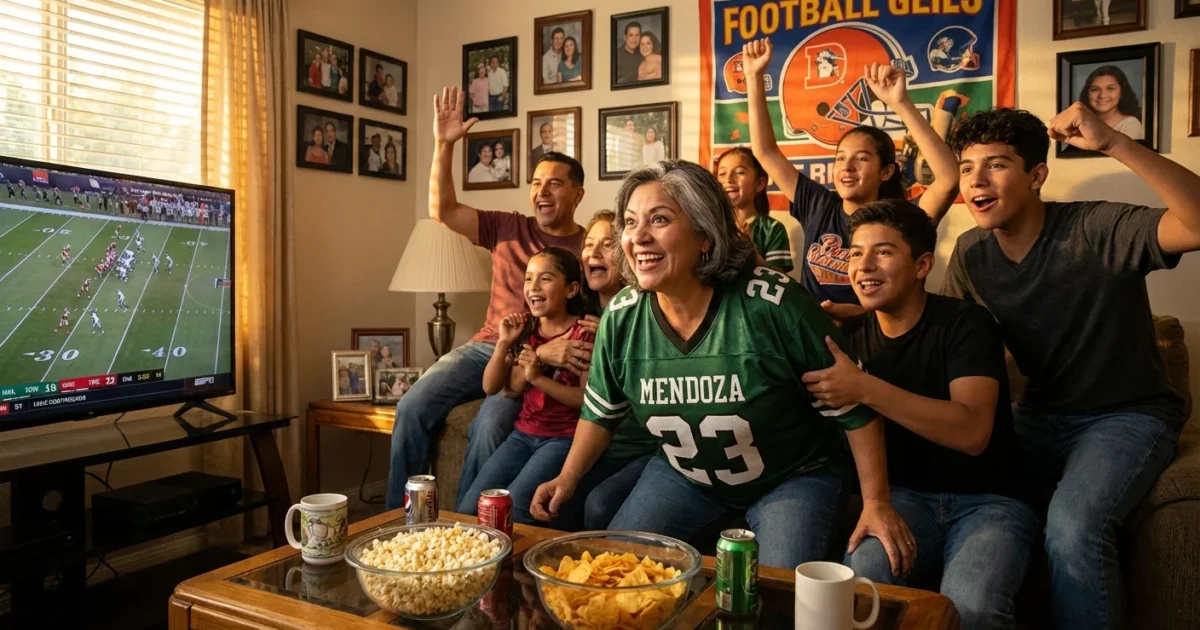
BREAKING: Fernando Mendoza’s aunt steals the Peach Bowl spotlight, and the story behind it runs deeper than a few camera shots. The quarterback’s family, already known around the program, became part of the night’s heartbeat. The cameras kept finding his aunt. Fans saw every clenched fist, every nervous smile, every breath held before the snap. 📸
The Cutaway That Took Over The Broadcast
Early in the first half, the production truck made a choice. As Mendoza settled in under the lights, they returned again and again to his aunt in the stands. Her reactions matched the rhythm of the game. A big third down, a zoom to her eyes. A touchdown, a roar from the section around her.
That is not an accident. Big games build storylines in real time. Family reaction shots give viewers an anchor. They pull the human side of football into millions of living rooms. Last night, the aunt became that anchor, a steady beat inside a loud bowl game.
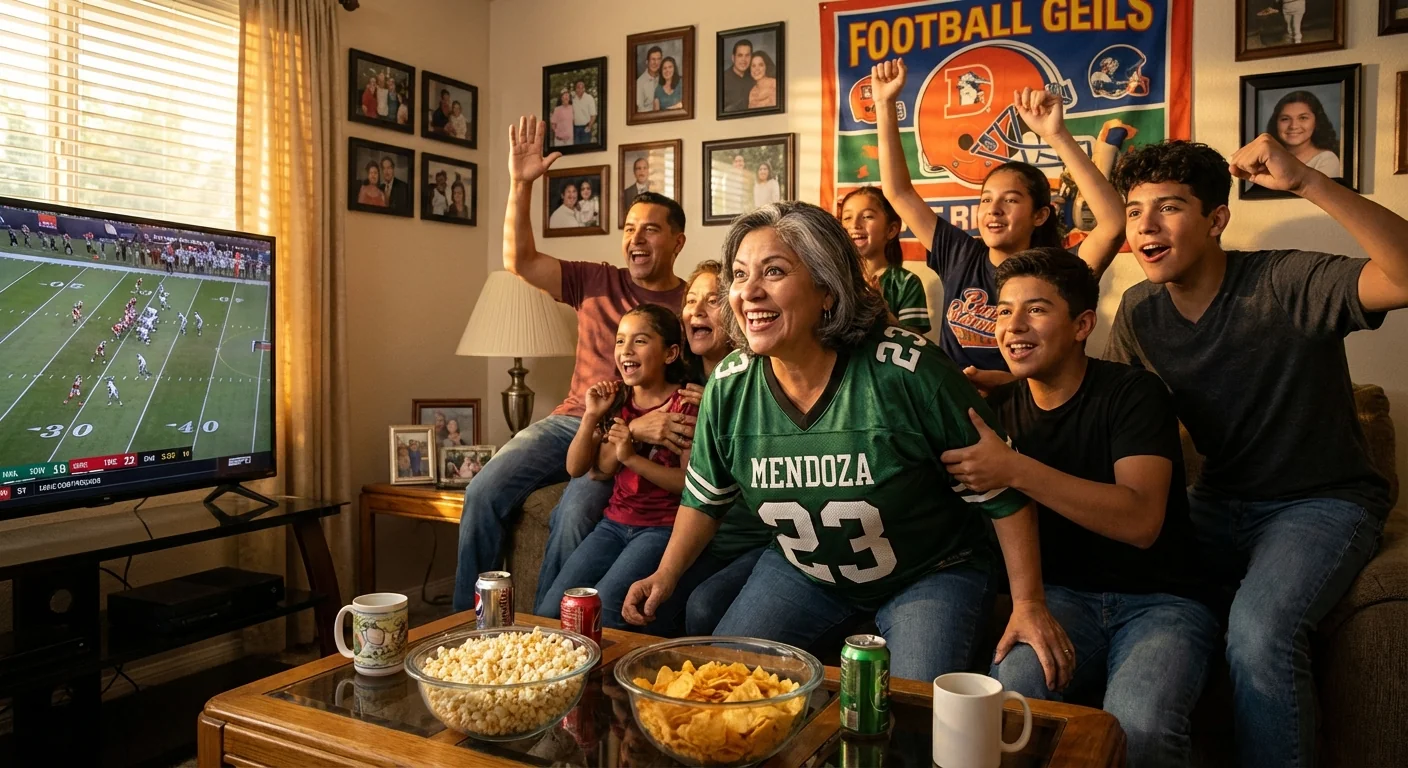
Telecasts rely on reaction shots to frame momentum, highlight pressure, and humanize the stakes on the field.
What It Says About Modern Sports TV
This is the new age of the big game broadcast. Production teams do not just track the ball. They track emotion. They scan the student section, the sideline, and yes, the family row. The cutaways create a through line, one that links a quarterback’s poise to a parent’s tears or, in this case, an aunt’s raw nerves.
There is a balance to strike. Too many cutaways can feel like a bit. But when the game tightens and the clock shrinks, those moments can heighten tension. They let fans see the same pressure that a quarterback feels in the pocket.
- Family shots give viewers a personal stakes line.
- They build a game’s narrative, from kickoff to final whistle.
- They can overshadow the action if overused.
- They also remind us that the players are sons, nephews, and grandkids.
Mendoza’s Night, And The Family Behind Him
Lost in the buzz around the stands, Mendoza did what matters most. He kept his composure. He set protections, worked through his reads, and fed the ball to his playmakers. He used tempo to control the defense and got the ball out fast when the rush heated up. When he had to, he took the safe throw, then waited for his shot downfield. That is veteran stuff for a college quarterback. 🏈
His family story tracks with that grit. His mother, Elsa, has battled multiple sclerosis, a fight that has shaped the way the family shows up. It explains the presence, the unity, and the pride you saw each time the camera found their section. Mendoza often plays with that on his shoulders, not as a burden, but as a source of strength.
Elsa’s MS journey is part of the quarterback’s identity, a quiet force behind his preparation and resolve.
His father, Fernando Sr., remains a steady figure. The aunt’s star turn only widened the lens. This is a football family, fully invested, living every snap with him.
Between The Lines, What Coaches Will See On Tape
Strip away the broadcast sizzle, and the tape tells a clean story. Mendoza showed pocket balance, a quick trigger on hitches and slants, and enough touch to hit corners and seams. He managed the middle of the field, which is often where bowl games are won. His eyes did not betray him, even when the defense rotated late.
Coaches will highlight three points in the film room. First, his command of pre snap looks. Second, his timing on intermediate routes, especially off play action. Third, his calm after a negative play. He reset, moved the chains, and kept the offense on schedule. That is how you protect your defense and keep momentum.
The Cultural Ripple
The aunt became more than a camera cutaway. She became a symbol of why people love college football. College games are intimate. Families sit inside the broadcast, and the sport invites them in. It is a shared experience, full of nerves, hope, and joy that spills from the row into the huddle.
The Bottom Line
The “Fernando Mendoza aunt” moment did exactly what big games often do. It fused the action with a human story. It made the quarterback’s world feel close, not distant. For Mendoza, the legacy grows beyond throws and reads. It now includes a family section that rose with him, frame by frame, under the bowl lights.
As the season turns and the tape gets studied, his play stands up. The family presence stands with it. The Peach Bowl showed us the sport at full volume, the game within the game, and a quarterback who handled both, the pressure and the spotlight, with the same calm feet.