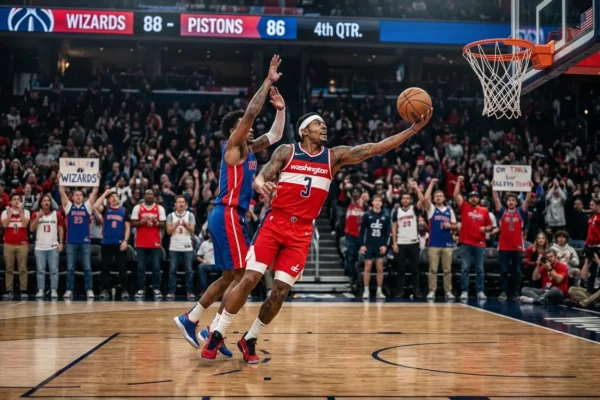
Breaking: Phoenix took a halftime lead over Houston in a first half that kept stopping and starting. The story is the scoreboard and the clock. A malfunction in the second quarter forced multiple halts, cooled runs, and scrambled rotations. It changed the feel of the game and the rhythm on both ends. The Suns handled the chop best early. The Rockets left points on the floor in the confusion.
Halftime update. Phoenix leads after a stop start half that featured a clock malfunction and long delays.
Clock Stoppage Tilts the Tempo
The pace was crisp to start. Then the clock froze, and everything got weird. Officials sent players back to the benches. The arena crew worked the issue. Warmups restarted twice. It was the kind of break that takes the air out of a run.
Houston wanted to push in transition. Those breaks cut that edge. Missed chances to flow off rebounds turned into set defense. Phoenix settled in. They leaned on half court actions, simple reads, and star shotmaking. That was the difference before the break and right after it.
You could see it in body language. The Rockets were eager. The Suns were calm. ⏱️
Rotations Under a Microscope
When a game stops like this, coaches rethink their sub patterns. They protect rhythm, not just rest. Phoenix kept a starter on the floor at all times to steady the offense. That guided the shot profile toward clean mid range looks and corner threes. It also kept turnovers low.
Houston tried a longer bench look to regain energy. The idea was to ramp up ball pressure and find easy buckets. The result was mixed. Pressure created a couple of steals, but fouls piled up. That second unit stretch never fully found a groove because stoppages kept breaking momentum.
Suns stars doing star things
Kevin Durant controlled space. He got to his spots and punished single coverage. Devin Booker pressured the rim and drew help. That opened skip passes and second chance shots. Phoenix did not rush. They trusted the clock, even when it did not cooperate. Bradley Beal’s touches came in pockets, but his gravity mattered. When he screens, defenses switch, and that bends the floor.
Rockets’ engine searching for a gear
Alperen Sengun worked the elbow and short roll. His reads were sharp, but shooters went cold during the longest pause. Jalen Green attacked gaps, yet the finishing timing was off. Fred VanVleet calmed the group, called sets, and tried to hunt mismatches. Houston needs his hand on the wheel in the third.
[IMAGE_1]
Shot Quality, Fouls, and Flow
The whistle tightened during the reset stretches. That helped Phoenix. They were in the bonus and pulled extra points at the line. Houston’s drives met a wall. Straight line attacks turned into kickouts and late clock heaves.
Phoenix found value in simple actions. Empty corner pick and roll. Spain twists with a ghost screen. Slip, swing, and go. Those looks produce clean mid range jumpers for Durant and paint touches for Booker. When the clock issues lingered, the Suns went even simpler. Clear a side, two man game, trust the star.
Houston must stick to their identity. Touch the paint. Let Sengun playmaker duties unlock cutters. Live with the first miss and crash the glass. They cannot let the game become a free throw contest that favors Phoenix’s vets.
Watch the early third quarter whistle. If fouls stack on Houston’s wings, their switching scheme loses bite.
Betting Angle Right Now
Live totals dipped during the long delays. Pace matters, and the stoppages slowed everything. Unders got a boost in that first half rhythm. Player props are in flux. Assist numbers for Phoenix’s handlers look healthy because of half court control. Points props on Houston’s guards could rebound if the clock behaves and the game opens.
For spread watchers, the first five minutes after halftime are the hinge. If Houston strings together stops and gets running, the in game line will tighten. If Phoenix grinds two or three empty Rockets trips into efficient star shots, they can widen the gap and squeeze value.
[IMAGE_2]
What Decides the Finish
- The clock, plain and simple. A clean second half favors Houston’s pace.
- Foul trouble on Rockets wings. If they sit, Phoenix will hunt mismatches.
- Suns rebounding. One and done trips kill Houston’s transition plan.
- Sengun’s touches. More elbow playmaking means better looks for shooters.
Culture check
This is a test of poise. The Suns are built for half court control. They win slow games with skill and patience. The Rockets rely on energy, movement, and swagger. They win when the gym feels fast and free. The clock turned this into a nerve game, and Phoenix read it better in the first half.
Conclusion
We have a live one. Phoenix owns the lead and the tempo after a choppy, clock bitten half. Houston needs a burst, not a brawl with the whistle. Watch the first few minutes after the break. If the clock behaves and the Rockets run, we will have a tight finish. If Phoenix keeps the game in the half court and keeps its stars in rhythm, the Suns will grind this out. The clock set the stage. The next 24 minutes will decide who owns it. 🔥