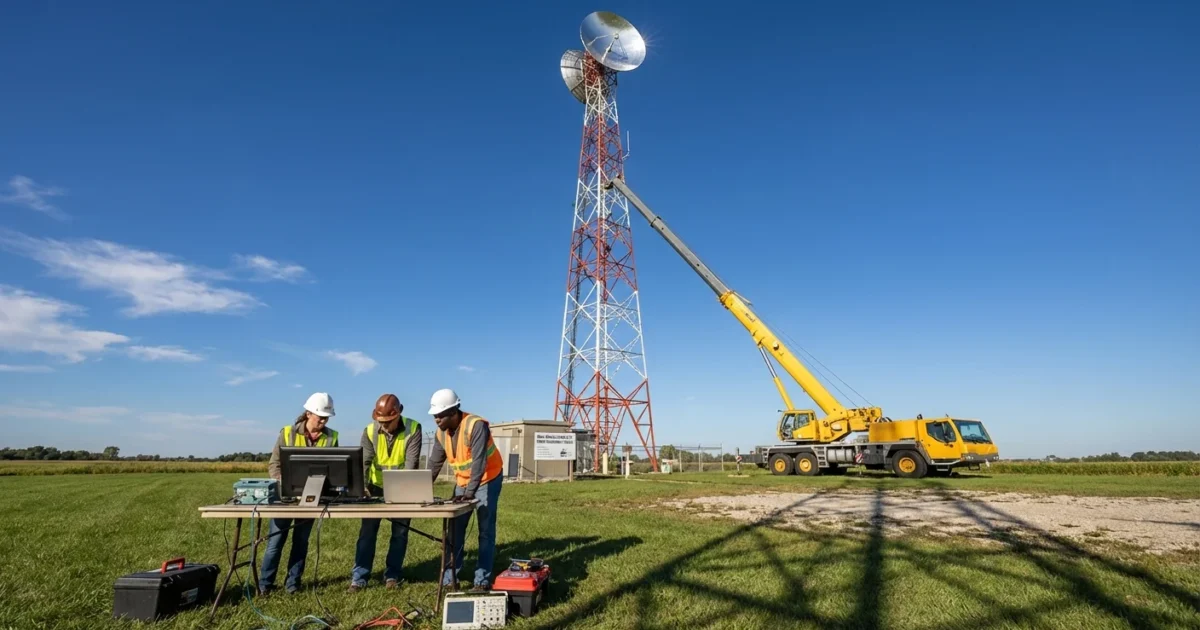
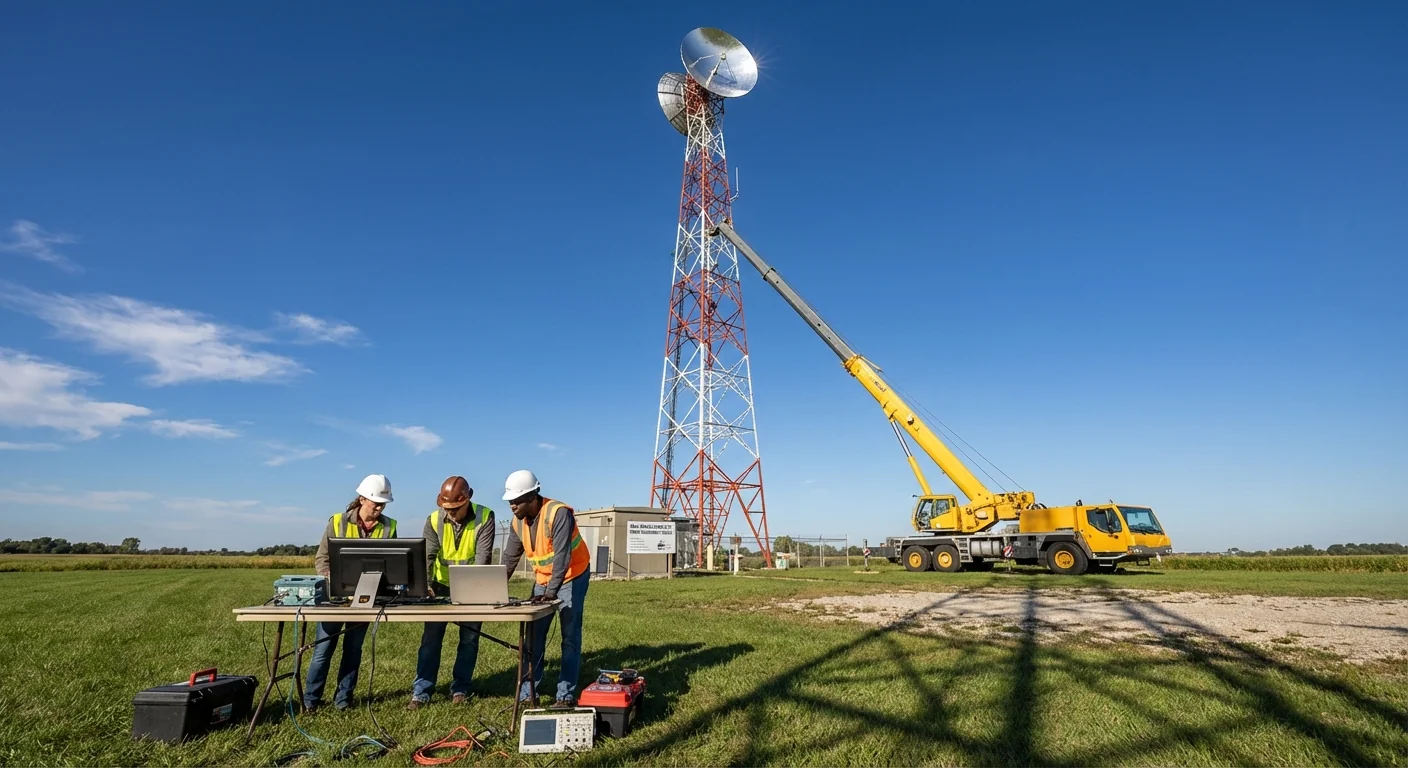
BREAKING: WEAU’s 2,000‑foot tower stands again, and the signal comeback is in motion. I confirmed today that crews have finished assembly and set a new circularly polarized antenna in place. This marks the key step toward full over‑the‑air service for Eau Claire and La Crosse viewers before year’s end. The station will now move into testing and final cutovers.
What Happened And Why It Matters
WEAU’s original 2,000‑foot tower collapsed on March 22, 2025. No injuries were reported. The fall cut off full broadcast service in a region that relies on TV for news and weather. Within days, WEAU struck cooperation deals with WQOW and WLAX. Its programming ran on those stations’ digital subchannels to keep viewers connected.
Today’s milestone changes the outlook. The new structure is up. A modern ERI antenna sits at the top. The station will operate on UHF channel 38. A new Harris transmitter will drive the signal. Circular polarization will help indoor antennas and phones get a steadier picture.
This is more than an engineering win. It is a public service recovery. Local broadcasting is part of the region’s safety net. It carries emergency alerts, weather warnings, and community news.
Emergency alerts depend on stations like WEAU. Full signal restoration strengthens regional readiness for severe weather and public safety messages.
The Legal Path That Made Speed Possible
Here is what cleared the way. Gray Television used existing Federal Communications Commission construction authority to accelerate the rebuild. Because the replacement tower closely matched the prior structure, key permits moved quickly. That kept the project within the station’s licensed technical parameters and helped avoid a full restart of the approval process.
During the outage, WEAU maintained its FCC public interest duties. It kept news and emergency information on the air through partner subchannels. That cooperation fits within FCC policy that encourages temporary arrangements to serve viewers when a station suffers a major failure. The station also complied with tower safety rules, aviation lighting, and RF exposure limits during construction and lift operations.
Cable and satellite rules matter here too. Must‑carry and retransmission consent are tied to licensed stations, not just physical towers. By staying operational on partner subchannels, WEAU preserved carriage and kept viewers informed. As WEAU switches to channel 38, cable systems will update routing, while the station keeps its familiar virtual channel through standard program mapping.
I will be watching for final filings on testing, power levels, and coverage maps. Those filings will confirm the last steps of compliance before the full cutover.

What Changes For Viewers
Once testing starts, viewers may see brief interruptions. That is normal. When the final cutover occurs, reception should improve across much of the market. Circular polarization helps in cities and in homes with small indoor antennas.
- Expect a switch to UHF channel 38, with your TV still showing the usual virtual channel.
- Signal stability should improve for indoor and mobile receivers.
- Some fringe areas may gain service as power and height return to normal.
Rescan your TV when WEAU announces testing or final cutover. Most sets will find the updated channel automatically after a rescan.
Policy Lessons For Local Media Resilience
This rebuild shows how policy and partnership protect the public. The FCC’s construction permits and temporary operating tools allowed a fast recovery. Inter‑station cooperation kept the news on the air. Modern gear will now raise long‑term reliability for rural and urban viewers.
Local TV is not just entertainment. It is a civic utility in storms, fires, and public emergencies. When towers fail, rules that let stations pivot quickly can save lives. Wisconsin’s broadcasters just proved that model in practice.
The tower site remains a controlled area. RF safety limits and worker rules protect crews and the public. Obey posted signs and keep clear of restricted zones.
In short, the tower is back, the antenna is live, and the path home is clear. With smart use of federal rules and strong local teamwork, WEAU turned a crisis into a stronger service for its viewers. The signal that ties this community together is almost fully restored.