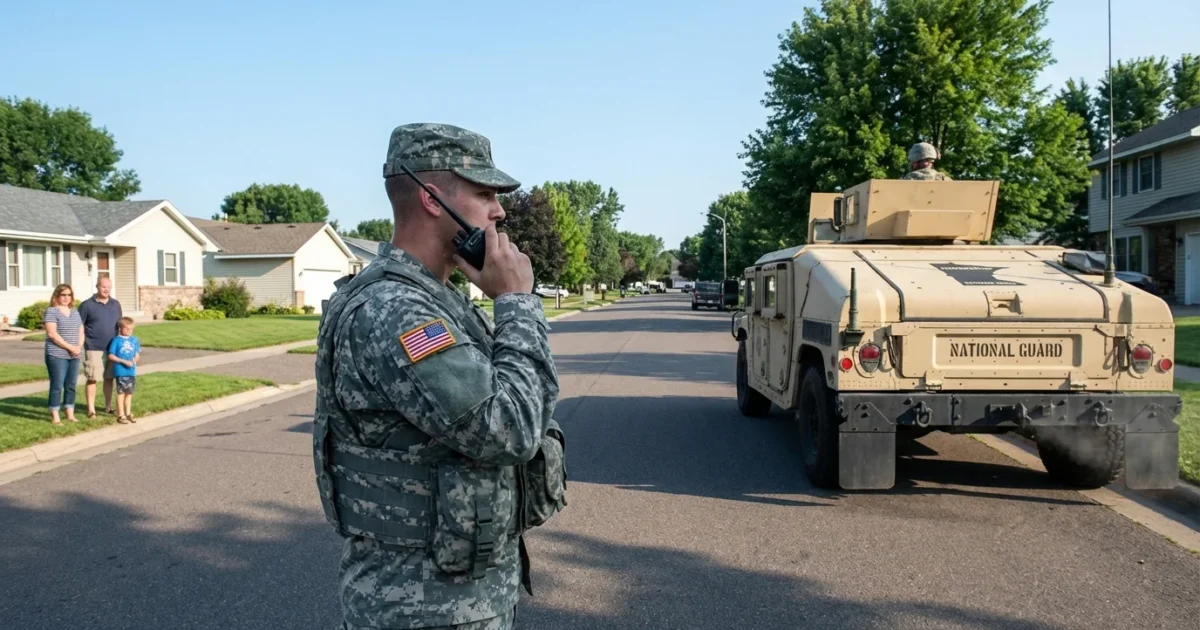
Breaking now. Minnesota Governor Tim Walz has activated the Minnesota National Guard to support Minneapolis and Hennepin County after a fatal shooting by a federal agent in Minneapolis. City and county leaders requested support. The goal is public safety while investigators work. ⚖️
Governor Activates Guard After Fatal Federal Shooting
The activation comes within hours of the shooting, which involved a U.S. Border Patrol agent. Officials say they are preparing for potential demonstrations. They also say they want a calm, safe environment for protest and for investigation.
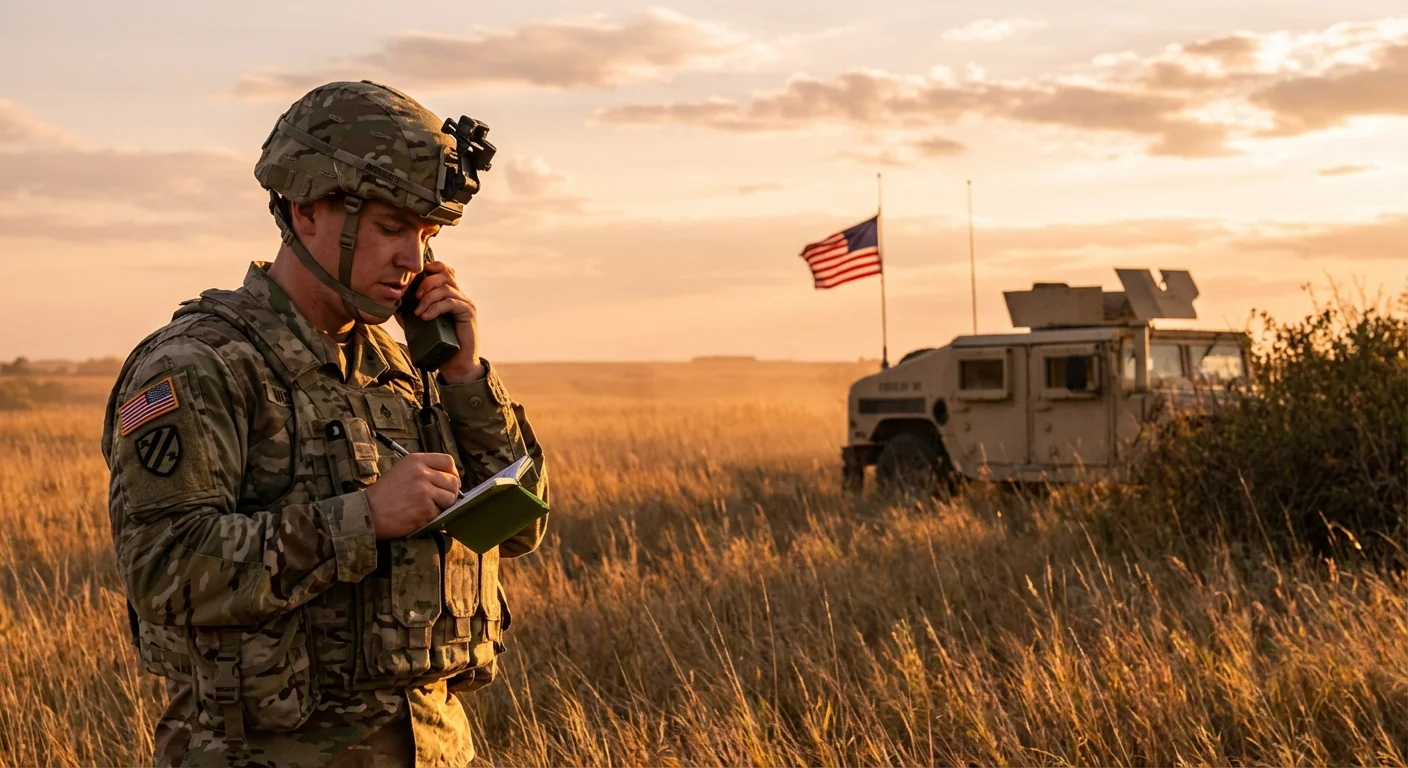
This is a limited support mission. The Guard will assist civil authorities. It will not replace routine policing. The focus is deterrence, stability, and clear lines of command.
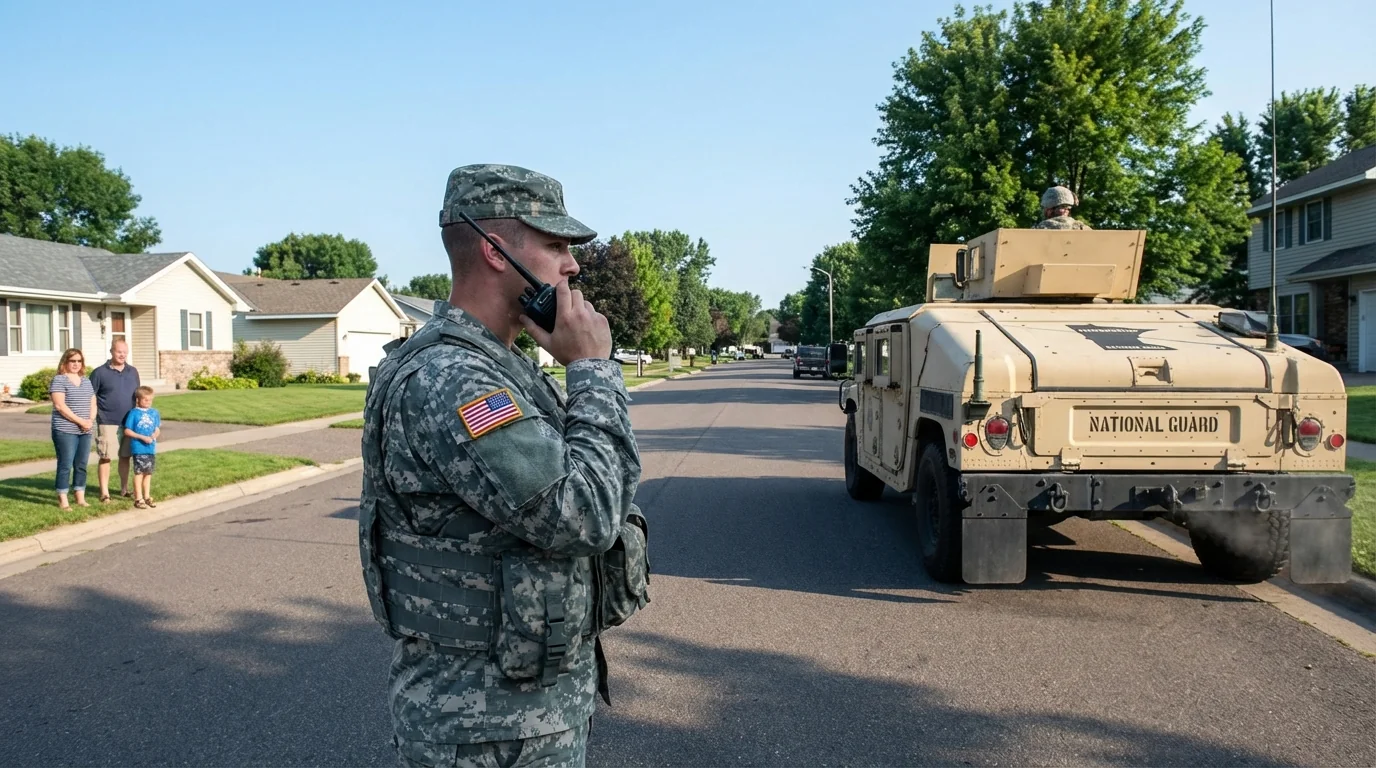
What This Activation Means On The Ground
Under state law, the governor can activate the Guard to support local governments. When that happens, soldiers and airmen operate under state control. The Adjutant General runs the military side. The city and county run the civil side.
Typical tasks look like steady, practical support. Expect Guard members near key buildings and along set routes. Expect mobile teams that help with barricades and traffic posts. Do not expect Guard units to run patrols or conduct investigations.
- Likely missions: site security, traffic control, perimeter support, logistics, transport
- Not their job: routine arrests, criminal investigations, crowd dispersal decisions, press control
The Guard supports civil authorities. It does not take over their powers or policies.
Legal Authority, Limits, and Oversight
This is a state activation. That matters for the law. The Posse Comitatus Act limits federal troops, but the National Guard under a governor has different authority. Even so, Minnesota policy keeps Guard roles narrow in civil settings.
Use of force rules apply. Guard members must follow state directives and the Constitution. Any force must be necessary and proportional. They may be equipped with protective gear. They are trained to hold lines and protect spaces, not to chase suspects.
Arrests are rare in Guard support missions. If an arrest is needed, local police usually take custody. That preserves clear accountability. It also keeps evidence and charging decisions in the civilian system.
On investigations, multiple layers may engage. Because a federal agent fired the shot, federal investigators will be involved. State investigators may assist. Local prosecutors and the U.S. Attorney will review outcomes. Public updates should identify which agency leads, what evidence is being collected, and when results will be shared.
Curfews remain a local call. The mayor or county can issue one if needed. Any curfew must be narrow, time limited, and clear to the public. Exemptions for work, medical needs, and the press must be honored.
Citizen Rights And What To Expect
Your rights do not change when the Guard appears. You have the right to protest peacefully. You have the right to speak, assemble, and record public officials in public spaces. Police and Guard must respect those rights.
If you join a demonstration, watch for posted restrictions. Listen for clear, repeated orders. Look for exit routes that are open and safe. Document what you see.
- You may record in public, including officers and Guard, as long as you do not interfere
- Ask if an area is closed before crossing a line or barrier
- If given a dispersal order, move in a safe direction that is open
- If stopped, ask if you are free to leave, and request a lawyer if detained
Write down times, locations, and names or badge numbers if you witness an incident. Save your video to the cloud.
Curfew or dispersal orders apply once clearly announced. Failure to comply can lead to arrest, even for peaceful conduct.
How This Compares To 2020, And What Officials Aim To Avoid
Minnesota has done this before. In 2020, Guard deployments were large and fast. They stabilized key corridors but drew criticism for heavy presence. Today’s activation signals a more targeted approach. Officials are leaning on smaller footprints, clearer missions, and early coordination.
De-escalation is the stated goal. That means visible security without needless confrontation. It means separating peaceful crowds from people who may cause harm. It also means better communication, with consistent briefings and clear lines of accountability.
The difference now is the trigger. A federal agent used deadly force. That raises the stakes for transparency. Expect pressure for a rapid identification of investigators, a timeline for releasing video or records, and a public explanation of legal standards for the use of force.
What Comes Next
Expect Guard staging in the city and county tonight. Expect briefings from state and local leaders. Expect investigators to outline their process, then go quiet while they work. The balance is delicate, but the law is clear. The state can secure streets while protecting rights. The public can demand answers while keeping protests peaceful. That is the line Minnesota is trying to hold, starting now.