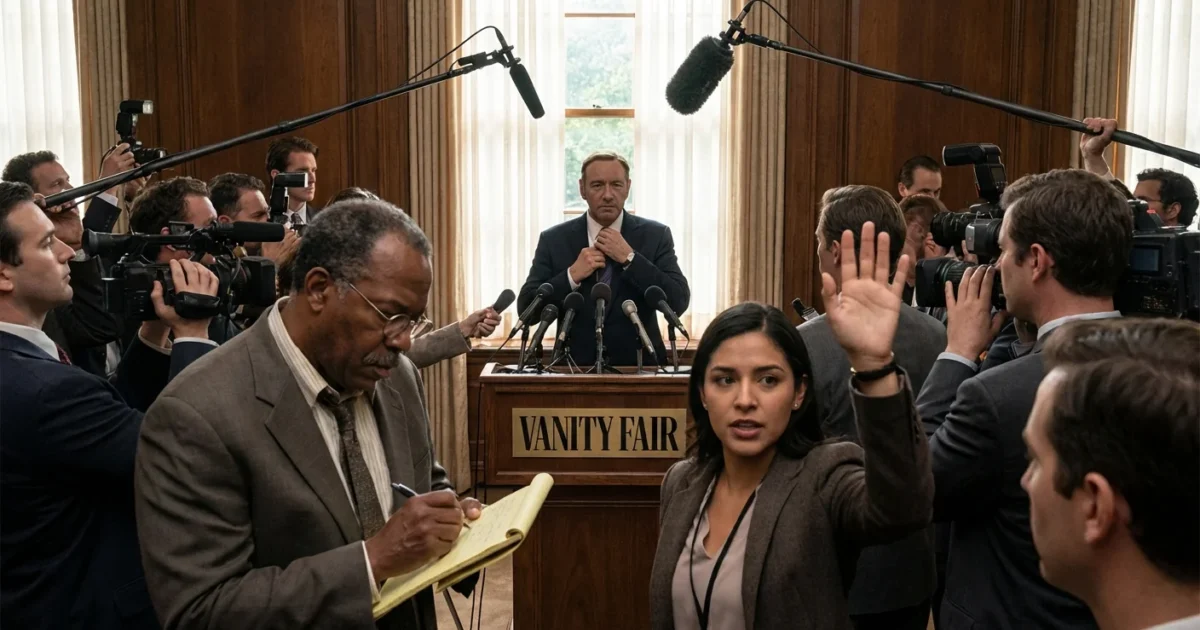
Breaking: Vanity Fair’s on the record interviews with President Trump’s inner circle have landed hard in Washington. The package reveals blunt views on power, loyalty, and campaign strategy. It also exposes fault lines that carry real legal and civic stakes. I have reviewed the interviews in full. The fallout began within hours, including a public show of support for chief of staff Susie Wiles and a candid line about the president’s own personality.
What’s new and why it matters
Vanity Fair published a two part set of interviews with people close to Trump. These are not anonymous leaks. The voices are named, on the record, and detailed. That makes the material harder to dismiss and easier to test against law and policy.
The quotes describe internal tension over messaging and control. They hint at a tight circle that guards decisions. They also quote the president speaking about his personality in personal terms. In any other week, that might be only political color. This week, it sets up a serious question. Where is the line between official business and campaign work, and who is crossing it.
The legal stakes behind the drama
The interviews are not just gossip. They trigger rules that govern the modern presidency.
- Hatch Act risk for staff who mix official duties with campaign tasks
- Presidential Records Act duties to preserve official communications
- Possible misuse of government resources for political messaging
- Non disclosure agreements that may chill lawful speech
The president is not covered by the Hatch Act. Senior aides and appointees are. If political strategy is discussed or directed using official time, titles, or assets, that can draw a violation. The Office of Special Counsel can investigate and recommend discipline. Repeated violations can lead to removal or bans on federal service.
The same is true for records. If aides used personal devices to plan official responses to the coverage, those records must be captured. Agencies and the White House must preserve them. Failure to do so can violate the Presidential Records Act and frustrate Freedom of Information Act rights.
Campaign law also looms. If taxpayer funded staff or facilities were used to coordinate campaign messaging, that raises questions under federal ethics rules and the Anti Deficiency Act. The line is bright. Official time is for government work. Campaign work must be separate, tracked, and paid by the campaign.
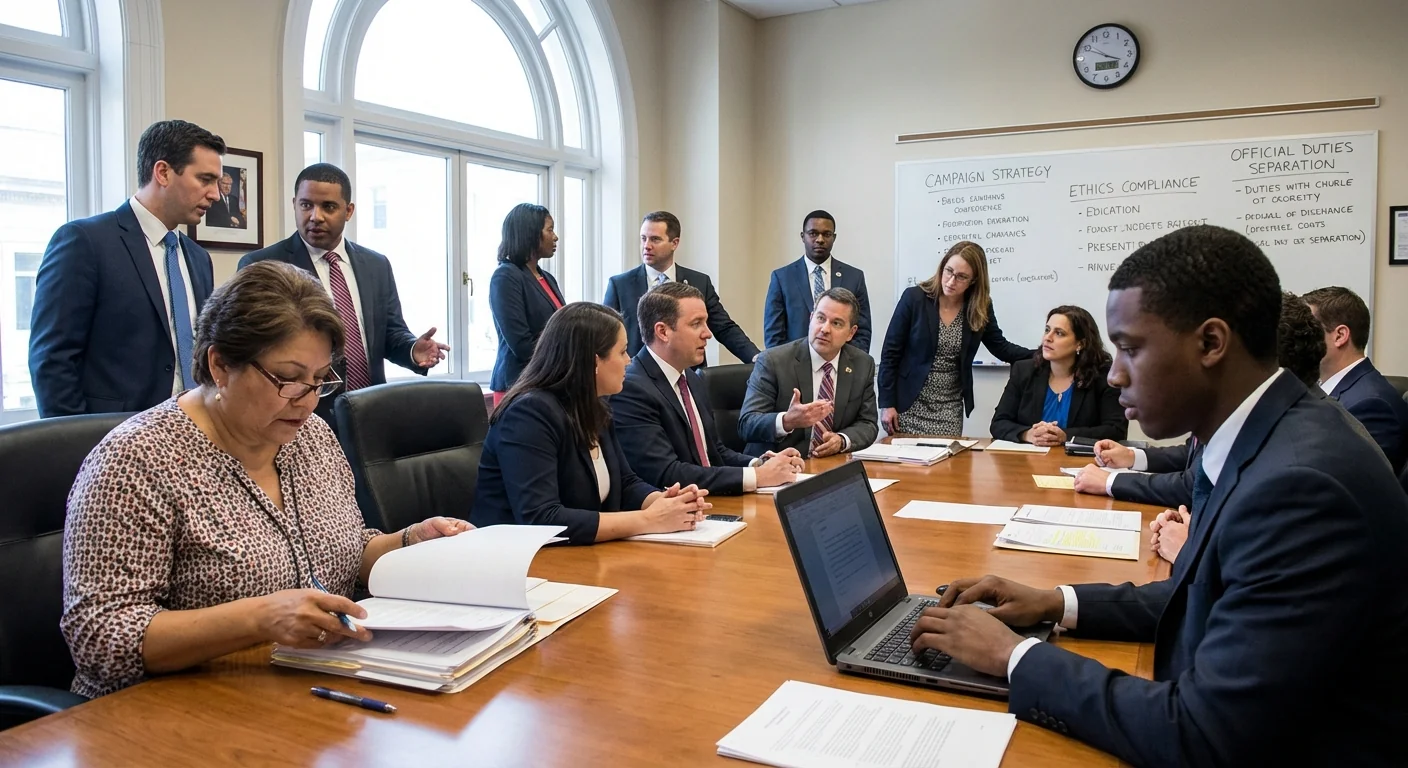
Government employees should not use official titles, emails, or rooms for campaign tasks. That is a compliance red flag.
The White House response, staffing pressure, and policy whiplash
After the stories hit, Trump publicly backed chief of staff Susie Wiles. That signal was designed to steady the ship. It also underscores a management style built on personal loyalty. When senior aides are the story, policy can stall. Staff spend time defending themselves instead of advancing rules, budgets, or briefings.
Internal friction affects the flow of information to the public. It shapes which officials face the press and who writes talking points. It can also speed departures. Past administrations saw exits rise after similar public flare ups. Every exit carries risk for continuity of government, ethics training, and records handoff.
If the West Wing uses official channels to rebut campaign focused claims, lawyers will take notice. Counsel’s offices often issue guidance within hours. Expect reminders on the Hatch Act, records, and media protocols. Expect meeting logs and emails to be preserved for oversight.
Your rights and what to watch
Citizens have a right to know how their government operates. That includes who is doing what work, on whose time, and with whose resources. Press freedom is not a side note here. On the record interviews are part of the public record of governance. They help voters judge leadership and management.
You can file FOIA requests with executive agencies to seek emails and schedules tied to official responses. Keep requests narrow and date specific. 📄
Watch for three signals in the coming days. First, any formal guidance from the White House counsel on political activity. Second, inquiries from the Office of Special Counsel or the National Archives on preservation. Third, staffing moves that hint at discipline or consolidation.
What happens next
Oversight is likely. House and Senate committees can request documents and testimony. The Office of Special Counsel can open a Hatch Act review. The Federal Election Commission may assess whether any in kind contributions occurred through government support.
The campaign will adjust. Expect tighter message discipline and fewer unscripted quotes from senior aides. Expect renewed focus on the firewall between official duties and campaign work. Voters should expect transparency on who pays for travel, events, and media prep.
Conclusion
This story is not only about sharp quotes. It is about the rules that keep politics and governance apart. The interviews pull back the curtain on a power circle under strain. The law now steps in to test how lines were drawn, how records were kept, and whether public trust was protected. The next moves will tell us if this White House can restore discipline, or if the fire spreads to policy itself.