Uvalde Trial Opens, With Prosecutors Framing A Test Of Police Accountability
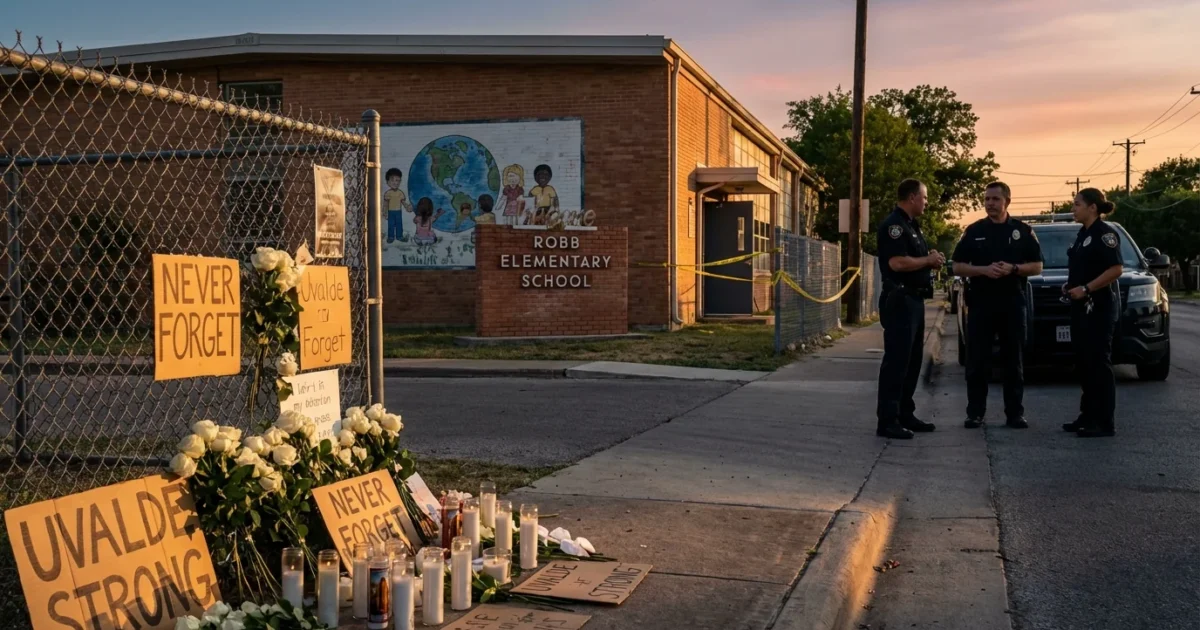
A former Uvalde school district officer went on trial today, the first criminal case tied to the botched response at Robb Elementary. Prosecutors told jurors the officer knew where the gunman was, yet failed to act until it was too late. Nineteen children and two teachers died. The courtroom is now the place where the long fight over responsibility, training, and the duty to act will be decided.
What happened in court today
Opening statements were direct and blunt. The state said the officer was informed of the shooter’s location and decision point, then did nothing meaningful while minutes turned into an hour. The charge is child endangerment. The theory is omission. The claim is that inaction put children in danger when action was required.
Investigations after May 24, 2022 found a 77 minute delay. Nearly 400 officers from multiple agencies were present. Yet no one confronted the gunman quickly. That failure led to scathing reports and ongoing civil suits. Today marks the shift from report to verdict.
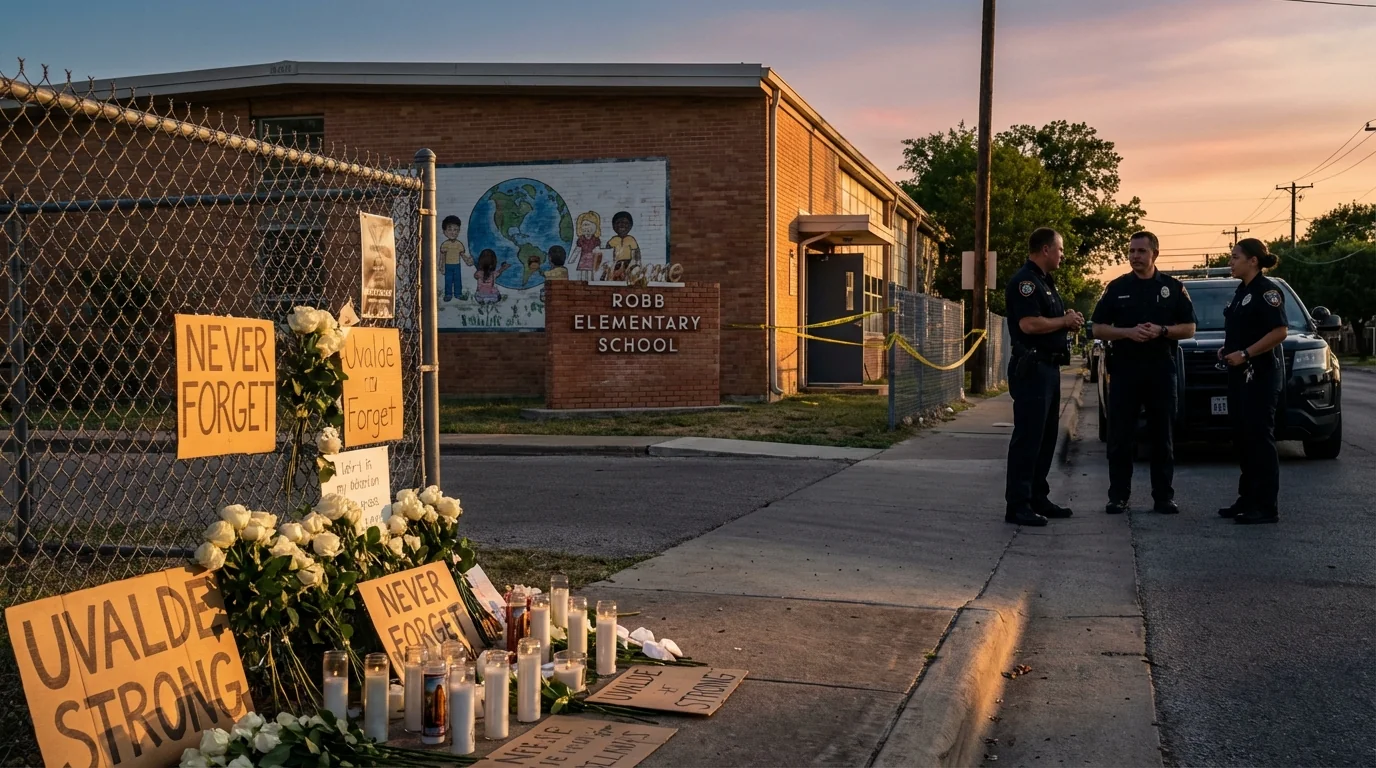
This is the first criminal trial focused on an officer’s inaction during the Uvalde shooting. Its outcome could set a practical rule for future responses.
The legal test facing prosecutors
This case asks a hard question. When does a police officer’s failure to enter a classroom become a crime. Under Texas law, child endangerment can be charged for acts or omissions that place a child in imminent danger. The state must prove more than a bad decision. It must show a duty to act, knowledge of the danger, and conduct that was at least reckless.
Prosecutors say the officer had both duty and knowledge. They argue training and assignment created a clear obligation to move toward the threat. They say the officer was told where the shooter was, then chose to wait.
The defense is expected to stress chaos and confusion. They may cite command breakdowns, radio failures, and mixed signals. They may argue the officer lacked clear authority to lead an entry, or that entering alone would have been unreasonable.
- What the state must show: a legal duty, knowledge of risk, a failure to act, and a mental state that meets the statute.
- What the defense may argue: no clear duty in that moment, conflicting commands, no reckless state of mind.
- What the jury will weigh: training, timelines, radio logs, body camera footage, and the officer’s own words.
Duty to act vs constitutional limits
There is another key line. Federal courts have long said the Constitution does not guarantee police protection in every case. That rule shapes civil rights lawsuits. But this is a state criminal case. The jury will apply Texas law on endangerment and omission, not federal duty to protect standards. Qualified immunity does not apply in criminal court.
Policy stakes for police training and command
This trial will echo through every police academy and school district. Active shooter guidance in Texas instructs officers to move to the gunfire as soon as possible. After Uvalde, departments rewrote checklists and ran new drills. Yet policies on who commands, who breaches, and who acts first still vary.
If the jury convicts, agencies will face a new reality. Failure to follow training could mean not just discipline, but felony charges. Expect chiefs to tighten orders, document roles, and test communications. Expect clearer rules on who must act when the first shots are fired.
If the jury acquits, the message will be more complex. Lawmakers may feel pressure to write a specific duty to intervene during active attacks. Police licensing bodies could link certification to objective active shooter standards. School districts may demand on-site leadership training and faster entry protocols.
Whatever the verdict, do not target or harass witnesses, jurors, or families. Intimidation and doxxing are crimes.
What this means for families and the public
Families have pursued answers for two years. Many also filed civil suits against agencies and manufacturers. A criminal verdict will not decide those lawsuits. But a conviction could influence settlement talks. It could also open the door to more prosecutions. An acquittal could shift focus back to policy fixes and civil claims for damages.
Citizens also have rights in this process. Texas recognizes a Crime Victims Bill of Rights. Families can be heard at sentencing if there is a conviction. The public can attend most hearings, subject to courtroom rules. Records requests under the Texas Public Information Act can shed light on policies, training, and communications, though some material may be exempt to protect students and investigations.
If you are a parent in a Texas district, ask your school board for the campus active shooter plan, drill schedule, and reunification protocol. You have a right to clear safety information.
The road ahead
This trial will turn on minutes, messages, and split second choices. It will test how the law treats hesitation during a massacre. It will push police leaders to make training real. It will give families a forum, and perhaps, a measure of accountability.
The stakes reach beyond one officer. They reach into every hallway where a child sits in class. The jury’s decision will not bring back lives. But it can draw a brighter line for duty, courage, and consequence. ⚖️🚔