BREAKING: What today’s USS Iwo Jima buzz means for law, policy, and your rights
I am seeing renewed attention on the USS Iwo Jima today. Here is what matters now, and how to tell rumor from fact. This is a legal and civic brief you can use right away. 🚢
What the USS Iwo Jima is, and what it does
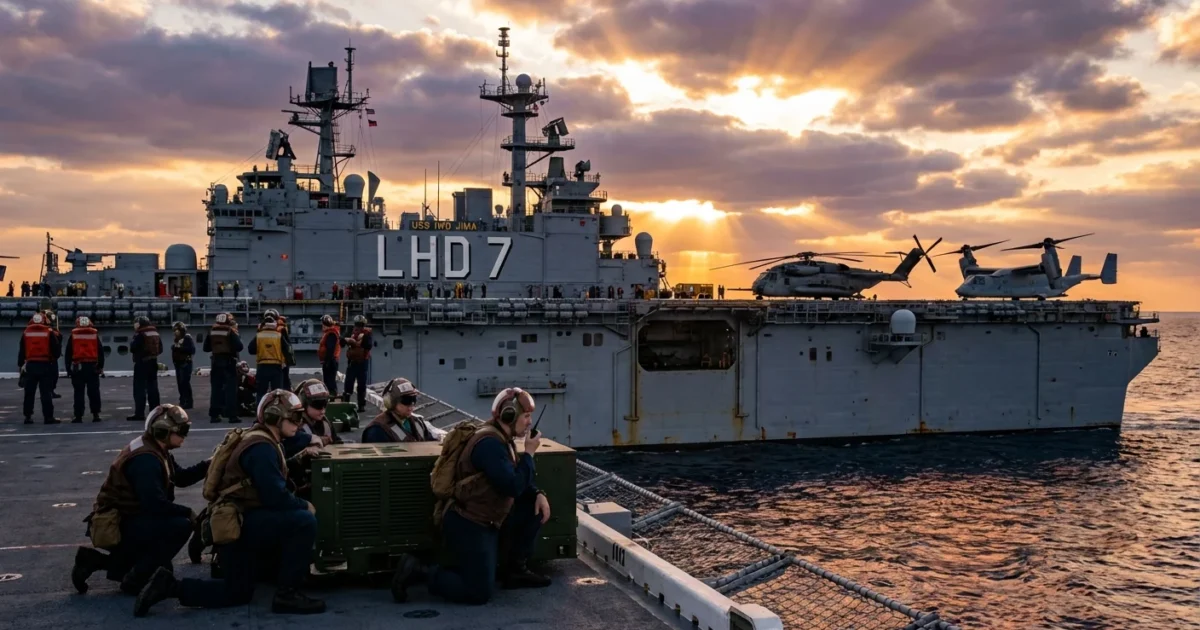
USS Iwo Jima, hull number LHD 7, is a Wasp-class amphibious assault ship. It works with Marines, aircraft, and landing craft. The ship can launch MV-22B Ospreys, helicopters, and support F-35B flight operations. It usually sails with two other amphibious ships as an Amphibious Ready Group.
Its jobs range from combat operations to disaster relief. Think evacuations, aid delivery, and fast response at sea. The ship is named for the World War II battle. Do not confuse it with the older USS Iwo Jima LPH 2, which was retired decades ago.

Movement and the law, what it actually signals
Ship movements, even sudden ones, do not equal war. Under Title 10 of U.S. law, the President can position forces. If U.S. forces enter hostilities, the War Powers Resolution requires a report to Congress within 48 hours. Notification can be classified, but Congress still gets it. The law also sets time limits unless Congress authorizes continued action.
For domestic waters, the Coast Guard can set Naval Vessel Protection Zones. These zones often extend 500 yards around a moving warship. Entering or ignoring these zones can bring criminal penalties. Expect safety zones and boarding authority in restricted areas.
DoD policy limits military involvement in civilian law enforcement. The Posse Comitatus Act applies most directly to the Army and Air Force. The Navy and Marine Corps follow similar limits by policy. There are narrow exceptions, such as counterdrug support or when the President invokes the Insurrection Act.
Humanitarian missions follow a different rulebook. For support inside the United States, civil authorities request help. The Stafford Act and Defense Support of Civil Authorities guide that process.
If you boat, kayak, or drone near a Navy ship, keep your distance. Security zones are enforced, and violations can lead to arrest and fines.
What the government must tell the public
The military will not broadcast precise routes or times. That is routine operational security. Still, some notices must be public.
- War Powers reports to Congress are published, sometimes with redactions.
- Coast Guard Local Notices to Mariners list safety zones and closures.
- Federal Register postings cover temporary waterway rules.
- Port authorities issue advisories when large vessels arrive.
You can also use the Freedom of Information Act to request records. Expect delays and some exemptions, especially for active operations.
A ship getting underway is not a declaration of hostilities. Watch for formal notices, not chatter, to judge policy shifts.
How to verify what is real today
Use official channels, and sequence your checks in this order:
- Navy and Fleet public affairs pages for deployment or port announcements.
- Coast Guard District Local Notice to Mariners for active safety zones.
- Federal Register for temporary security zones and rulemakings.
- Port authority bulletins and harbor master advisories.
- Embassy or State Department alerts if a foreign port is involved.
Screen for three signals at once, a Navy statement, a Coast Guard zone, and a port advisory. Together, they mean movement you can trust.
Your rights near bases, ports, and at sea
You can film from public land and public waters. You can assemble and speak on sidewalks and parks, subject to time, place, and manner rules. Local permits may be required for large marches. Police can enforce safety perimeters, but they must allow alternative channels for speech.
Stay off military property and out of marked restricted waters. Do not fly drones near ships or bases without approval. The FAA can issue temporary flight restrictions. Border zones, ferry terminals, and secure port areas can include ID checks and search rules.
If you are stopped, ask if you are free to go. You can stay silent and request a lawyer. If told to move for safety, ask for the lawful basis, such as a posted zone or written order.
The bottom line
The name USS Iwo Jima draws fast attention, but the law sets the pace. Movements at sea are routine. Policy changes show up in formal notices and congressional reports. Watch those, not rumor. Citizens keep strong rights to know, to speak, and to assemble. Respect safety zones, verify using official channels, and hold leaders to the rules that govern force, transparency, and public safety.