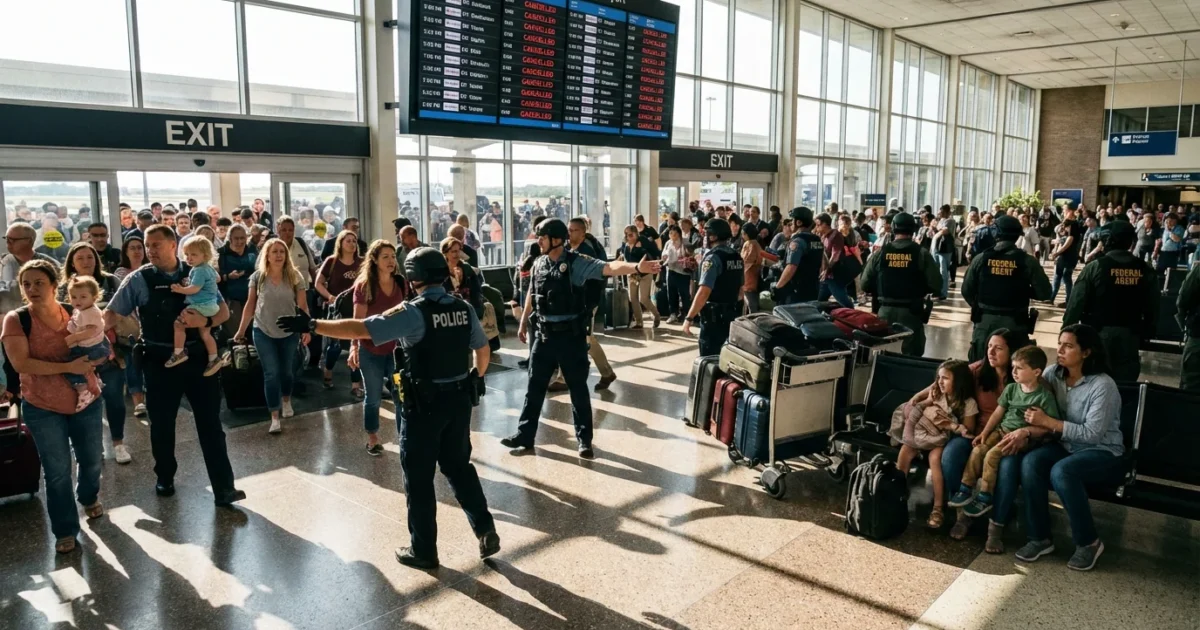
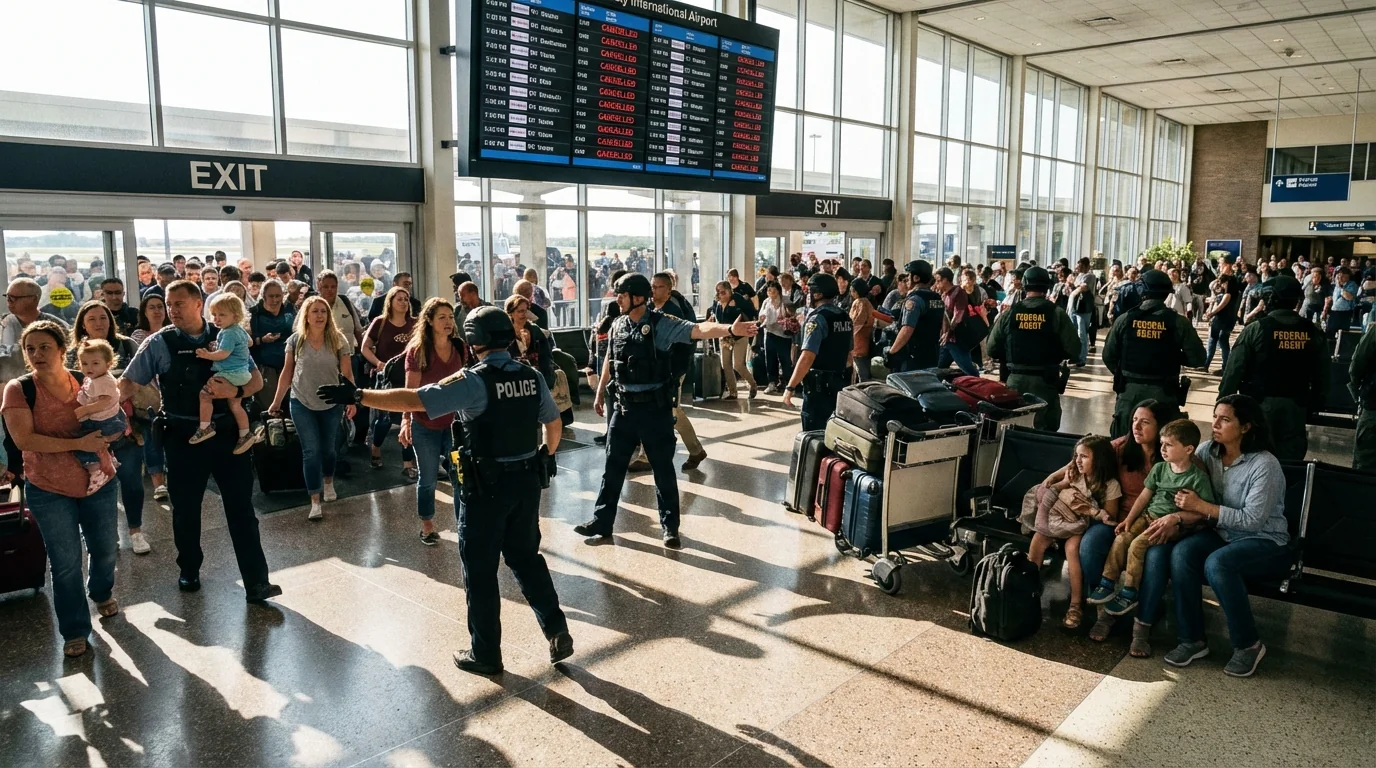
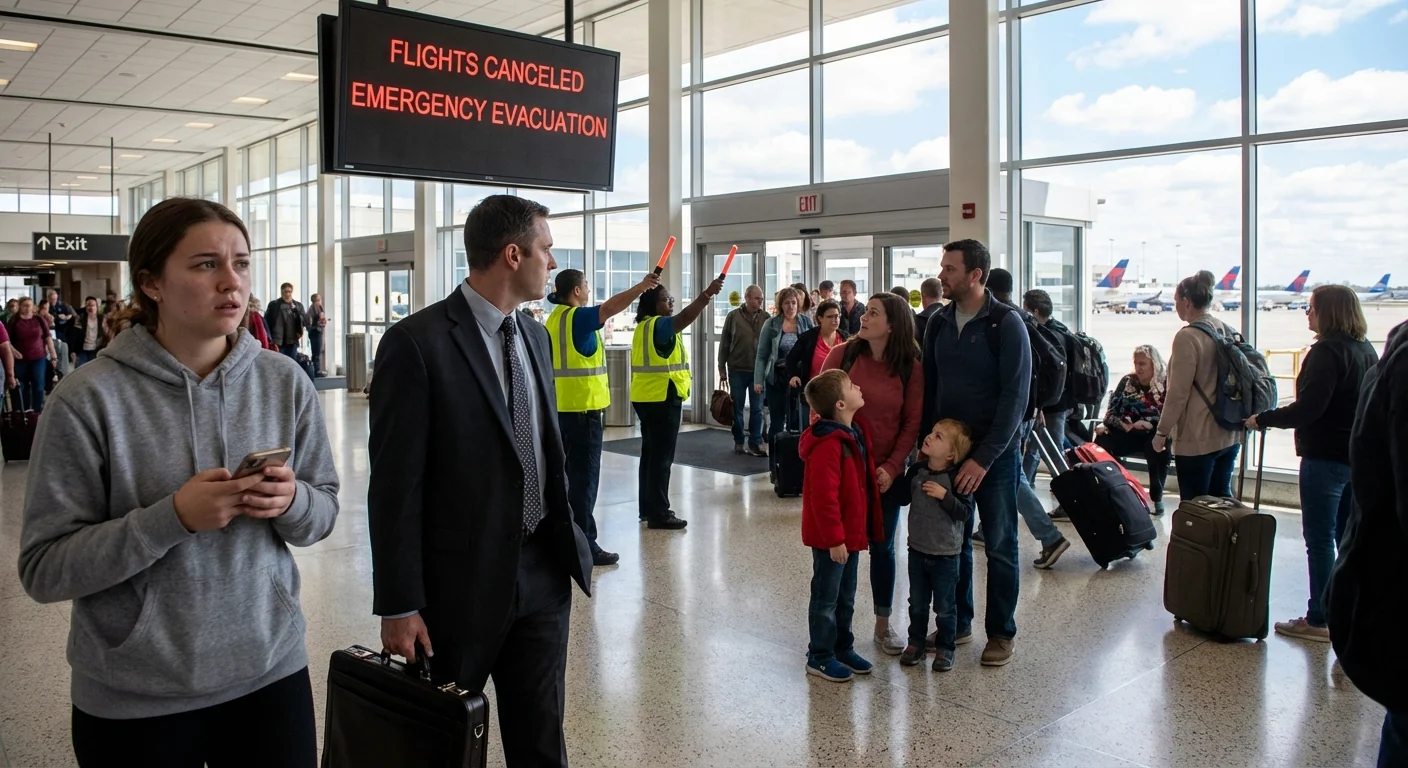
Kansas City International Airport is now on lockdown. Police have ordered evacuations while they investigate a reported threat. Federal agents are on the ground. Flights are pausing and gates are clearing. This is an active security response, and it affects anyone heading to or from KCI today.
What we know now
Authorities confirmed that KCI is under lockdown. Evacuations are underway as a threat is investigated. The FBI is working with Kansas City police. The Kansas City, Missouri, Aviation Department is coordinating the response. Officials have not disclosed the nature of the threat. That is normal in a live investigation. It keeps people safe and preserves evidence.
Expect restricted access to roads and terminals. Security checkpoints may be closed. Airlines will hold or cancel departures while police secure the area. Arrivals may divert or remain in the air until they get instructions. Airport staff are guiding passengers out of affected zones. Follow the posted signs and the voice announcements. Do not reenter any closed area until authorities clear it.
Travel impact and what to do
If you are at KCI, follow police orders and move calmly. If you are in a vehicle approaching the airport, prepare to stop and turn around if directed. If you have a flight later today, assume changes until you confirm otherwise.
- Check your airline app for new departure times and gate changes.
- Monitor the airport’s official channels for access updates.
- Keep your boarding pass and ID handy for reentry once allowed.
- If you have a disability or need help, ask any official for assistance.
If your flight is canceled or significantly changed, you are entitled to a cash refund if you do not travel. That is federal law. Vouchers are optional. You can ask for money back to your original form of payment.
Airlines must also follow tarmac delay rules. If a plane sits on the ramp too long, carriers must provide food, water, and access to restrooms, then return to a gate if limits are reached. If you are stuck on board, politely ask the crew for status updates. They receive instructions from the operations center, which follows police guidance during a lockdown.
Your rights during a lockdown
Police can order an evacuation for public safety. At an airport, security rules are strict. You can be directed to exit, be screened again, or wait in a safe area. That falls under standard security authority at transportation hubs.
You still keep core rights. You have the right to be free from unreasonable searches. At airports, screening is an administrative search for security, not evidence. Extra screening may happen when there is a threat. You can ask for a supervisor if you have concerns. You can also request a private screening and an interpreter if needed.
Passengers with disabilities have a right to accessible evacuation and screening. That includes mobility help, communication support, and access to medication and medical devices. Keep essential items with you if you can do so safely. Inform officers if you need accommodations.
You may record in public areas of the airport, as long as you do not interfere with officers or security operations. Recording is restricted in screening lanes and sterile areas. If an officer tells you to stop in a secure zone, comply and move to a public space.
Do not share unverified details about the threat. Posting security locations or tactics can put people at risk. Follow official updates and avoid rumor chains.
How officials make the call
A lockdown is a legal and policy tool used when there is a credible risk. Local police lead the scene with support from the FBI and airport security. The Aviation Department activates an incident command structure. That unifies fire, police, medical, airline, and TSA actions. The goal is simple. Move people away from danger, secure the area, then restore operations.
Airspace decisions fall to federal aviation officials. Ground stops or diversions can ripple across the system. Those choices balance safety and the need to keep flights moving once it is safe. The airport, airlines, and federal partners coordinate reentry steps. That includes rescreening passengers and reopening roads by zone.
What to watch next
Expect a staged reopening. First, law enforcement clears the immediate area. Then, checkpoints come back online. Airlines reboard crews and reset flight plans. Baggage may take extra time to reach carousels. If the threat is resolved with no hazard found, operations can resume quickly. If evidence is found, closures may last longer for forensic work.
Keep your phone charged. Set alerts from your airline and the airport. If you rebook, ask about meal or hotel help during an extended delay. Policies vary by airline, but many provide vouchers when the disruption lasts into the night.
This response will be judged by one standard, safety first. Officials are acting under clear legal authority, and they remain accountable for how they use it. We will continue to report updates as the investigation develops and the airport moves toward a safe restart.