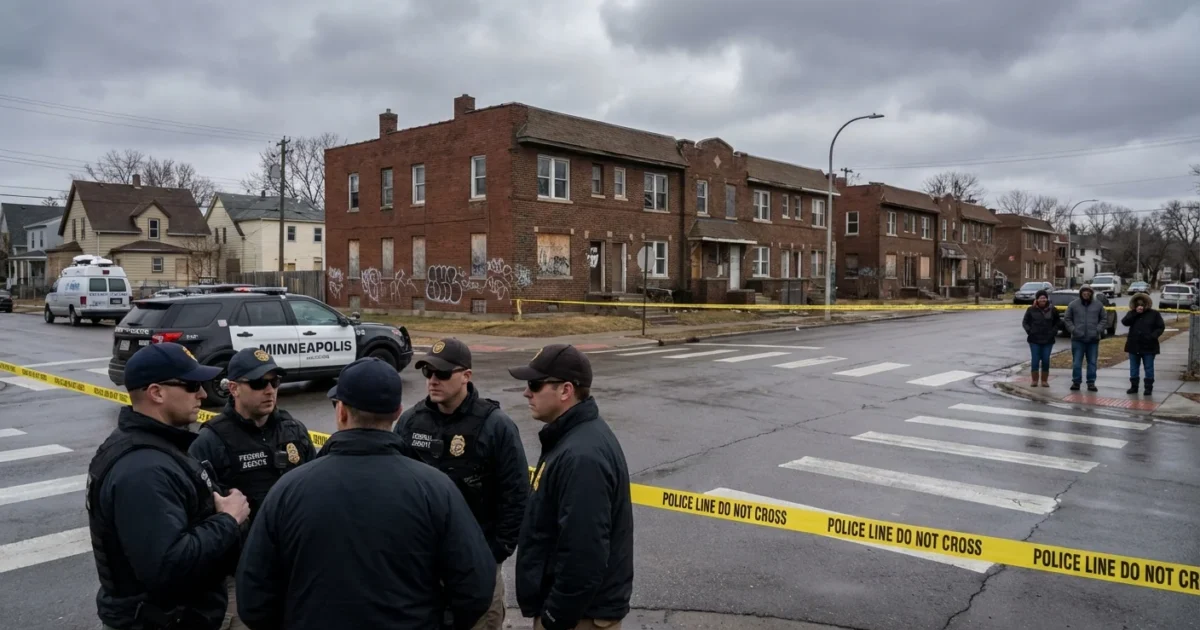
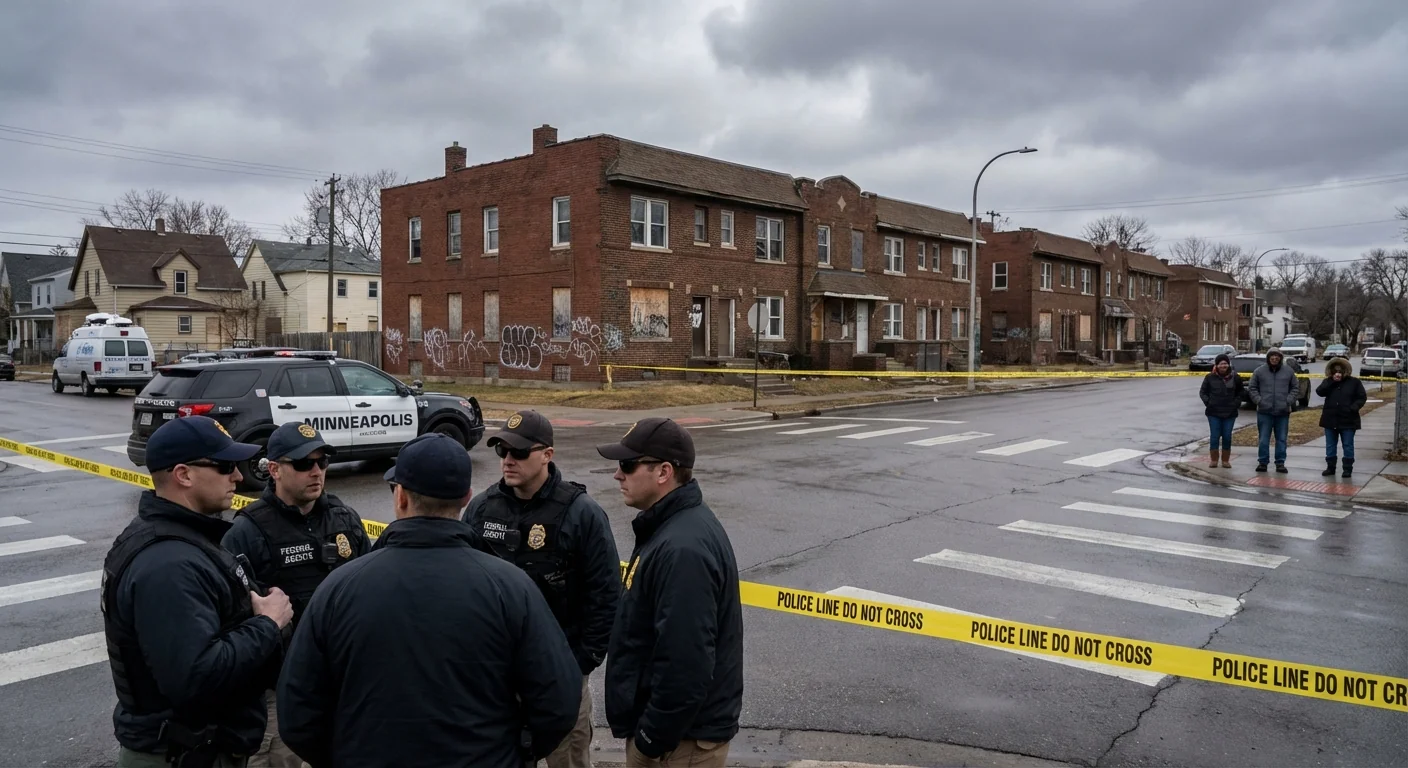
A federal agent shot a man in south Minneapolis this afternoon, and the city is on edge. Officials confirm the shooting involved a federal officer, but the agency has not been named. This is the third recent shooting tied to federal agents in Minneapolis. Urgent questions about law, policy, and accountability now take center stage.
What we know right now
Police and federal personnel moved quickly to secure the scene. The man who was shot has not been publicly identified. His condition is not yet confirmed. City leaders are pressing for answers. Governor Tim Walz condemned what he called another horrific shooting by federal agents, and he is demanding transparency.
People in the neighborhood want clarity. Many are using the phrase ICE shooting Minneapolis, but the government has not confirmed that Immigration and Customs Enforcement was involved. The lack of agency detail makes it hard to connect facts across these federal incidents.
Agency identity has not been confirmed. Treat claims about ICE involvement as unverified until officials release the name of the agency.
The legal stakes, right away
This is not only a public safety event. It is a use of force by the federal government on city streets. That triggers overlapping rules. Federal agents follow the Department of Justice deadly force policy. That policy allows deadly force only if there is an imminent threat of death or serious injury. Each agency also has its own training and reporting rules.
Minnesota has its own expectations for critical incidents. The Bureau of Criminal Apprehension often investigates officer-involved shootings, but jurisdiction can get complex when the shooter is federal. In many cases, the FBI or an Inspector General will take the lead, and the U.S. Attorney will review. State prosecutors can still assess state charges, depending on the facts.
Body cameras are a key issue. Minneapolis police wear them. Federal agents may or may not, depending on the operation. DOJ now authorizes body cameras for many pre-planned arrests and warrant services. It is not universal. If cameras were used, Minnesota law requires timely access for families in critical incidents, and it encourages early release when it serves public interest. Federal rules on release are less clear and can slow the timeline.
Families are entitled to timely review of critical incident footage in Minnesota. Public release can follow, but federal involvement may affect timing.
Government response and accountability
This third federal-agent shooting in Minneapolis raises a pattern question. Why are federal operations repeatedly ending in gunfire here. State and city leaders will need to show a plan, not only statements. Expect calls for the following, and soon:
- A clear naming of the federal agency and the specific task force, if any
- A unified investigative roadmap with deadlines for public updates
- A commitment to release any video as soon as legally possible
- A public briefing on use-of-force standards that applied in this operation
The City of Minneapolis is already operating under court-enforced police reforms. Those reforms do not bind federal agents working inside city limits. That gap matters. When federal and local teams work together, written agreements should set camera rules, reporting duties, and community notification. Residents deserve to know which rules were in force today.
Civil liability will be on the table. If the shooting is unlawful, the victim or family can bring claims. With federal officers, that can mean a constitutional claim directly against the agent or a negligence claim against the United States under the Federal Tort Claims Act. Those paths are narrow and slow, but they exist.
Your rights during federal encounters
Confusion breeds fear. Your rights remain the same whether the badge is city, state, or federal.
- You can ask, am I free to leave. If yes, you can walk away.
- You have the right to remain silent. Say, I am choosing to remain silent.
- You can ask for a lawyer. Do not answer questions until counsel is present.
- You can record officers in public, as long as you do not interfere.
If approached by federal agents, stay calm, keep hands visible, ask if you are free to leave, and state that you want a lawyer before any questioning.
If you witnessed the incident, save your video. Do not edit it. You can share it with your lawyer or submit it directly to investigators. For records, you can file a request under Minnesota’s Government Data Practices Act for local materials, and a federal FOIA request for agency records. Note that investigations can delay releases, but a request preserves your place in line.
Why this keeps happening, and what must change
Federal agents bring tools for violent crime, gun trafficking, and fugitive cases. Those missions sometimes come to residential blocks. Minneapolis is trying to rebuild trust after years of painful incidents. When federal teams operate here, they must meet the same trust standard. That means clear command structure, real-time camera rules, and fast, factual briefings after force is used.
Today’s shooting underscores the cost of silence. Every hour without the agency name, the use-of-force explanation, and the plan for evidence release erodes confidence. The public is not asking for secrets. The public is asking for the basics, on the record, now.
Conclusion
This community needs answers and a timeline. Name the agency. Identify the investigative lead. Commit to releasing any available video to the family and the public on a defined schedule. Explain the legal standard that governed the trigger pull. Minneapolis deserves both safety and the law, fully and in the open. We will continue to press officials and report updates as they arrive.