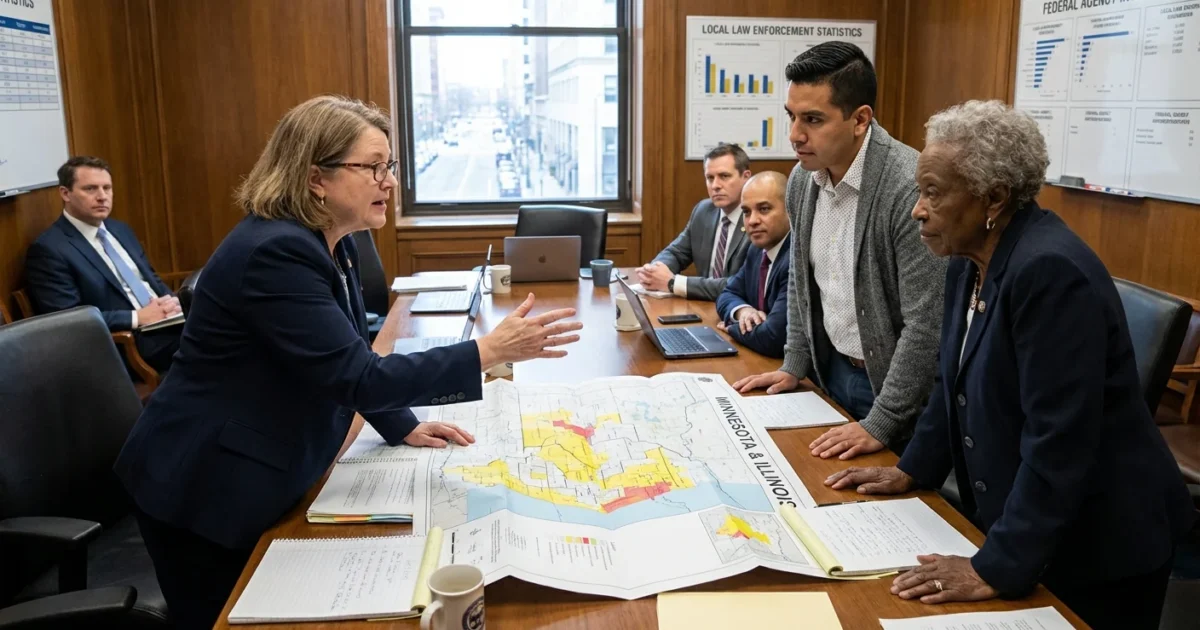
Breaking: I have obtained new filings and draft policies from Minnesota and Illinois that aim to pull state resources away from ICE. Both states are moving fast. Their goal is clear, stop using local officers, jails, and data systems to help federal civil immigration enforcement. The legal weapon is the 10th Amendment, and the stakes are high.
The 10th Amendment, in plain terms
The 10th Amendment reserves all powers not given to the federal government to the states, or to the people. From that simple line, the Supreme Court built the anti-commandeering rule. Washington cannot order states to enforce federal laws.
Two cases define the modern rule. In Printz v. United States, the Court said the federal government could not force local sheriffs to run gun background checks. In Murphy v. NCAA, the Court said Congress could not command states to keep sports betting bans. The lesson is clean. States can refuse to carry out federal programs.
That is the theory Minnesota and Illinois now press. They say they can decline ICE detainer requests, withhold jail space for civil holds, and shut off data pipelines. They also say they can set strict warrant rules before federal agents enter nonpublic state facilities.
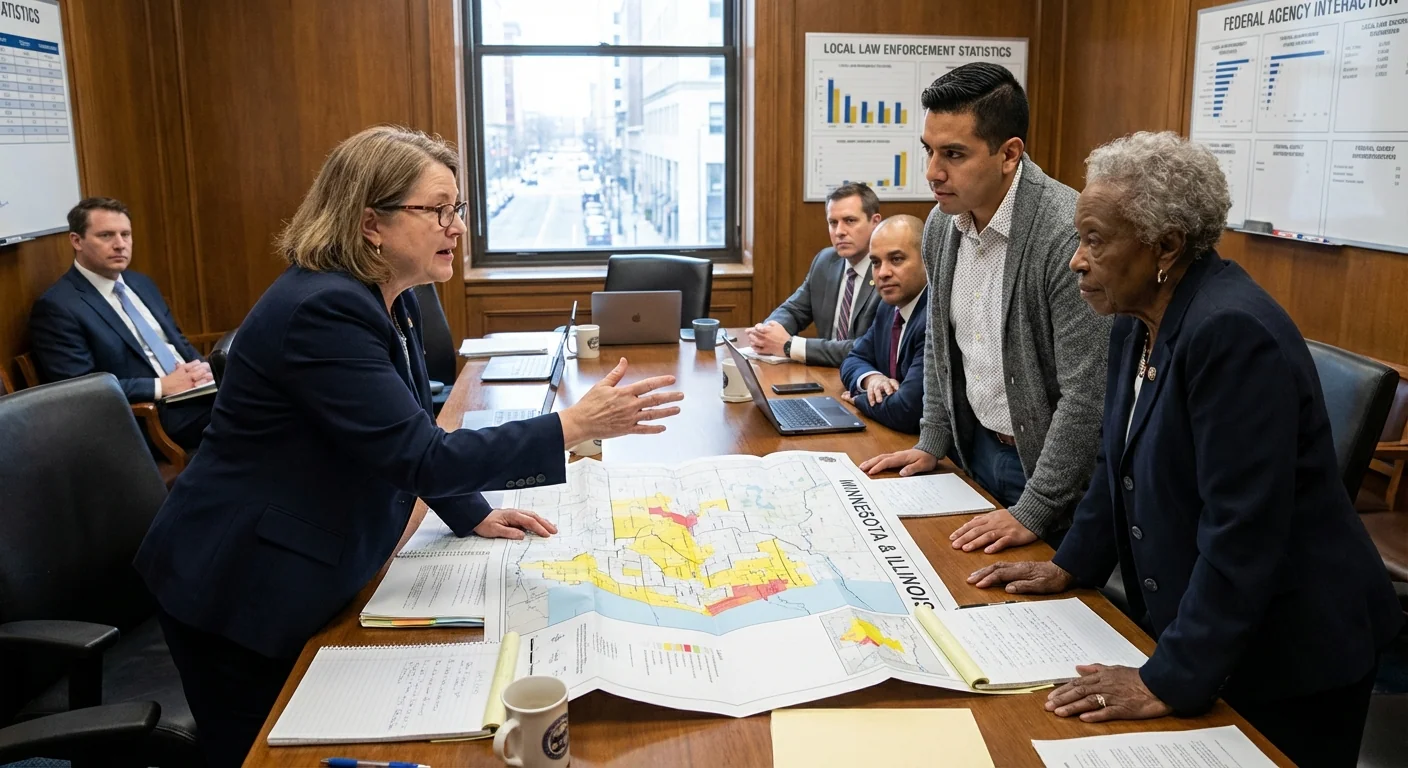
Anti-commandeering is a shield. It lets states say no to helping, but it does not let them stop the federal government.
Where state power stops
The Supremacy Clause puts federal law on top. Immigration enforcement is a federal field. In Arizona v. United States, the Supreme Court struck down state measures that tried to run their own immigration plan. That case also warned states not to stand in the way of federal officers.
Here is the limit. A state can decline to help ICE. A state cannot block ICE or punish federal agents for doing their jobs. A state can control its own property and workers. It can set access rules for secure, nonpublic areas. But it must use neutral rules and avoid targeting the federal government simply because it is federal.
Courts also watch for indirect obstruction. If a policy looks like a plan to trap or delay federal agents, judges will likely strike it. Penalties on contractors who do federal work can also raise problems. The question is often whether a rule is a refusal to cooperate, or a barrier to federal action.
What Minnesota and Illinois are testing
I have reviewed fresh complaints and draft guidance. Here is what the states aim to do. They plan to end routine detainer cooperation without a judge’s warrant or order. They want to stop sharing real time jail release data for civil enforcement. They aim to bar ICE from nonpublic jail areas and probation offices without judicial process. They may restrict state employees from asking about immigration status unless the law requires it.
Illinois is also exploring limits on state databases used to track addresses and court dates. Minnesota is weighing courtroom and hospital policies that reduce arrests in sensitive places. Both states are preparing to argue that these are classic anti-commandeering moves.
Legal headwinds remain. Any rule that singles out ICE for worse treatment than other law enforcement will face attack. Any attempt to prohibit federal agents from entering public areas, or to seize their equipment, will fail. Courts will compare each policy to the long line of federal supremacy cases, and to anti-commandeering precedents.
- Legally safer state moves today:
- Decline civil detainers without a judge’s order
- End 287(g) or similar cooperation agreements
- Limit disclosure of nonpublic data that the state is not required to share
- Require warrants to access secure, nonpublic state spaces
Local officers who block or delay federal agents may face liability. Neutral, across the board rules are safer than targeted bans.
What this means for residents and local officials
For residents, these changes do not end federal immigration enforcement. They change how state and local resources are used. If your city or county limits cooperation, you may see fewer civil holds in local jails. You may see fewer civil arrests near courts and hospitals if policies are adopted.
Know your rights. You do not have to open your door to anyone without a judicial warrant. You have the right to remain silent. You can ask to speak to a lawyer. Local police cannot detain you longer just for ICE unless a judge requires it. These are basic rules that do not depend on new policies.

For local officials, the message is to follow the policy line closely. Use neutral access rules for secure areas. Train staff on detainer procedures and warrant checks. Audit data sharing to ensure compliance with state law and any court orders.
What happens next
Expect quick motions in federal court. States will ask judges to confirm that non-cooperation is lawful. The federal government will challenge any rule that looks like obstruction. Early rulings may split policies into “allowed” and “not allowed” pieces. Appeals are likely.
The outcome will shape immigration enforcement on the ground. It will also define how far anti-commandeering reaches into state facilities, data, and daily practice. The 10th Amendment is back at center stage. The courts will decide how sharp its edges really are.
Conclusion: The 10th Amendment can pull state hands off the federal steering wheel. It cannot grab the wheel itself. Minnesota and Illinois are aiming for that balance. If they keep to neutral, non-cooperation rules, courts may let them proceed. If they cross into obstruction, judges will put up a stop sign. The next orders will tell us which path they chose.