Law Enforcement Appreciation Day turns into high-stakes policy stage in New York
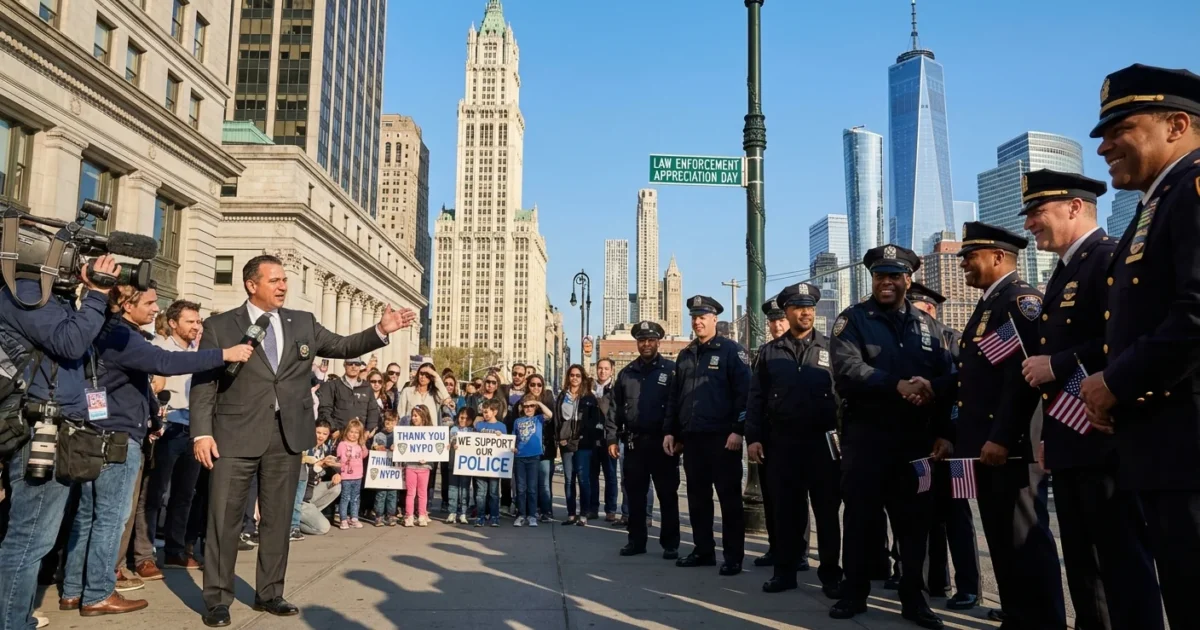
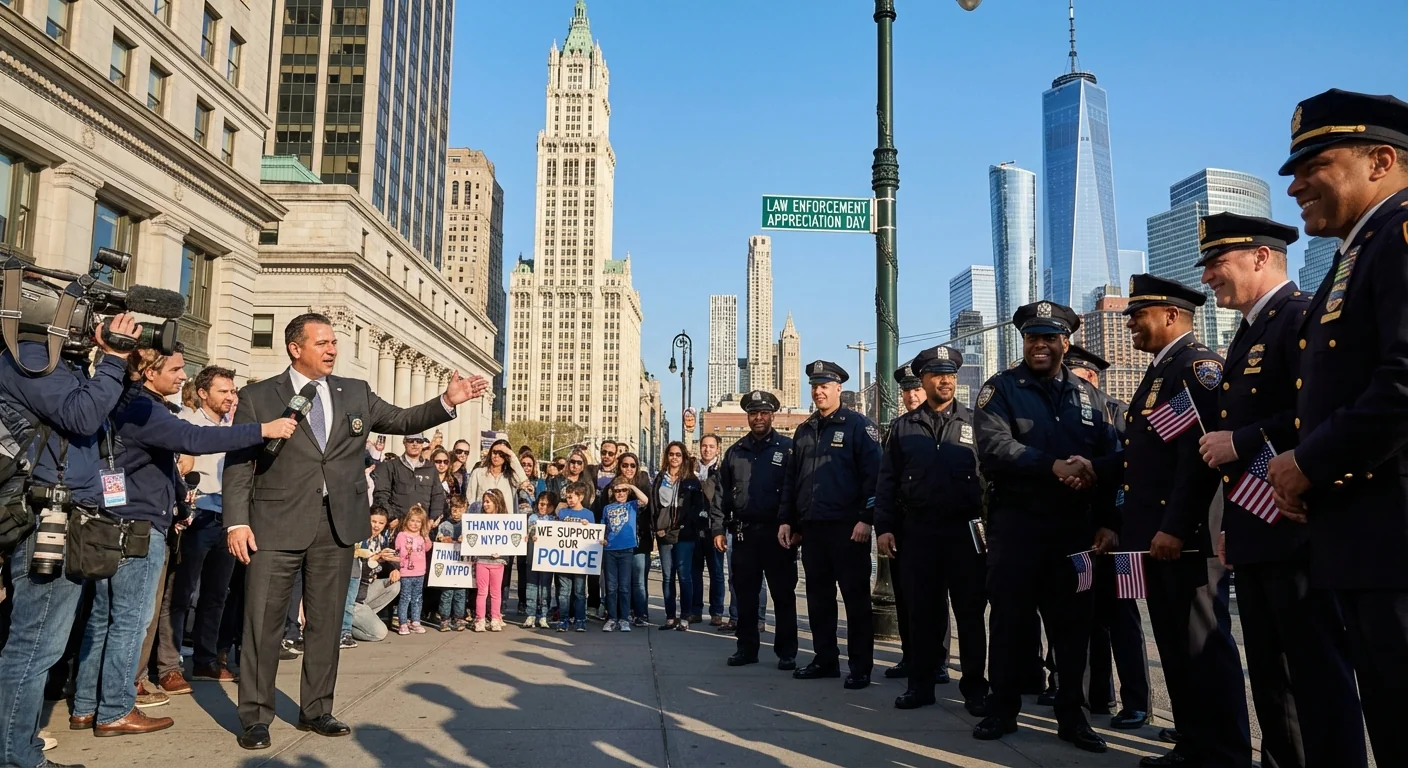
Law Enforcement Appreciation Day arrived with a spotlight brighter than usual. In Lower Manhattan this morning, federal and city officials used the day to push a law and order message. They tied public safety to immigration enforcement and officer support. Then a press access fight broke out at the door, raising fresh legal questions about transparency.
What this day is, and why it matters
Law Enforcement Appreciation Day, held every January 9, honors police and other law enforcement workers. Agencies hold ceremonies. Mayors issue proclamations. Families and survivors share stories. It is a day of gratitude. It is also a day when policy gets shaped in public view.
These events are not just symbolic. Officials often announce new initiatives. They set a tone for the year on crime and justice. That tone can shape budgets, training, discipline, and oversight. Proclamations do not change the law by themselves. They do signal where government is headed.
Ceremonial proclamations do not create legal authority, but they can guide policy and budgets.
Case study, a New York press event and a closed door
At the World Trade Center, federal homeland security leaders highlighted a gang crackdown. They said the operation led to 54 arrests. They linked local crime and immigration enforcement. They also voiced public support for an ICE agent tied to a Minneapolis shooting, a case now under review.
Inside, the message was crisp. Honor the badge. Back the line. Pursue violent crews. Outside, a different message took shape. New York City Public Advocate Jumaane Williams and members of the press were told they could not enter. Staff said the event was invitation only. That decision sparked a fast debate about access and public accountability.
The First Amendment protects the press, but it does not guarantee entry to every press event. Government can set neutral rules for attendance. It cannot exclude people because of their viewpoint. When an event is held in a government building, the rules must be clear and fair. They must be enforced the same way for everyone.
If a public official speaks on matters of broad public concern, denial of access can trigger legal scrutiny. Courts look for viewpoint bias, arbitrary standards, or unequal treatment. In a moment built to honor law and transparency, a closed door became the story.
If you are denied entry to a public briefing, ask what rule applies, who set it, and how to appeal.
Policing, immigration, and the law
Linking gang cases to immigration makes for sharp politics. It also raises legal tests. Federal agents can ask local police for help through detainers and task forces. Cities can accept or limit that help. Courts have ruled that detainers are requests, not orders. Local agencies must still follow the Fourth Amendment. They need a lawful basis to hold someone.
When officials praise an agent involved in a shooting, they speak to morale. Due process still governs the case. Investigators must assess use of force under constitutional standards. Body camera footage, witness accounts, and forensic evidence control the outcome, not public statements. Support for officers and impartial review can both be true. Getting that balance right is what builds trust.
Immigration enforcement also tests community policing. If people fear that a traffic stop may lead to deportation, they call 911 less. Public safety can suffer. Federal and local leaders must weigh that risk against the duty to enforce the law. That is a policy choice, and voters can judge it.
Immigration detainers do not override state law or the Fourth Amendment. Unlawful holds can bring civil liability.
Citizen rights at LEAD events and beyond
You have rights at public events, even high profile ones. You can record police in public places where you are lawfully present. You can protest peacefully, subject to reasonable time, place, and manner rules. You can request government records about arrests and operations through FOIA and state laws like New York’s FOIL. You can seek press lists and credential policies.
- Record from a safe distance. Do not interfere.
- Ask, am I free to leave. If not, ask why you are being detained.
- Request badge names and numbers when appropriate.
- File a written records request for arrest reports and policies.

Officials also have rules. Federal employees face the Hatch Act, which limits political activity on duty. City agencies must follow open records and open meeting laws. When leaders turn a ceremonial day into a policy launch, these guardrails matter even more.
The budget and oversight ripple effect
Announcements like today’s often lead to funding requests. Expect pushes for task forces, data systems, and cross agency teams. With new money comes oversight. Lawmakers can ask for reporting on arrests, charges, and case outcomes. Inspectors general can audit partnerships between city police and federal agencies. Consent decrees and state oversight boards may review use of force trends linked to new tactics.
Strong oversight is not anti police. It is how durable public safety gains are made. Clear rules protect both officers and the public. They reduce lawsuits and build trust in the results.
The bottom line
Law Enforcement Appreciation Day is about gratitude. This year, it also became a stage for big choices. In New York, support for officers came with sharp messaging on gangs and immigration. A locked door at a press event raised real questions about access and fairness. The legal stakes are clear. Honor service. Enforce the law. Protect rights in the open. The country can do all three, if leaders let sunlight in and the public stays engaged. 🌟