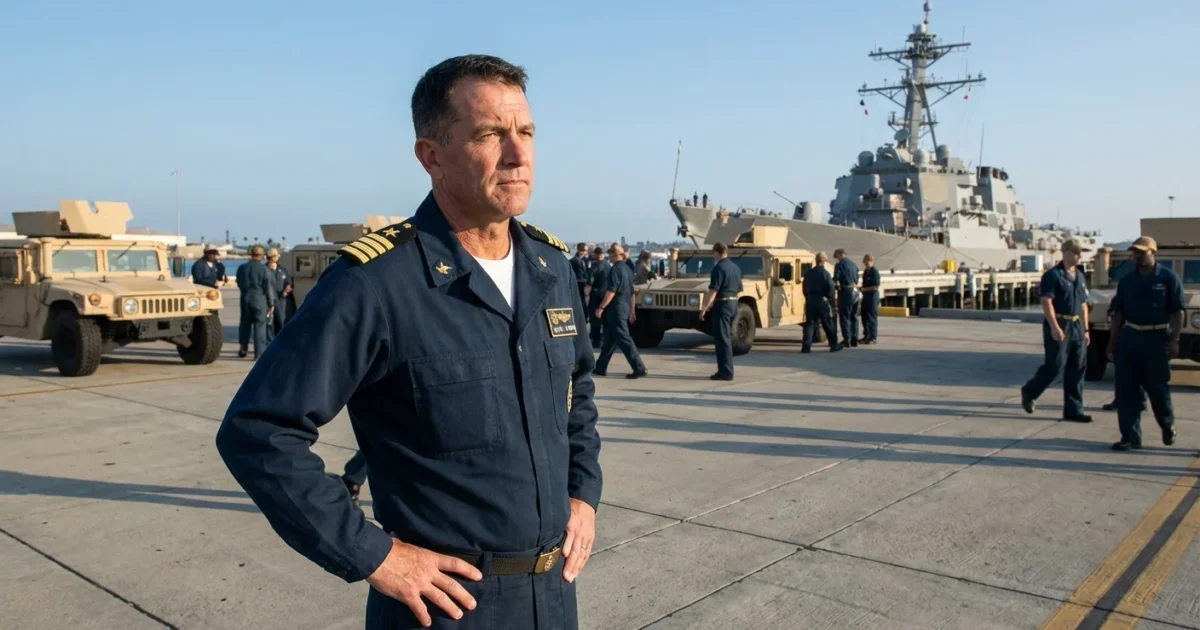
Breaking: The U.S. Navy has relieved Commodore Douglas Whimpey of his command in California, citing a loss of confidence in his ability to lead. Navy officials confirmed the action within the past 24 hours and offered no further details. Whimpey is the first Navy commodore publicly removed from command this year. The move raises sharp legal and policy questions that deserve straight answers.

What We Know Right Now
Whimpey held the positional title of commodore, which is given to senior captains who lead a squadron or group. It is not a permanent rank. It is a leadership billet with broad authority over people, ships, missions, and readiness.
The Navy used a familiar phrase. Leaders are sometimes relieved for a loss of confidence. This is standard language across the sea services. It signals a serious break in trust between the Navy and the officer in command. The Navy did not release the cause. No charges were announced. No investigation details were shared.
I pressed for more information. Officials declined, citing ongoing processes and privacy rules. That means the public must now rely on formal steps that follow a relief for cause. Those steps are governed by law and policy, not rumor.
What “Commodore” Means, And Why It Matters
A commodore in the modern Navy is a senior captain in charge of multiple units. Think of it as a superintendent role. The job carries legal responsibility for safety, discipline, training, and mission success. When a commodore is relieved, the impact ripples through sailors, families, and operations.
An acting leader is typically assigned to keep the squadron running. Training, deployments, and maintenance continue. The Navy plans for continuity. Still, a sudden leadership change can affect morale and public trust.
What “Loss of Confidence” Means In Plain Terms
Loss of confidence is not a criminal verdict. It is a command decision. The Navy uses it when a leader’s judgment, conduct, or performance no longer meets the standard for command. The reasons can vary. They may include professional mistakes, poor command climate, or other issues. Sometimes there is related misconduct. Sometimes there is not.
Relief for cause is an administrative action. It can be followed by reviews and, if warranted, investigations. If criminal conduct is alleged, the Uniform Code of Military Justice would apply. If not, administrative boards handle career outcomes.
A loss of confidence relief is a preventive step. It protects sailors and missions while facts are reviewed.
Rights, Due Process, And What The Public Can Expect
The Officer’s Rights
Whimpey retains rights under military law and federal policy. These include:
- The right to respond to adverse actions in writing
- The right to counsel
- The right to an administrative board review in certain cases
- The right to appeal career-impacting decisions
If the Navy pursues a detachment for cause, the officer can contest the basis. If the issue is misconduct, the UCMJ requires proof and affords procedural protections. If the issue is performance, the administrative process still requires a record and a rationale.
Public Transparency And Citizen Rights
The public also has rights. The Freedom of Information Act allows citizens to seek releasable records about the relief. The Privacy Act restricts personal information. Expect redactions if the record contains private data or ongoing investigative material. Congressional oversight committees can request briefings. State and local leaders may seek updates to inform affected communities.
If you file a FOIA request, ask for the relief memorandum, any command climate assessments, and final review documents.
Policy Signals And Oversight
The Navy’s use of loss of confidence is well known. It signals that command is a privilege, not a guarantee. It also reflects a wider Department of Defense push for accountability. That push covers ship safety, training standards, ethical conduct, and workplace climate.
Congress watches these cases closely. Lawmakers often press for clarity on whether reliefs reflect individual failures or systemic problems. If multiple removals cluster in one region or mission set, committees may request a broader review. The Government Accountability Office can be tasked to study patterns. These steps keep military power aligned with public trust.
Speculation can harm real people and ongoing reviews. Wait for official findings before drawing conclusions.
What Comes Next
Expect the Navy to name an acting commodore to maintain continuity. Administrative reviews will run their course. If there are findings, the Navy can release a summary consistent with law and policy. If there are no substantiated issues beyond leadership judgment, the record may remain sparse.
For citizens, two things matter. First, a swift relief helps protect sailors and missions when trust breaks. Second, transparency must follow as rules allow. The balance is not easy. Privacy and due process matter. So do public accountability and confidence in the chain of command.
Conclusion
Commodore Douglas Whimpey’s relief is a serious step with real consequences. It is also a test of the Navy’s accountability system. The facts will emerge through formal channels, not rumor. Our job is to demand fairness, protect due process, and insist on transparency, all at the same time. ⚖️