

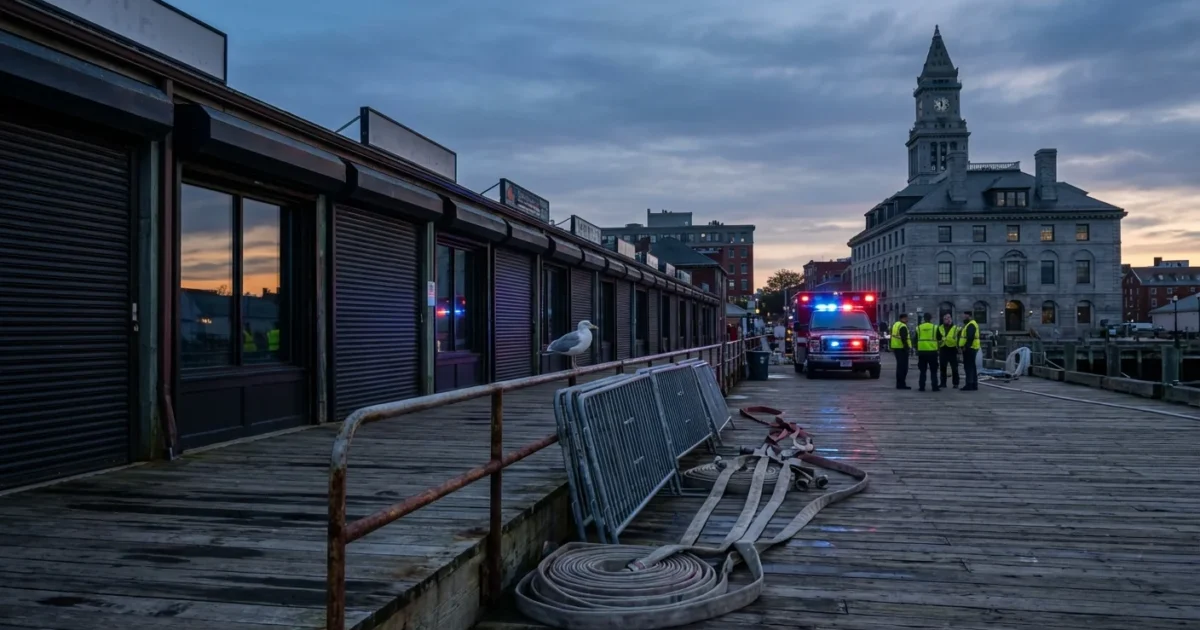
Portland’s Old Port is on fire tonight. Flames are working through Custom House Wharf, a tight cluster of working waterfront buildings and docks. I am on the scene, watching firefighters attack heavy smoke from the street and the water. Sirens, radios, and the smell of char hang over Commercial Street. This is a fast moving emergency with real legal and civic stakes.
What we know now
Portland Fire Department has established a wide safety perimeter around Custom House Wharf. Mutual aid crews are here, along with marine units pushing water from the harbor. The Coast Guard is monitoring vessel traffic near the wharf. Police are turning cars and pedestrians away from the Old Port’s waterfront blocks. City officials are asking everyone to avoid the area and follow directions on site.
Several businesses along the wharf have closed for the night. Access to adjoining piers may be limited while crews work. Damage assessments will take time. The cause is not yet known. Investigators will move in only after the fire is under control and the structure is safe to enter.
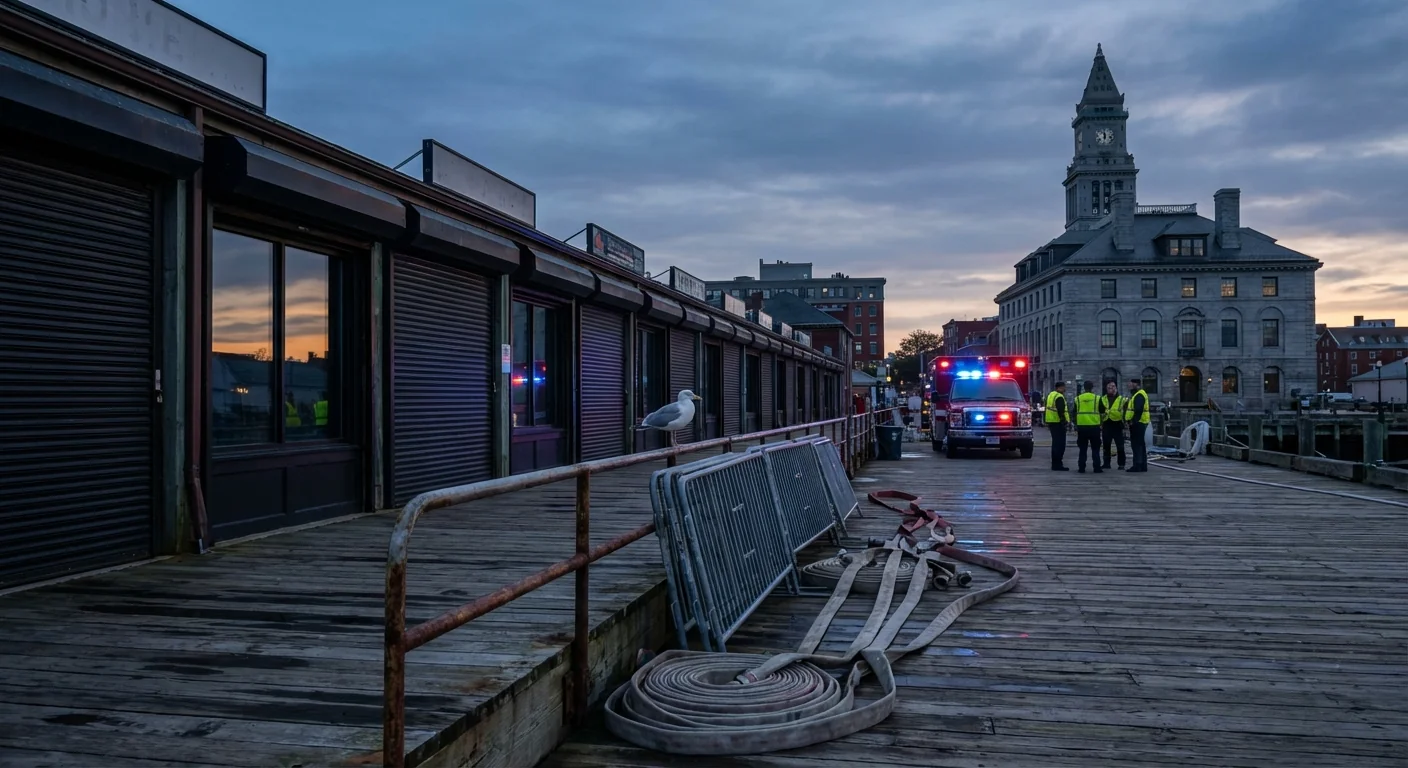
Avoid the Old Port waterfront near Custom House Wharf. Follow lawful orders from fire and police. Do not cross tape or barricades.
Public safety orders and your rights
In a fire like this, the city can close streets and restrict access for safety. That authority comes from local ordinances and Maine’s emergency management laws. Orders must be clear and related to safety. If an officer tells you to move back, you must comply. Arrests can follow if you refuse a lawful order within a marked emergency zone.
You still have rights. You may record from public places that are outside the safety perimeter. Do not interfere with crews or block equipment. Residents and workers who are displaced are entitled to information about when they can return. The city must communicate reentry rules and provide a point of contact.
People with disabilities must receive reasonable accommodations during evacuations. That includes accessible transport when needed. If smoke affects your health, you can leave the area or shelter indoors with windows closed. Employers should not force workers to stay in unsafe spaces. Workers have the right to refuse dangerous work, without retaliation, when a hazard is clear.
Government response and legal footing
This scene is operating under incident command, the standard system for large emergencies. Portland can request mutual aid, and it has. Water operations raise a second layer of law. If fuel, debris, or runoff reach the harbor, Maine DEP and the Coast Guard can take action under state law and the Clean Water Act. Boom lines may be placed to protect the water, and violations can trigger fines later if negligence is found.
Building code and fire code questions will follow. Many Old Port piers are historic, with heavy timber and older utilities. Investigators will review whether required alarms, sprinklers, and clear egress were in place. If a recent renovation occurred, permits and inspections will be pulled for review. OSHA standards govern firefighter safety, and the city must protect crews with proper gear and rest cycles.

If the city manager declares a local civil emergency, it can unlock rapid contracting, overtime policies, and state coordination. That does not erase civil rights. Curfews or broader restrictions must be narrowly tailored, time limited, and clearly posted.
Impact on businesses and the waterfront economy
Tonight’s closures will ripple through the Old Port. Restaurants, bait suppliers, and tour operators depend on these piers. If damage blocks the docks, fishermen could lose access, even for a short time. The city will need to balance rapid reopening with structural safety.
Business owners should review their insurance now. Business interruption coverage often requires physical loss or damage. Keep expenses and communications organized. Workers sent home because of closures may qualify for unemployment if hours are cut beyond their control. Tenants in mixed use buildings have rights to safe housing and timely notice of any relocation.
Permitting offices may fast track temporary repairs after the scene is cleared. Expect inspectors on site before any reopening. If the Governor issues a disaster declaration later, low interest loans and grants could follow, but that process takes documentation.
Document losses early. Save receipts, take dated photos from a safe distance, and keep all notices from city officials. File public records requests for inspection reports once available.
What investigators will examine next
- Point of origin and electrical load, including recent equipment changes.
- Sprinkler presence, alarm performance, and blocked exits.
- Hot work permits, if any welding or cutting occurred today.
- Fuel lines, propane storage, and marina utilities along the pier.
- Maintenance of historic timber pilings and fire breaks between structures.
The path forward
Tonight, the priority is life safety. Crews are fighting hard to keep this fire from jumping between old wooden buildings. The law gives them the space they need, and it gives you clear rights at the edge of that space. Expect more street closures into the night, air quality advisories, and a layered investigation that will cut through permits, inspections, and environmental impacts.
I will stay on the waterfront and report the moment officials open an access lane, schedule the next briefing, or identify a likely cause. Old Port neighbors, take care of each other, check on workers heading home, and keep clear of the tape. The city will answer hard questions about code compliance and response. Those answers start when the fire is out.




