BREAKING: Payne County court reviews Jesse Butler case as youthful offender rules clash with calls for tougher accountability
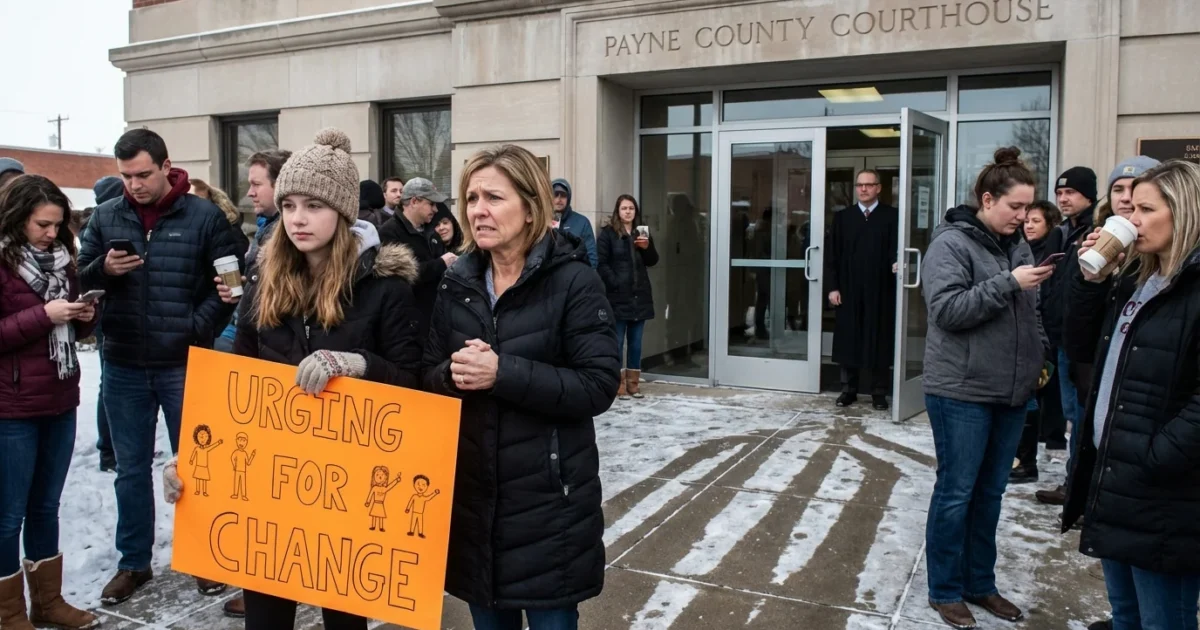
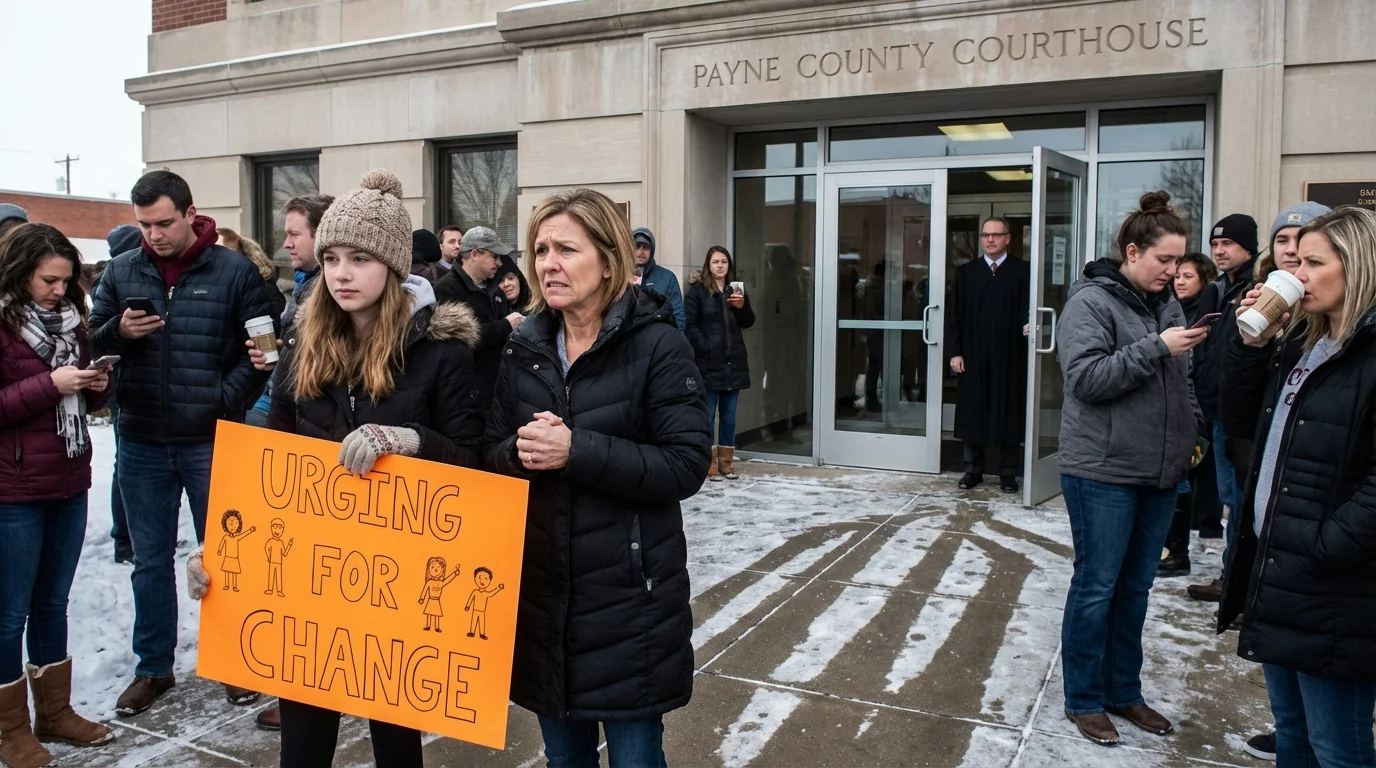
I was inside the Payne County courtroom today as Jesse Butler returned for his first review since his August plea to 11 felony counts. The judge heard updates on his supervision plan. Outside, students and families pressed against the cold, demanding change. The question in the air was simple, and heavy. How should the law treat a 17-year-old who admits to violent sexual crimes?
What happened in court today
Today’s hearing examined whether Butler is following the rules set in August. He pleaded no contest to rape, strangulation, and related charges involving two girls he dated. Because he was 17 at the time, the court labeled him a youthful offender. The adult prison time, which could have stretched decades, was suspended. Instead, he must complete a strict program that runs until his 19th birthday.
The court focused on compliance. That means curfew checks, counseling reports, school or work status, and contact limits. Any claim that he broke the rules would trigger a separate finding before the judge can change his status. The victims and their families have the right to attend, submit statements, and be heard.
A youthful offender review is a status check. The judge measures compliance. If violations are proven, the court can tighten rules or send the case to adult court for sentencing.
The law that shaped the outcome
Oklahoma’s youthful offender law is a hybrid system. It aims to hold older minors accountable, and still offer a path to treatment and education. In Butler’s case, the court required counseling, community service, daily check-ins, a curfew, and limits on social media use. If he completes the program, he avoids adult prison. If he fails, the court can revoke that benefit and impose adult time.
This approach has drawn sharp criticism here. Advocates argue that violent sexual crimes by older teens should default to adult court. They say the current law gives too much room for leniency, and not enough space for victim safety and public trust. Supporters of the law counter that teens are different from adults, that treatment can work, and that judges need options.
The body camera video and the policy stakes
The recent public release of arrest body camera video intensified this debate. The footage shows the arrest scene and the strain on the family. To many viewers, the tone of the video felt at odds with the seriousness of the crimes. That contrast fueled anger around the youthful offender outcome. It also raised questions about how and when police video should be released when minors are involved.
This matters for policy. Lawmakers are weighing rules for body camera releases in cases with juvenile defendants. They are also studying privacy protections, redactions, and timing. The goal is to balance transparency, fair process, and the dignity of victims.

What could change next
From my reporting on today’s hearing and meetings at the Capitol, several reforms are now on the table:
- Automatic adult certification for certain violent sex crimes by 16 and 17 year olds
- Minimum custody or secure placement periods within youthful offender cases
- Stronger victim notification and guaranteed speaking rights at all reviews
- Clear rules for body camera releases in cases involving minors
- More funding for trauma care and evidence-based treatment
Any change will require careful drafting. If penalties are too rigid, judges lose tools to manage risk. If they are too soft, the public loses faith in the system.
Your rights and the road ahead
This case has become a civic stress test. Protesters have the right to gather on public grounds, follow police instructions, and speak out. Victims have the right to notice, to be present, and to be heard. Butler has the right to counsel, to due process at any violation hearing, and to a clear path to compliance.
The next months will decide whether the youthful offender plan holds. If Butler violates conditions and the court finds proof, the adult sentence can return to the center of the case. If he complies, the law as written allows him to finish the program and avoid prison.
Do not threaten, harass, or dox anyone connected to this case. That is illegal. It also undermines the very justice and safety reforms that advocates are fighting for.