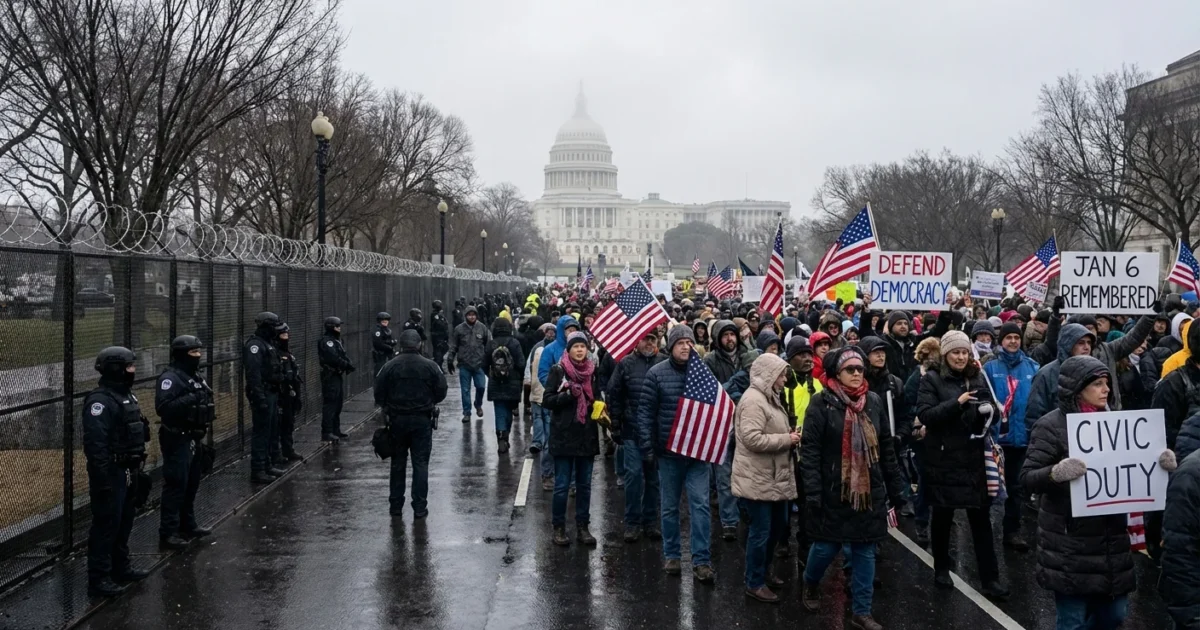
January 6 returns to the streets and the courts today. Five years after the attack, the fight over its meaning is no longer abstract. It is here, in real time, in our laws, and in our civic life. I am on the ground, and I can confirm a new test of resolve is underway.
What is happening today
A group of January 6 defendants and supporters plan to march in Washington, D.C. They frame it as a call for leniency and a challenge to the government’s narrative. City officials confirm a permitted route. Police have set crowd and traffic controls. Capitol Police are on heightened posture. The goal is clear, protect the Capitol and preserve the right to protest.
The symbolism is heavy. The march arrives on the exact date Congress was forced to pause the electoral count in 2021. The city is different now. Fences, staffing, and joint command protocols are tighter. So are the rules for demonstrations on Capitol grounds.
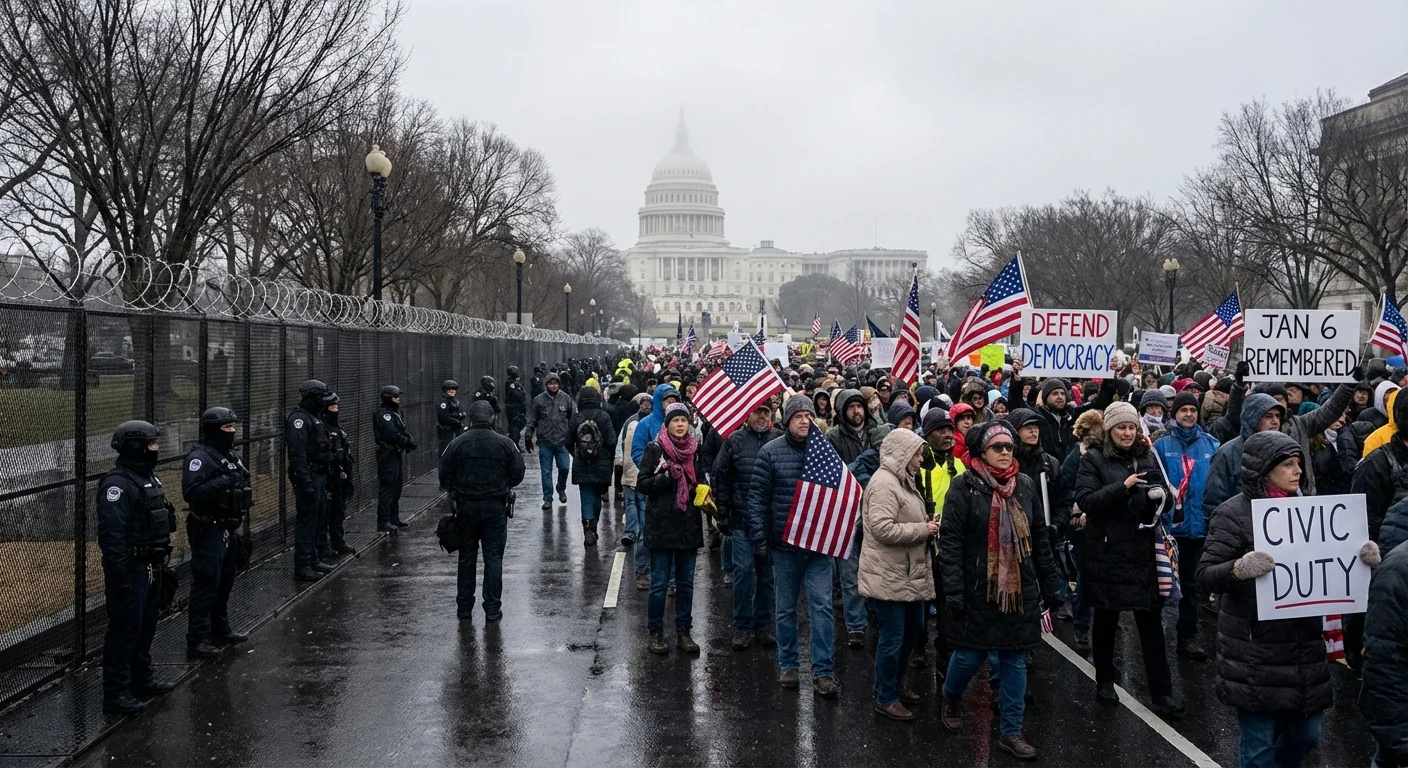
Entering restricted Capitol grounds without authorization can be a federal crime. Violence and property damage will trigger immediate arrest and federal charges.
The law since 2021, where the cases stand
The legal ledger is long. Federal prosecutors have charged more than 1,200 people for crimes tied to January 6. Hundreds pleaded guilty. Many others were convicted at trial. Judges have issued sentences that range from probation to more than 20 years. Leaders of the Oath Keepers and Proud Boys were convicted of seditious conspiracy. Those verdicts underline a core point. Courts found organized efforts to stop the transfer of power.
Key rulings reshaped the playbook. In 2024, the Supreme Court narrowed the use of the federal obstruction statute often used in January 6 cases. It held that 18 U.S.C. 1512 applies mainly to evidence tampering. That decision forced judges to review some convictions and sentences. Some counts have been tossed, others stand on separate charges like assault, trespass, and conspiracy.
Also in 2024, the Court ruled that a former president has immunity for certain official acts, but not for private conduct. Trial courts now must sort which acts count as official. That process affects high level cases connected to January 6. It does not shield violence in the halls of Congress.
Two Supreme Court rulings now guide January 6 cases. Obstruction charges face a tighter test. Claims of presidential immunity face a line between official and private acts.
Policy shifts and oversight
Congress and agencies overhauled security planning for certification day. The Capitol Police Board rewrote rules for emergency aid and riot control. Joint session security now includes earlier threat sharing with D.C. police and the National Guard. The Architect of the Capitol updated physical barriers and camera coverage. The House and Senate sergeants at arms added training and rapid deployment teams.
At the Justice Department, charging memos emphasize violence, weapons, and leadership roles. The Department of Homeland Security renewed its strategy on domestic violent extremism. That strategy adds resources for community reporting and civil rights guardrails. Inspectors general continue to audit the failures of January 6. They also track how fixes affect free speech and assembly.
Your rights today
You have the right to speak, assemble, and petition the government. You also have the duty to follow lawful orders about time, place, and manner. Police can set routes and restrict items that pose safety risks. You may record police in public, as long as you do not interfere.
- Keep distance from restricted zones, follow posted signs, and respect barriers
- If stopped, ask if you are free to leave, and state you wish to remain silent
- Do not carry weapons or items banned by permit terms
- Record events openly, and store video in a secure cloud
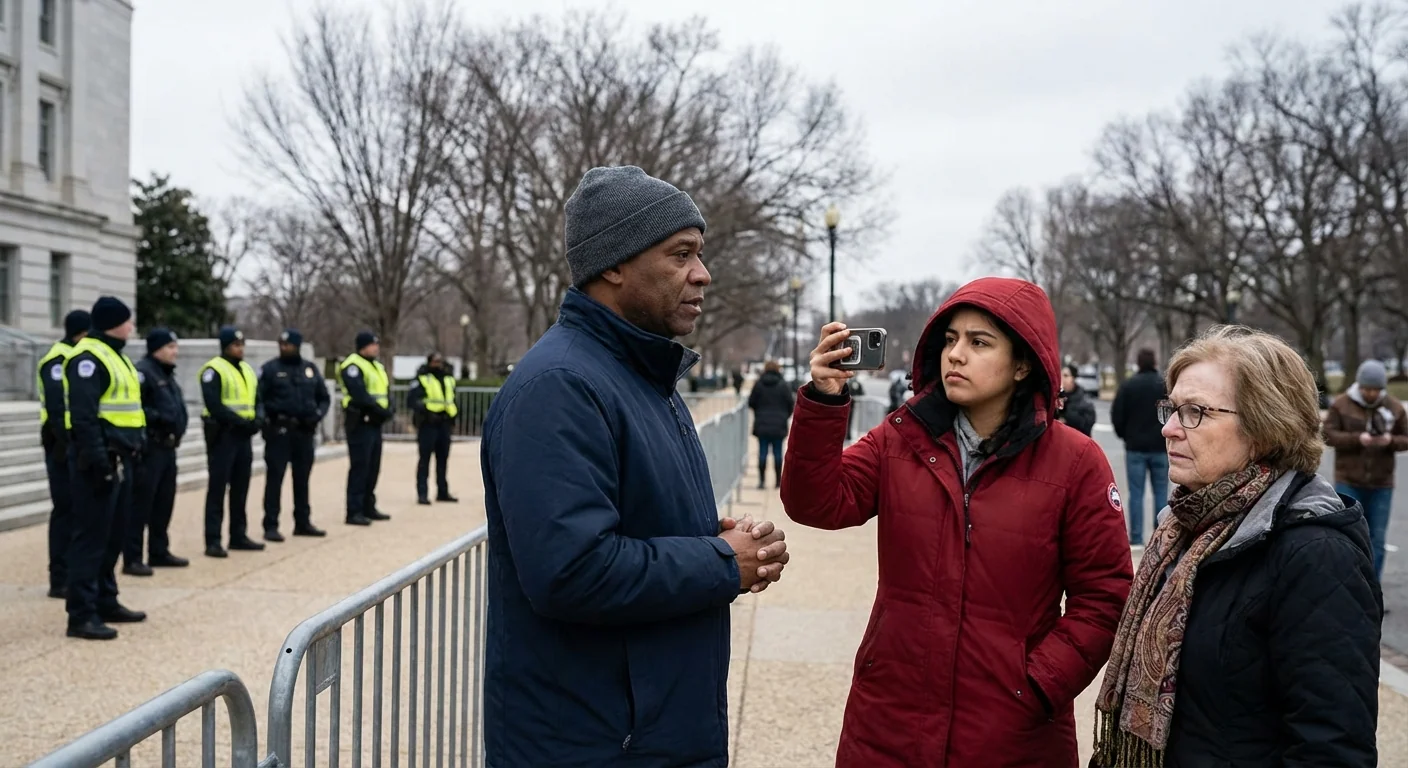
Bring ID, a charged phone, and the permit map. Write a legal hotline on your arm. Peaceful, planned actions protect your rights and your message. ⚖️
The battle over memory and accountability
This anniversary is not just a date. It is a contest over public memory and the rule of law. One camp calls January 6 a protest gone wrong. Another calls it a coordinated attempt to stop a lawful transfer of power. Court records support the second view. The 2020 election was valid. The false claim of widespread fraud still drives much of the conflict.
The law is now the referee. Criminal cases set lines around violence, threats, and deception. Civil suits by officers and lawmakers press for damages and truths under oath. Election laws and certification rules have been stress tested. In 2024, the Supreme Court also settled one more question. States cannot use the 14th Amendment’s insurrection clause to strike federal candidates from the ballot without an act of Congress. That decision moved the fight back to voters and to Congress.
Today’s march, and the responses to it, will shape how we remember January 6. They will also show how we handle hard disagreement inside democratic rules. The message from the law is steady. Speak. March. Petition. But do not cross the line into force or fraud. Our civic future depends on holding that line, together. 🇺🇸