Breaking: What is ICE, and what can it do? I am publishing this explainer now because questions are flooding city halls, schools, and courtrooms. A recent use-of-force incident and fresh directives out of Washington have reset the rules of engagement. Here is what the law says, what has changed, and what you can do to stay informed and safe.
What ICE is, right now
U.S. Immigration and Customs Enforcement is a federal agency inside the Department of Homeland Security. It has two main parts. Enforcement and Removal Operations handles civil immigration enforcement. Homeland Security Investigations runs criminal probes that often cross borders.
ERO officers arrest, detain, and remove people for civil immigration violations. That includes overstays and people with final orders of removal. HSI agents investigate crimes like smuggling, human trafficking, and money laundering tied to cross border activity. The two branches share the ICE badge, but they carry out very different missions.
ICE works mostly in the interior of the country, not at the border. That is where U.S. Customs and Border Protection operates. The line matters. It decides who knocks on a door, who sets the checkpoint, and which laws apply.
ICE is not CBP. CBP operates mainly at and near the border. ICE operates inside the United States.
Where ICE gets its power
ICE’s legal authority comes from the Immigration and Nationality Act and federal regulations. ERO officers can make civil immigration arrests. They can also issue administrative warrants. Those are not signed by judges. They are signed by DHS officials. An administrative warrant does not let officers enter a private home without consent. A judicial warrant can.
Use of force is controlled by DHS policy. Officers may use force that is objectively reasonable. Deadly force is allowed only to stop an imminent threat of death or serious injury. After any serious incident, there are layers of review. ICE’s internal affairs unit investigates. DHS civil rights officials and the inspector general may review. Local prosecutors and federal courts can get involved when the facts demand it.

What officers can do, and what they cannot
- Arrest in public places when they have legal cause.
- Detain at jails using detainers, which ask locals to hold a person.
- Conduct at large operations with approved plans.
- Enter a home only with consent or a judicial warrant.
What is changing under the current directives
The new enforcement playbook is sharper and faster. It places a heavier focus on recent border crossers and people with prior removal orders. It narrows discretion that once paused many cases. Field teams are conducting more at large arrests, including in non sensitive locations.
Agreements with local police under section 287(g) are expanding in several regions. Some cities are pushing back. Detainers remain a flashpoint. Courts in some states have limited how local jails can honor them without a judge’s order. Worksite enforcement is also shifting. Raids and criminal charges are back in the toolkit, alongside civil fines.
Key shifts you will see in the field:
- More arrests away from courthouses and schools, with tighter approval rules
- A larger role for 287(g) partnerships between ICE and sheriffs
- Expanded use of detainers, tested by state and local laws
- Narrower case by case relief and faster movement on final orders
Your rights if ICE shows up
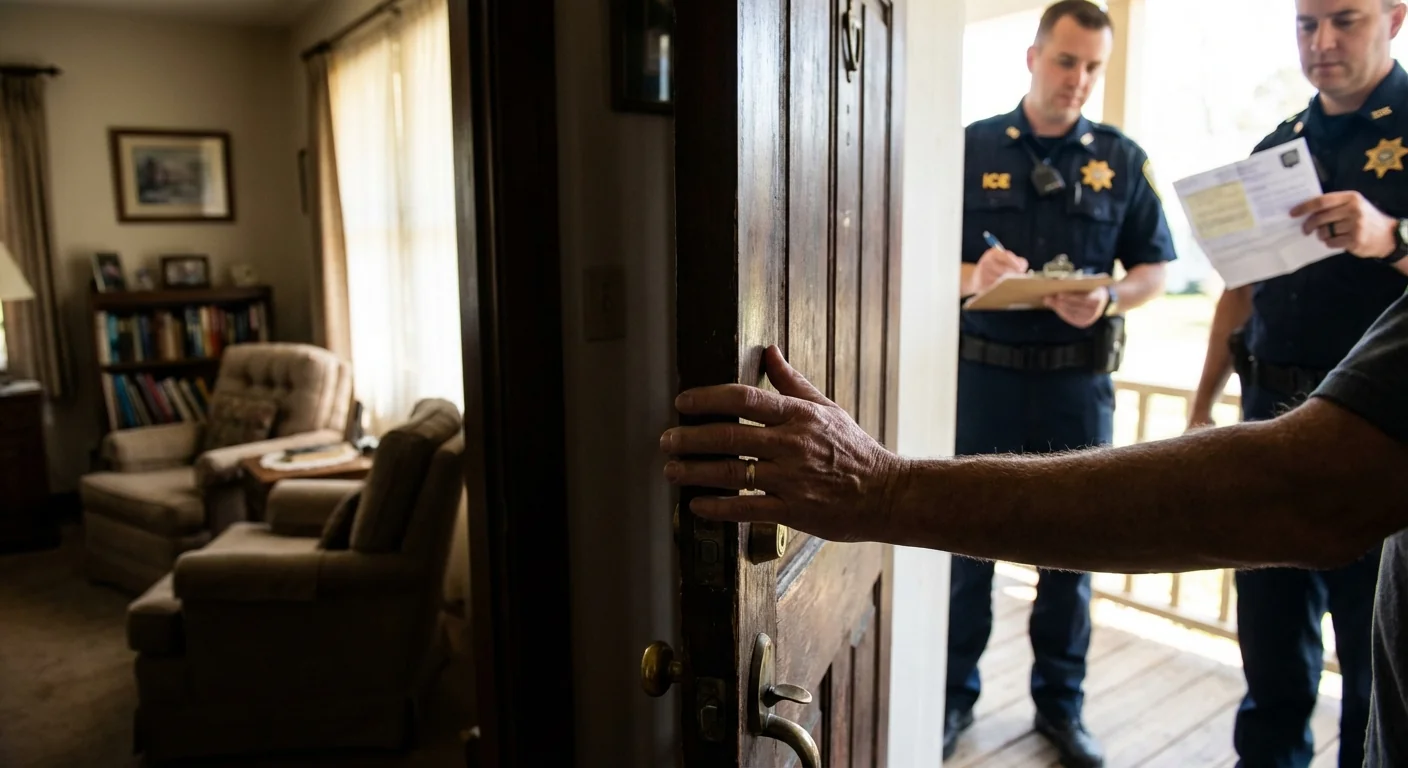
Immigrants have rights in the United States. So do citizens and bystanders. You do not have to open the door if officers lack a judicial warrant. You have the right to remain silent. You can ask to speak to a lawyer. You can refuse consent to a search.
Ask to see a warrant through a window. A judicial warrant must list your name and address and must be signed by a judge. An ICE administrative warrant is not enough to enter a home. ✅
If ICE knocks, follow these steps:
- Stay calm. Do not run. Keep the door closed.
- Ask if they have a judicial warrant. Request to see it without opening the door.
- Do not answer questions about your status. Say, I wish to remain silent.
- Do not sign anything you do not understand. Ask for a lawyer.
Oversight and accountability
Every use of force must meet the reasonableness test. Body worn cameras are now used in more operations, and footage is reviewed after incidents. The ICE Office of Professional Responsibility can open an inquiry. The DHS Office for Civil Rights and Civil Liberties and the inspector general can review patterns and specific cases. Congress can demand records. Courts can suppress evidence or award damages when rights are violated.
Local choices matter too. City councils decide whether police will honor detainers. Sheriffs choose whether to sign 287(g) agreements. State attorneys general can sue over civil rights violations. These levers shape what happens on your block.
You may record ICE in public from a safe distance. Do not interfere. Do not resist arrest, even if you believe it is unlawful. Use your right to remain silent and ask for a lawyer.
The bottom line
ICE is powerful, but its power has limits. The law sets those limits, and courts enforce them. The current directives push harder interior enforcement. That means more contact between officers and communities. Know the difference between ICE and CBP. Know the rules on warrants and force. Know your rights. Policy will keep moving. I will keep reporting, with clarity and facts you can use.