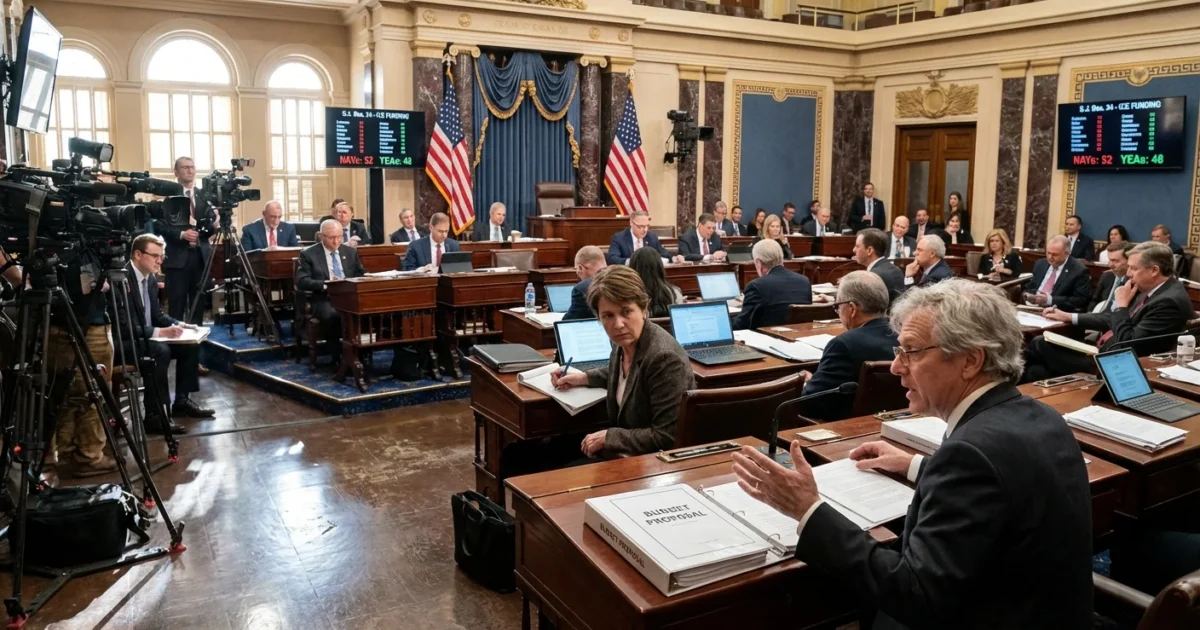
BREAKING: Senate Vote Stalls Over ICE Money, Homeland Security Stopgap Takes Center Stage
The Senate just hit the brakes on a major funding bill. The choke point is clear, money for Immigration and Customs Enforcement. Leaders are now racing to write a short term plan to keep the government open, with ICE funding as the key fight. The clock is running, and the stakes are real. ⏳
What Just Happened
In a tense floor vote this afternoon, senators blocked a sweeping package that would have funded much of the government. The roadblock is Homeland Security. More precisely, it is how, and how long, to fund ICE. Party leaders huddled within minutes. A stopgap is now the only path in sight to avoid a shutdown.
This is not only a budget debate. It is a clash over immigration policy. The length of the stopgap will decide when the next fight lands. The terms on ICE money will decide who holds the leverage when it does.
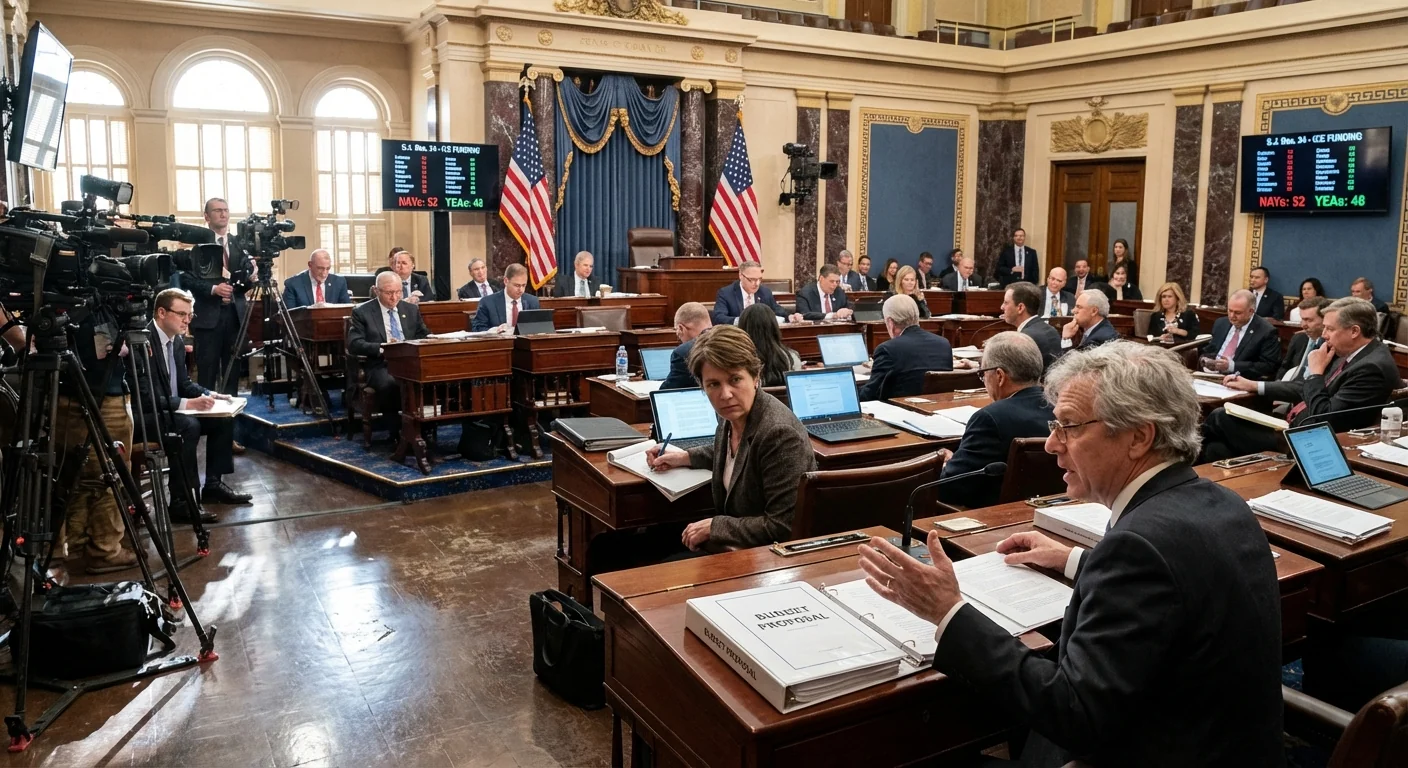
Why ICE Money Is The Hinge
ICE is a branch of the Department of Homeland Security. Its budget pays for detention beds, deportation flights, field operations, and electronic monitoring. It also funds data systems, contractors, and legal support needed to run the network.
One side is pressing for more detention capacity, fewer limits on transfers of funds, and faster removals. The other side wants tighter guardrails, fewer detention beds, stronger reporting, and more use of alternatives to detention. Both know the stopgap terms will shape the next round. A short bill keeps today’s rules. A longer bill locks the status quo for months.
What ICE Funding Covers
- Detention capacity and transport, including medical and custody costs
- Enforcement operations, including fugitive teams and worksite checks
- Alternatives to detention, like ankle monitors and check ins
- Data, contractor support, and oversight systems
The Stopgap Clock And The Law
Congress relies on continuing resolutions, also called stopgaps, when final bills stall. A stopgap keeps money flowing at current levels for a set period. It can also add policy riders, which are legal rules tied to the money.
If lawmakers miss the deadline, the Anti Deficiency Act kicks in. Agencies must stop non essential work when money runs out. DHS keeps many operations going because they protect life and property. Border security and certain ICE functions continue, usually without pay. Other programs pause or slow. Planning suffers, costs rise, and legal risk grows.
If talks fail, DHS will triage. Enforcement will continue, but court dates, contracting, hiring, and audits could slip. That exposes the government to errors, grievances, and lawsuits.
The Legal Stakes And Policy Trade Offs
ICE funding is not only dollars. It is policy by appropriation. Watch for riders that set limits, demand reports, or shift priorities. These items are on the table in the room I am tracking:
- A cap on detention beds, with strict limits on transfers to exceed it
- Reporting on deaths in custody, solitary use, and medical referrals
- Guardrails on data sharing with local police, and on use of detainers
- More money for alternatives to detention, with performance measures
These choices have clear effects. A high bed cap speeds detention, which can strain counsel access and court capacity. Strict transfer limits restrain rapid expansion. Strong reports help oversight, but they also impose deadlines and may delay spending. If Congress sets short stopgaps, both sides will reopen this fight again and again. If it sets a longer one, policy will freeze in place until that window ends.
What This Means For Communities And Rights
ICE activity touches real people, often fast. Even in a shutdown, rights remain. The Constitution does not pause. People in custody still have due process rights. That includes reasonable access to counsel and interpreters. Officers must follow the law on arrests, warrants, and searches. Local jails that hold people for ICE must meet basic standards.
If a stopgap tightens oversight, you can expect more public data on detention and transfers. If it expands beds and reduces limits, communities may see broader enforcement.
Know your rights during encounters. You can ask if you are free to leave. You can ask for a lawyer if detained. You do not have to open the door unless agents have a signed judge’s warrant. Keep copies of key documents and phone numbers.
Civil society groups will monitor conditions. Litigation is likely if detention standards slip, or if transfers bypass set caps. Congress can require DHS to notify committees before shifting funds. It can also ask the Government Accountability Office to review ICE spending, and it often does.
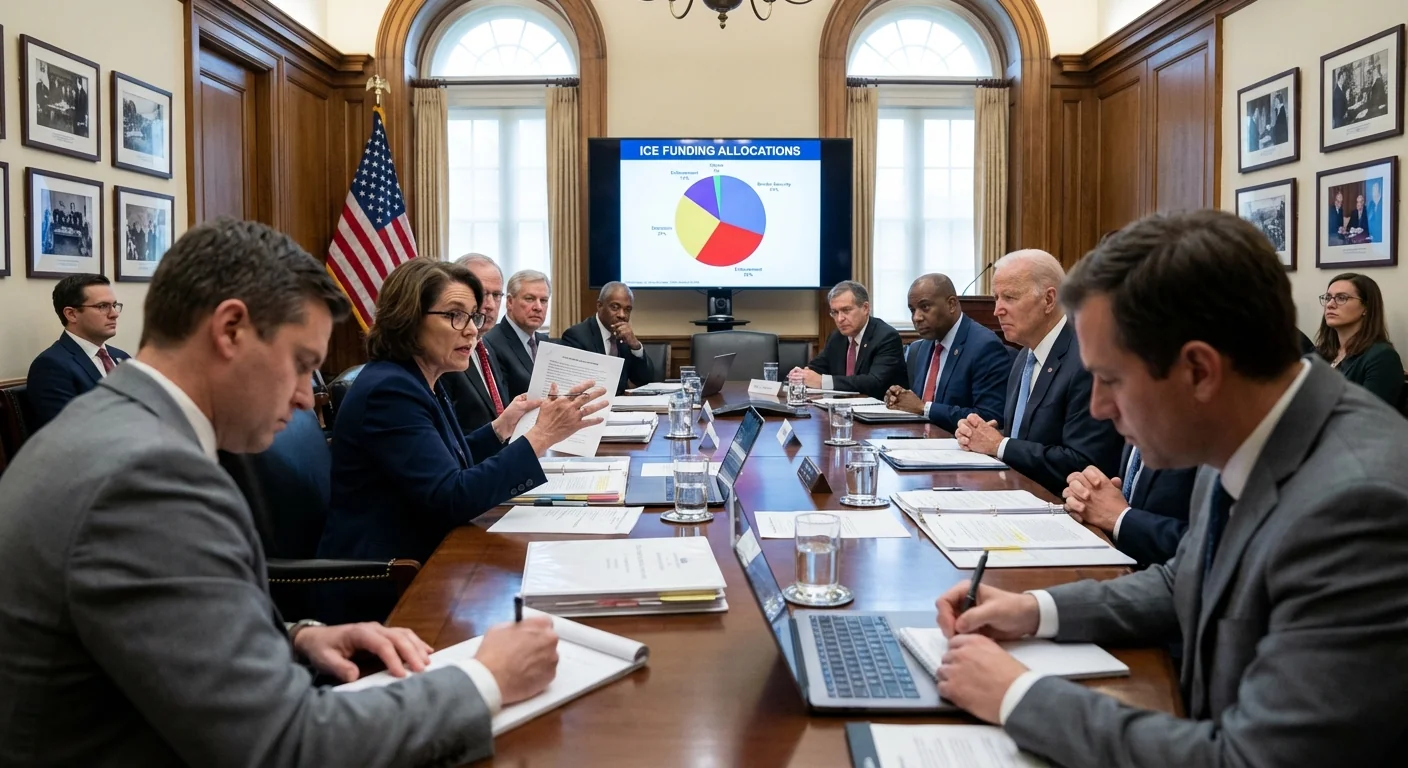
What To Watch Next
The next move is the stopgap text. Two details will tell the story, the calendar date it runs through, and the line by line terms on ICE. A short bridge would force another clash soon, keeping pressure high. A longer bridge would calm markets and agencies, but it would also lock in today’s rules.
The shutdown threat pushes both sides closer, but not all the way. Each concession on ICE money will have a policy price. Communities, lawyers, and local officials should be ready for quick guidance once the bill lands. Agencies will move fast to update directives.
Conclusion
Tonight’s vote was not only about spending. It was about how the law sets immigration policy through the purse. ICE funding is now the lever that moves the broader deal. The stopgap will decide how much force it has, and for how long. The Senate has the pen. The country will feel what it writes.