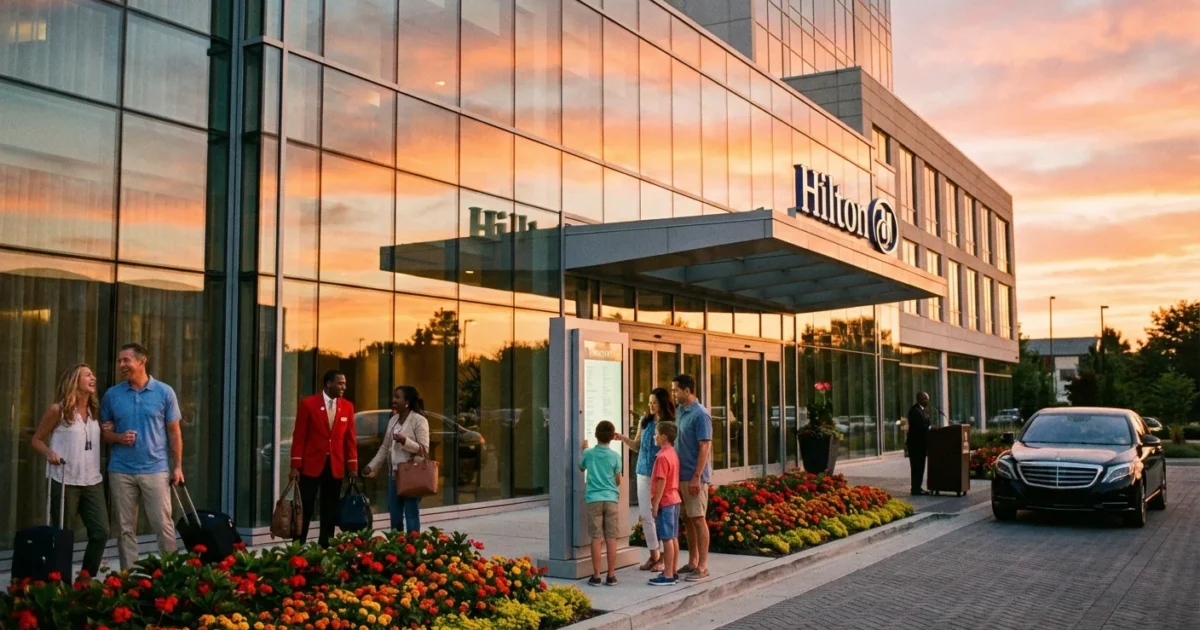
Hilton faces legal heat tonight after a federal allegation that goes straight to the heart of public accommodation policy and corporate control. I have confirmed that the Department of Homeland Security says a Minneapolis area Hilton canceled or denied hotel reservations for Immigration and Customs Enforcement agents tied to an enforcement action. Hilton has issued a response and says it is addressing what happened. The fallout began within hours, including a sharp investor reaction and fresh political fire.
What happened, and why it matters
According to DHS, multiple ICE agents expected to check in for official travel were turned away, or saw bookings canceled, in the Twin Cities area. The alleged refusals were linked to planned immigration enforcement work. Hilton responded quickly and said it does not condone denying rooms to government guests. The company says it is engaging with the property and federal officials while it reviews the facts.
This is not a small slip. Hotels operate as public accommodations. They serve the general public, often with state and local licensing that assumes equal access. When federal officers cannot secure rooms for official duties, it sets up a direct clash between business choices, government operations, and the rights of travelers who rely on a confirmed reservation.
The legal stakes, in plain terms
Public accommodation laws at the federal and state level ban discrimination against protected classes such as race, religion, national origin, sex, and disability. These laws usually do not treat occupation, including law enforcement status, as a protected class. That means a hotel is not automatically breaking civil rights law if it refuses service based on someone being an ICE agent.
But that is not the end of the story. If a business cancels a confirmed reservation without a valid reason, it risks breach of contract claims. If a refusal is intended to hinder officers carrying out their duties, it can brush against obstruction concepts. That bar is high, and intent matters. Still, lawyers on both sides will study the timing, the stated reasons, and any written policies at the property.
If the hotel participates in federal lodging programs or takes the government rate, contract terms likely require nondiscriminatory access for federal travelers. Violations can trigger penalties, loss of rate eligibility, or suspension from government travel programs.
A blanket policy that singles out law enforcement can create contract and licensing risk, even if civil rights laws do not list occupation as a protected class.
Franchise decisions, brand liability
Many branded hotels are franchise operated, with local owners running day to day operations under brand standards. That structure sits at the center of this dispute. The brand writes rules and training, but the franchisee decides who to check in at the desk.
If a local manager turned ICE away, Hilton still faces brand risk. Guests see the sign, not the ownership chart. Corporate leaders may issue directives, retrain staff, or even discipline the franchise. The company also has to show it oversees compliance with law. That includes record keeping, anti discrimination policies, and clear escalation paths when government bookings raise sensitive issues.
Government response and policy signals
DHS is pressing for answers and accountability. The agency wants continuity of operations, especially during enforcement actions. State leaders may also weigh in. Minnesota’s public accommodations law bans discrimination, but focuses on protected traits, not occupation. Lawmakers could now consider whether to list government service as a protected status in certain contexts. City licensing boards could also review whether local permits require neutral service to all lawful guests.
At the federal level, travel and procurement offices can act faster than legislatures. Agencies can revisit hotel agreements, issue guidance to travelers, and pull preferred status from properties that refuse official bookings without cause.
What guests and workers should know
Travelers have rights to reasonable access and truthful pricing. If a hotel cancels without a valid reason, guests can seek refunds, rate protections, and sometimes damages for costs they had to absorb.
- Save confirmation emails and names of staff who spoke with you
- Ask for the cancellation reason in writing
- Escalate to the brand’s corporate office
- Use your card protections if a refund stalls
If you are on official travel, notify your agency travel office at once. They can document the incident and secure alternate lodging fast. ⚖️
For workers, the safest move is to follow written policy and the law. If a request from law enforcement conflicts with policy, escalate to a manager and corporate counsel. Do not improvise at the desk. Documentation protects everyone.
Markets, optics, and next steps
Hilton’s shares fell today after the allegation surfaced and spread. Investors price brand risk in real time. The company now must contain the legal exposure and show firm control of standards across franchised properties. That means fact finding, public clarity, and concrete steps to prevent a repeat.
Expect three near term moves. First, a corporate investigation and a public update on findings. Second, targeted training for franchisees in high risk scenarios, including government bookings. Third, DHS and travel offices will reassess which properties get federal business.
Whether you approve of ICE or not, the legal question is not politics. It is whether a public accommodation can deny lawful, documented guests on the basis of their job, and whether that refusal interferes with government operations.
The bottom line
This clash started at a front desk, but it now touches federal law, state rules, brand governance, and citizen rights. Hilton says it is addressing the report. DHS wants assurances that its agents can do their jobs without last minute roadblocks. The legal lines are narrower than the politics, yet the consequences are large. I will keep pressing both sides for the paper trail, the policies, and the fixes that follow.