BREAKING: NRA Faces Fierce Internal Rift After Minneapolis CBP Shooting
The country’s biggest gun-rights brand is in a bind tonight. The NRA is under sharp pressure after a fatal U.S. Customs and Border Protection shooting in Minneapolis. The question at the heart of the storm is simple, and explosive. When is mere gun possession enough to justify lethal force by federal officers?
What We Know Right Now
Homeland Security officials say the man who was shot was armed. Multiple investigations are active. Details can change as evidence is reviewed. The core legal issue does not depend on every fact, it turns on standards the law already sets.
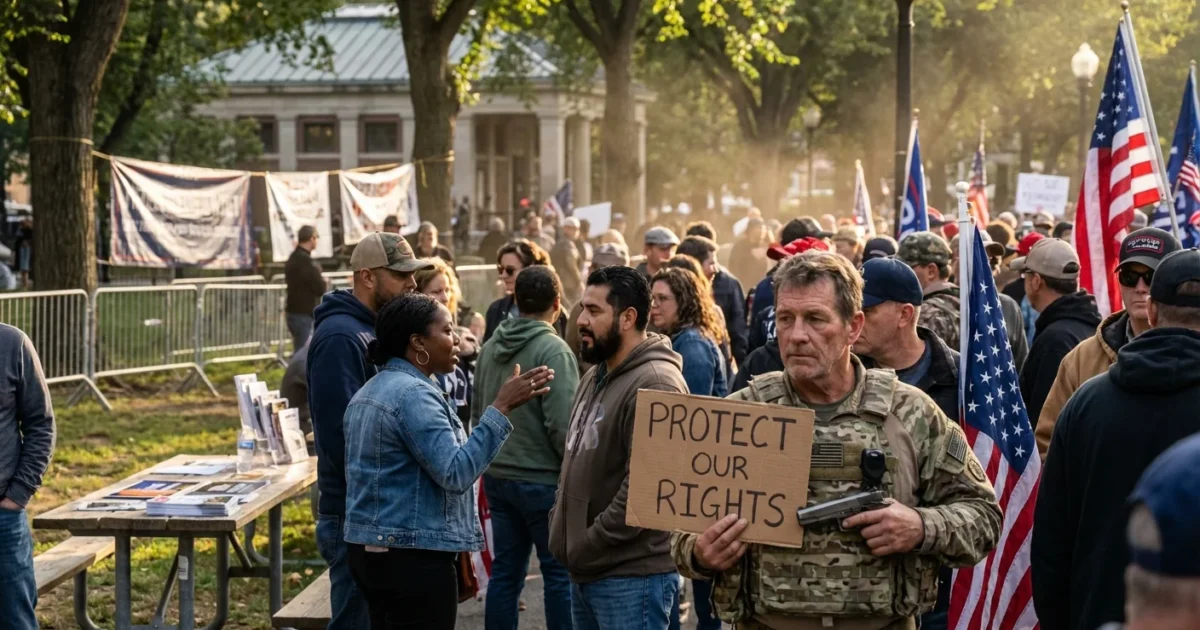
Gun-rights voices are now split in public. Some insist that the presence of a pistol, in a state where carry is legal with a permit, cannot by itself meet the test for deadly force. Others urge restraint, arguing that agents must make fast judgments that courts later review for reasonableness.
Why the NRA Is Under Pressure
For years, the NRA has balanced two messages. It defends the right to keep and bear arms. It also backs law enforcement. That balance is wobbling. Rival groups to the NRA are staking out harder lines on government overreach, especially when federal officers use deadly force against armed citizens.
The Minneapolis case brought the split into the open. Influential Second Amendment advocates are warning against a standard that treats lawful carry as a threat. At the same time, some conservatives are invoking the Second Amendment as a check on possible government tyranny. The result is a stress test for the movement’s unity and for the NRA’s message discipline.
Inside this clash sits a blunt legal truth. The Constitution protects both the right to carry and the right to be free from unreasonable seizures. The government must square those rights with officer safety. That tension is not new, but it is now front and center.
Police may use deadly force only when a reasonable officer would see an imminent threat of death or serious injury. This comes from Supreme Court cases like Graham v. Connor and Tennessee v. Garner.
The Law On Lethal Force, In Plain Terms
Deadly force by officers is judged by objective reasonableness. The question is what a reasonable officer would do in the same moment, with the same facts, not with 20 20 hindsight. Deadly force is allowed when there is an imminent threat. Imminent means the danger is about to happen, not a vague risk.
Mere possession of a gun, in a place where carrying is legal, does not equal an imminent threat by itself. Movement, brandishing, pointing, and ignoring clear commands can change the analysis. Context matters. Lighting, distance, whether officers gave a warning if feasible, and whether the person was reaching for the weapon, all factor into a court’s view.
Minnesota allows permitted carry in many settings. Minneapolis has no local ban that overrides state law on permits. Federal officers operate under DHS policy that also calls for necessity and proportionality. CBP has been rolling out body cameras. If footage exists, it will be crucial to the legal review.
Policy Stakes For DHS, States, And Cities
This case will shape policy far beyond one street corner. DHS will face hard questions about training in states where carry is common. Expect pressure to release body camera footage quickly, and to spell out the timeline, commands given, and whether the gun was displayed or simply present.
State lawmakers will revisit how permit holders should interact with federal officers. City leaders will press for clear protocols when federal operations happen in urban neighborhoods. Prosecutors, state and federal, will review the shooting for criminal exposure. Civil litigation is likely, under the Fourth Amendment, for excessive force. That means months of discovery and expert analysis if filed.
- What matters now:
- Whether the person pointed, brandished, or reached for the gun
- Body camera and surveillance video, and how fast it is released
- DHS and local investigative independence, including outside review
- Clarity on commands given, warnings, and identification by agents
If you carry a firearm and are stopped by law enforcement, keep your hands visible, state calmly that you are lawfully armed, and follow commands. Laws vary by state. This is general information, not legal advice.
The Path Forward For Citizens And The NRA
Citizens should watch for evidence, not spin. Video, dispatch audio, and forensic reports will answer key questions. The legal test is clear, the facts will decide how it applies here.
The NRA now faces a strategic choice. Double down on a law and order frame, or draw a bright line that says lawful carry cannot be treated as de facto threat. Rivals are already choosing the second path. That choice has legal weight. It signals to courts and lawmakers how the movement reads the Constitution in daily life, not just in lawsuits.
This moment is bigger than one case or one brand. It is about how a nation that permits armed self defense also polices its streets. Rights and restraint can coexist. They must, if public trust is going to hold. The next round of facts, and the responses from DHS, prosecutors, and the NRA, will set the tone for that balance in the days ahead.