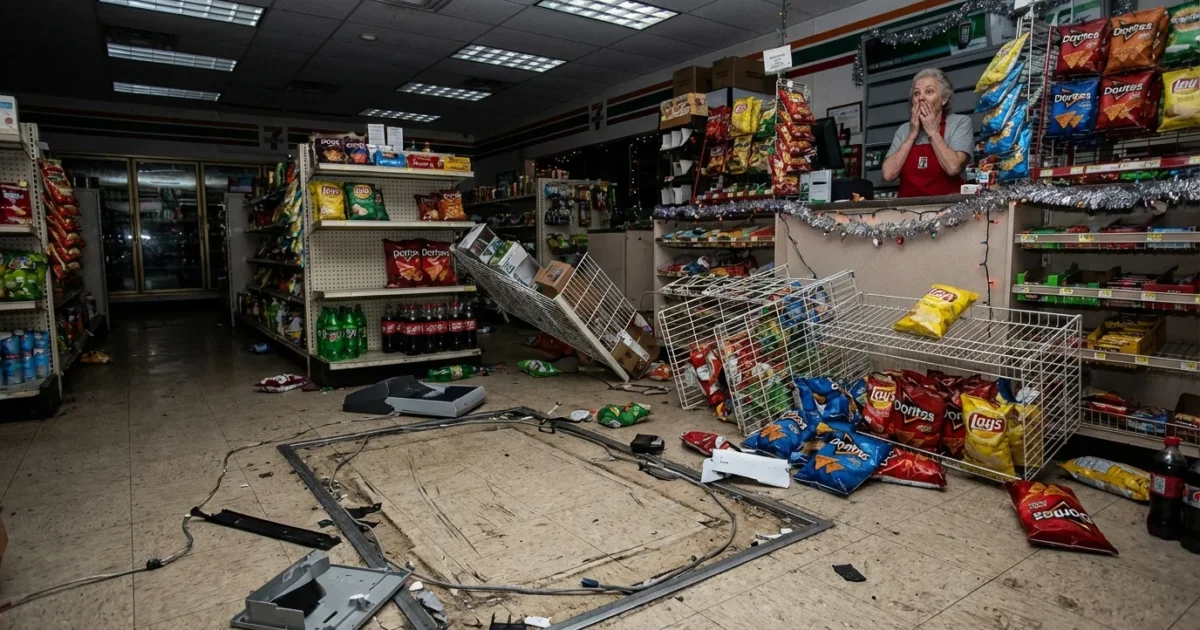
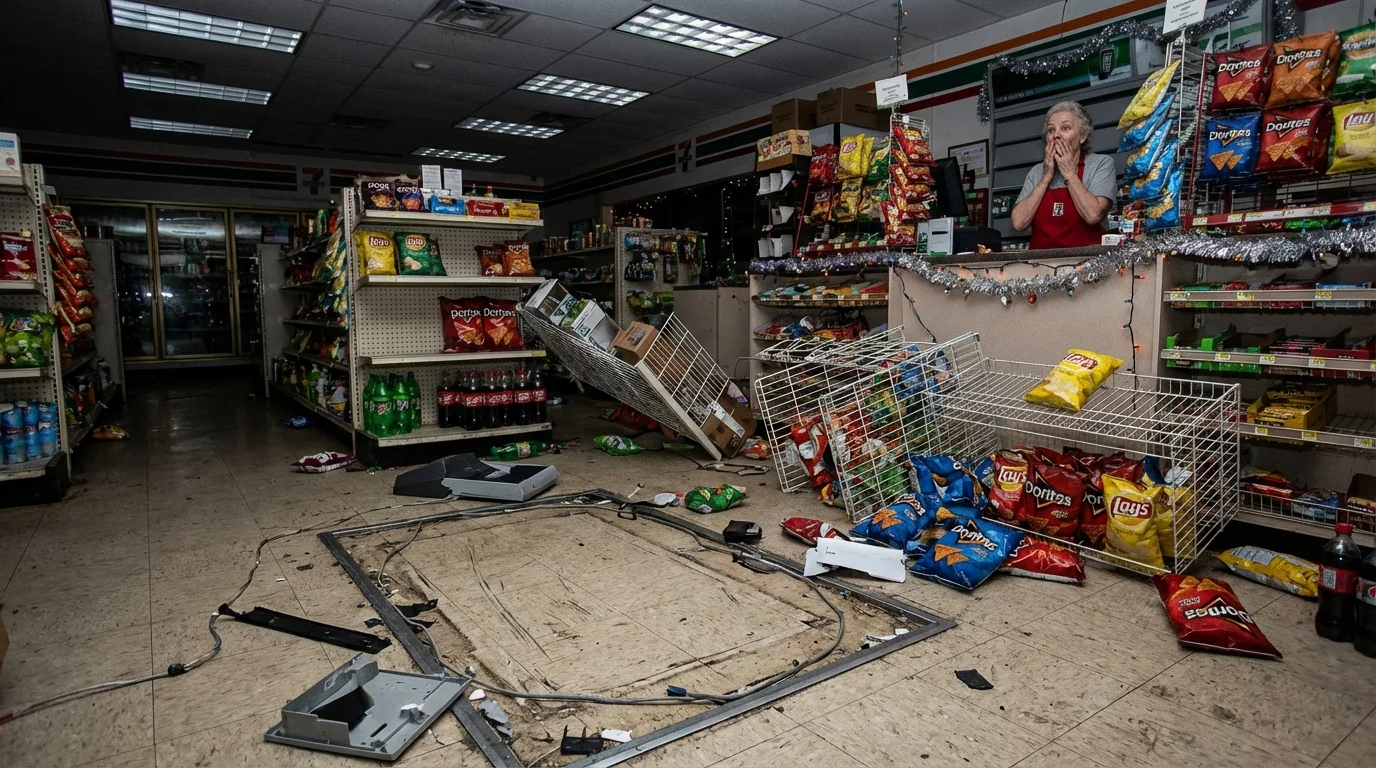
🚨 Christmas Eve smash and grab inside a Texas 7‑Eleven. Thieves ripped an ATM from its base, dragged it across the floor, and left the store in ruins. I can confirm the machine was torn from inside the premises, with debris scattered and shelving twisted. As of publication, police have not announced arrests or named suspects. The damage is severe, and the legal fallout will be, too.
What happened, and what it means for the law
The method was blunt. Pull, drag, and get out fast. This is not a new tactic, but the holiday timing raised the risk. Late hours, thin staffing, and quiet streets give these crews time. The wreckage shows how easy it is to turn a storefront into a crime scene within seconds.
Legally, this is not a simple theft. In Texas, prosecutors can stack charges. That matters for sentencing, insurance claims, and the store’s recovery timeline.
- Burglary of a building, a felony tied to entering to commit a crime
- Theft, tied to the attempt to take the ATM and cash
- Criminal mischief, tied to major property damage
- Engaging in organized criminal activity, if a group coordinated the hit
Felony exposure is real here. Burglary and organized crime counts can add years in state prison, especially with high dollar damage.
Policy pressure is coming for storefront security
Crimes like this expose a gap in basic protections. Many stores rely on cameras and alarms. That is not enough when the threat is a truck, a chain, and a minute of force. Cities already have tools they can use. Building permits can require protective posts at entries. Local codes can call for vehicle impact barriers that stop a slow roll into glass. These rules are common for gas meters and fire lanes. They can be applied to doors and windows as well.
ATM anchoring is another weak link. Bolting into concrete helps, but it must be done to a tested standard. Steel cages, internal tethers, and locked cash cassettes cut the payoff. Clear sightlines and bright lighting also reduce risk. In late-night retail, strong design slows crime and buys time for police.
Practical steps stores can take now
- Install bollards at the door line and near the ATM
- Anchor the ATM with reinforced plates and tamper alarms
- Use high resolution cameras with 30 to 60 days of storage
- Place the ATM away from the entry, not along a straight path out
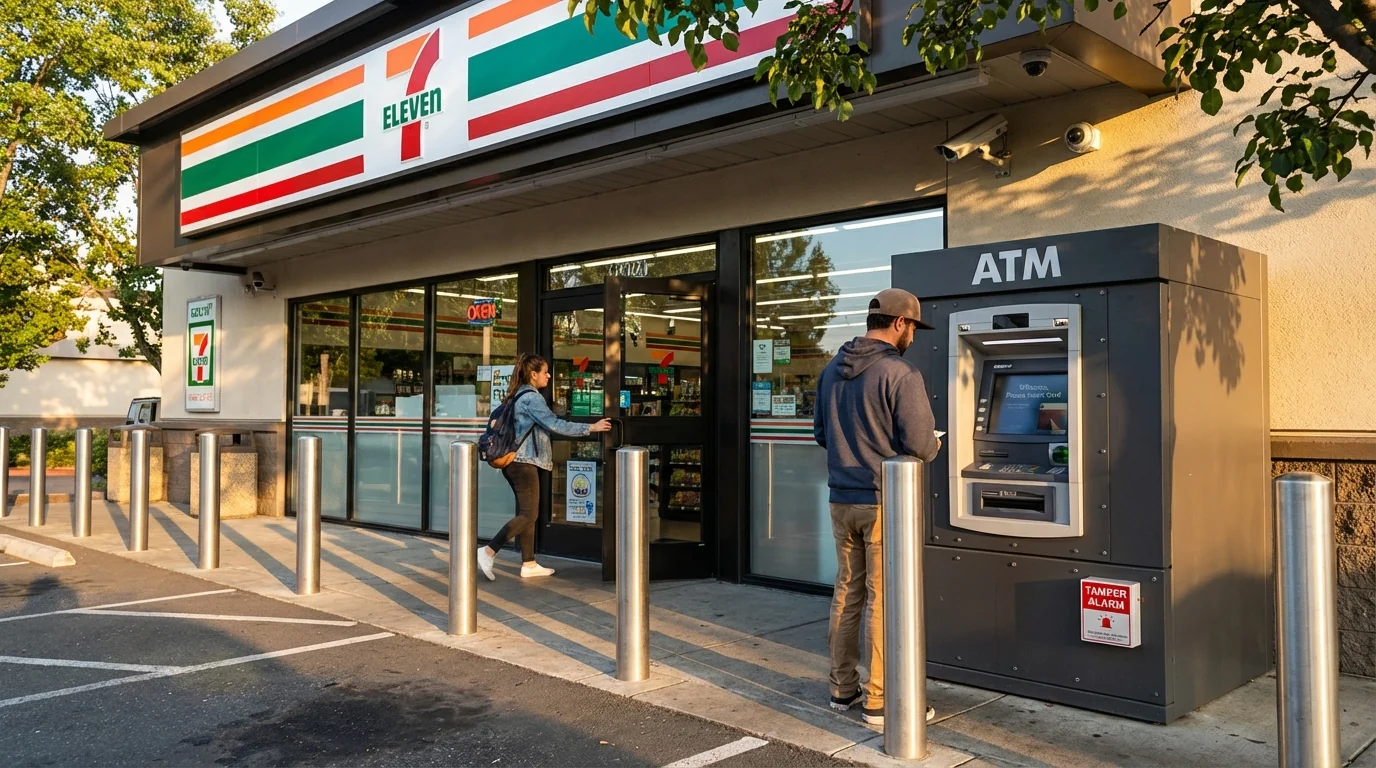
Ask your insurer if grants or premium credits are available for barriers, anchoring, and upgraded alarms. Many carriers reward proven hardware, not just signage.
Who pays, and how recovery works
This kind of attack triggers several layers of coverage. Commercial property insurance handles the broken doors, walls, and fixtures. Business interruption coverage can help with lost sales while repairs are made. The ATM may be covered by the store or by the machine operator, depending on the contract. Expect a high deductible and intense documentation demands. Insurers will look for video, alarm logs, repair invoices, and proof of security features.
For small retailers, the bigger cost may come later. One large claim can push premiums up at renewal. Some policies include a protective safeguards clause. If a required alarm or lock was offline, coverage can be denied. Owners should review those terms today, not after a loss.
Restitution can be ordered in criminal court if suspects are caught. That is often slow and uncertain. Civil suits against offenders are possible, but collection is rare. The best financial defense remains prevention.
Citizen rights and public oversight
Shaken customers and employees have rights. Witnesses can file statements and request case numbers for work or insurance needs. Crime victims can seek restitution later through the court. If anyone was injured, the Texas Crime Victims’ Compensation Program may help with certain costs, subject to eligibility rules.
The public can also ask for basic records. Under the Texas Public Information Act, residents may request incident reports and certain data from police and code offices. Some details can be withheld during an active investigation, but the law favors disclosure once the case moves forward.
You can file a records request with your city for incident logs, 911 times, and inspection histories. Agencies must respond within legal deadlines.
What comes next
This case will push city halls to act. Expect talk of bollard rules at new builds, grants for barrier posts at legacy sites, and tougher anchoring for in-store ATMs. Police will continue to target crews who use vehicles and chains to yank machines. Prosecutors in Texas have the tools to bring heavy charges when damage is high and teams are involved.
For now, the scene tells the story. A store torn open on a holiday. A machine dragged like scrap. The bill lands on a small business and its insurer. The fix is clear. Stronger storefronts, smarter ATM placement, and firm local standards can make smash and grab crews pick another target, or quit trying at all. 🔒