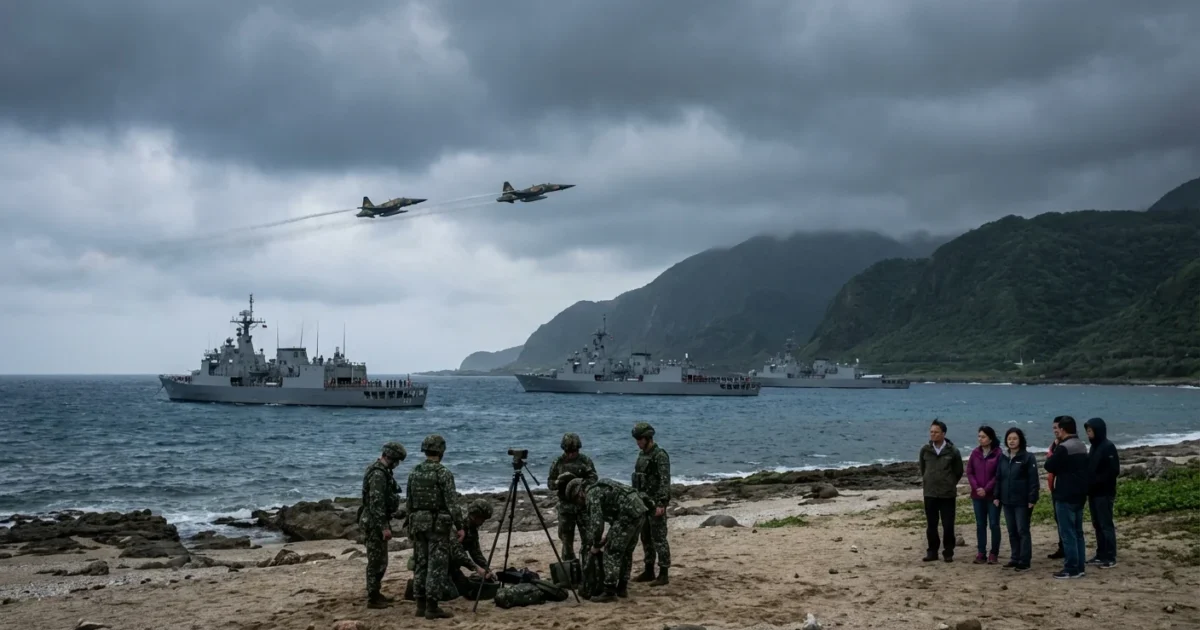
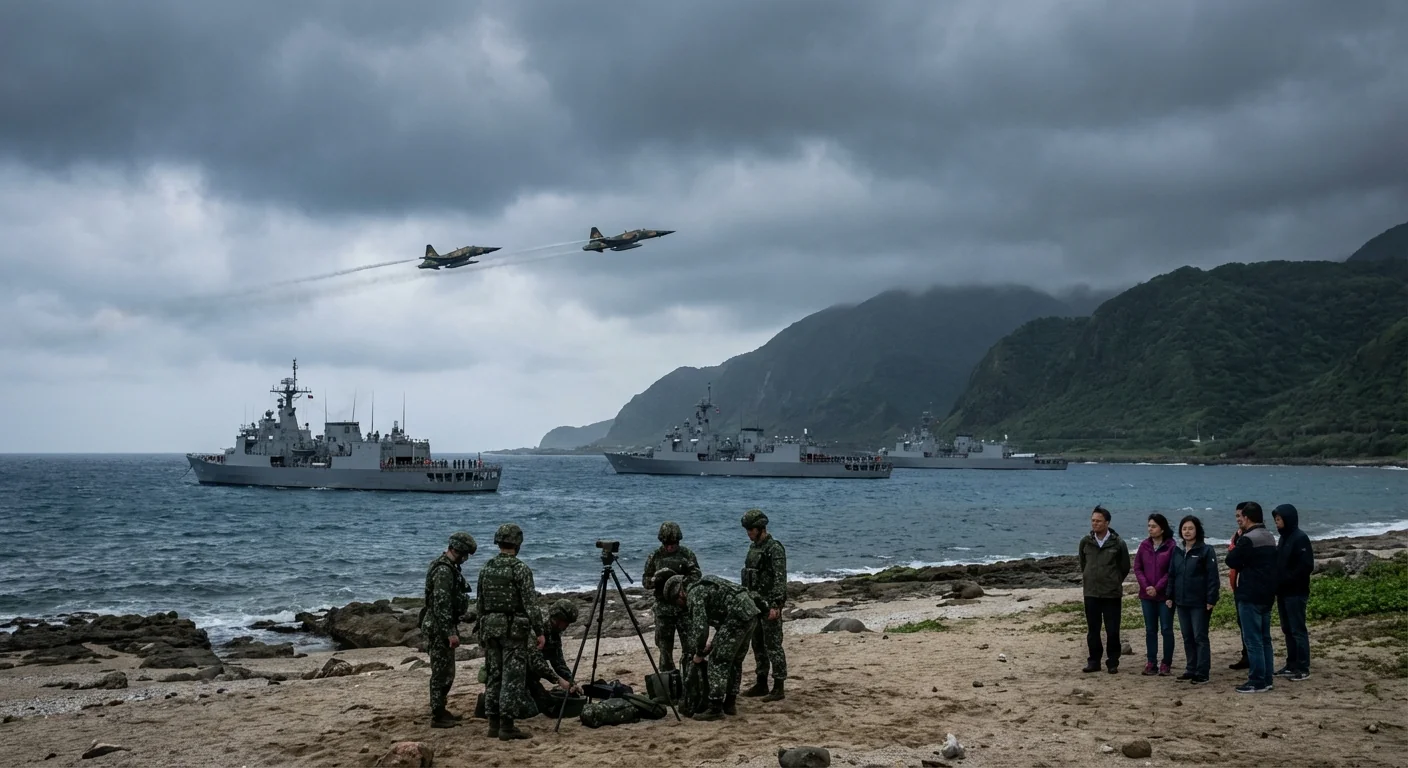
BREAKING: China’s biggest drills yet encircle Taiwan. I have confirmed that warships and fighter jets are operating on multiple sides of the island today. Beijing says the drills answer a new United States arms package for Taipei. Taiwan calls the moves a threat to regional peace and has raised readiness.
What is happening, and why it matters
Naval task groups and combat aircraft are moving close to Taiwan’s air and sea approaches. Training zones were announced near busy shipping lanes and flight paths. Live fire activity is included. The scale and timing are deliberate. China wants to signal that outside help for Taiwan comes with risk.
The legal stakes are serious. These drills push near waters and airspace that are lawful to transit, but also close to Taiwan’s territorial sea and critical ports. If operations impede commercial traffic, this shifts from a show of force to coercion. That has consequences under international law.
Live fire zones can force ships and aircraft to detour. Delay equals cost, and close calls raise accident risks.
The law in plain language
Under the UN Charter, threats of force are restricted. States can train their militaries, but they must avoid unlawful force. Under the law of the sea, Taiwan controls a 12 nautical mile territorial sea around its coast. Beyond that, in the exclusive economic zone, foreign navies may operate. They must still show due regard for safety and navigation.
China rejects Taiwan’s separate status and cites its Anti Secession Law. Taiwan rejects that claim and cites its own constitution and democratic mandate. The median line in the Taiwan Strait is a historic military safety line. It is not a formal border, but crossing it raises risk.
Blockade is a loaded word. A lawful blockade is tied to an armed conflict. A peacetime attempt to stop neutral shipping could be an unlawful use of force. Insurance markets and carriers will act fast if they think a blockade is forming.
If ships or planes are turned back by force over time, it could meet the legal test for a blockade.
Government moves now in play
Taipei has activated joint surveillance and air patrols. Officials tell me civil aviation has issued routing advisories. The coast guard is shadowing some exercises and warning local fishermen. Defense units remain on alert, but they are avoiding steps that could spark a clash.
United States policy
The arms transfer that sparked this week is lawful under the Taiwan Relations Act and the Arms Export Control Act. Washington is required to provide defensive items and keep capacity to resist coercion. Expect visible steps that stop short of a fight.
- Naval presence in international waters to support safe passage
- Rapid talks with allies on a joint statement
- Extra advisories through maritime and aviation channels
- Quiet logistics moves to speed delivery of approved systems
A Freedom of Navigation transit is possible, but timing will aim to lower risk, not raise it.
Regional partners
Japan will worry about spillover near the Sakishima islands and key undersea cables. The Philippines will watch activity near Batanes and its treaty sites. Australia will back calls for restraint and for open sea lanes. All three may join statements and exercises away from the strait.
Travelers and mariners should monitor official NOTAM and NAVTEX notices. Use only verified government apps and channels.
Citizen rights and duties
Taiwan’s people have the right to safety, movement, and clear public information. Authorities must keep notices precise and narrow. Drills are stressful, but panic helps no one. Civil defense law allows alerts and protective guidance. It does not permit censorship of peaceful speech. False alarms that cause harm can bring penalties, but criticism of policy remains protected.
If you are in Taiwan today:
- Check official alerts for flight and ferry changes
- Keep phones charged and follow local safety advice
- Avoid spreading unverified claims
- Know nearby shelters, but go only if told
Employers must follow labor and safety rules during alerts. Schools should use standard drill plans, then return to normal when safe.
What could lower or raise the risk
De escalation can happen fast. China can end live fire zones on schedule and pull back aircraft. Taipei can keep responses measured and public. Washington and partners can stress open sea lanes and rules, while keeping ships at a safe distance. Quiet military hotlines should stay open.
Escalation risks are also clear. A collision at sea, a missile splashdown near a port, or a forced boarding of a merchant vessel could trigger counter moves. That might include sanctions, export controls, and a larger allied naval presence. Each step makes the next one harder to undo.
In the next 72 hours, I am watching:
- Whether flights and ships face delays near Kaohsiung and Keelung
- If aircraft cross deeper into Taiwan’s air defense zone
- The tone of official notices from Beijing and Taipei
- Any move to extend the drills beyond the first schedule
The bottom line
The law still matters in the strait. Today’s drills sit on a tight legal and strategic line. Training is legal. Coercion is not. Taiwan is calm but alert. The United States and regional partners are preparing steadiness, not theater. Every actor has tools to cool things down. They should use them now, before a warning shot becomes a crisis.