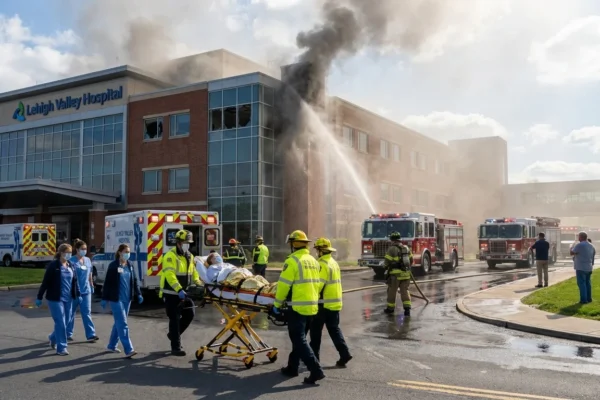
A violent blast ripped through a Bucks County nursing home near Bristol this afternoon, shaking nearby blocks and sending families racing for answers. Multiple residents and staff were hurt. Officials confirmed at least three deaths as of tonight. The search for a cause has begun, and so has the legal and civic reckoning that follows a disaster at a care facility.
What we know now
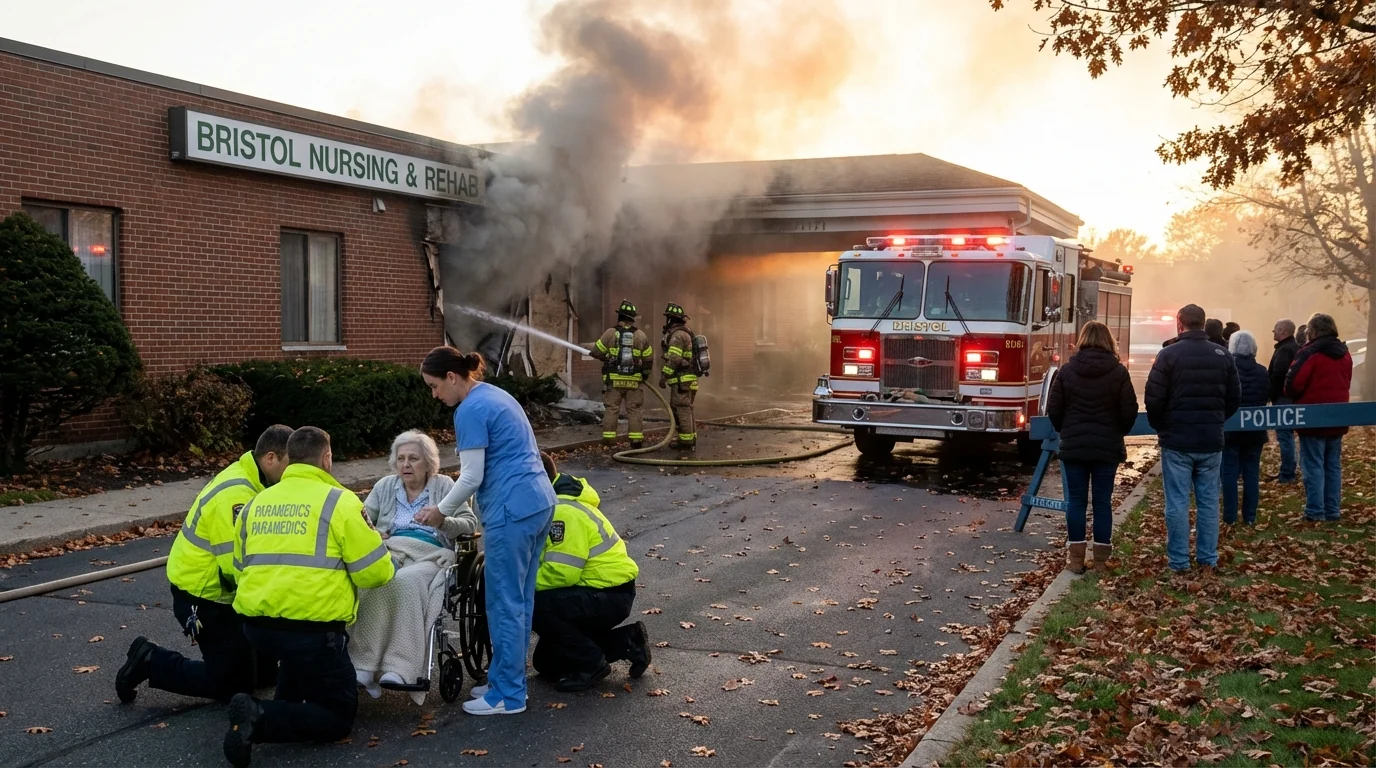
Firefighters and EMS converged within minutes. Crews evacuated residents, many in wheelchairs and on oxygen. Medics treated people in the parking lot, then moved the most serious cases to area hospitals. Several remain in critical condition. Earlier reports listed two dead and about 20 hospitalized. Authorities later confirmed a third death. People first listed as missing have been found safe, officials told us.
The building took heavy damage. Windows blew out. Interior sections buckled. The county fire marshal began an on scene investigation. State and federal partners have been notified. The cause has not been confirmed. Gas, equipment failure, or human error remain open questions.
Families are being routed to a reunification site. Staff are working down call lists to notify next of kin. Residents are being relocated to partner facilities and hospitals as beds open.
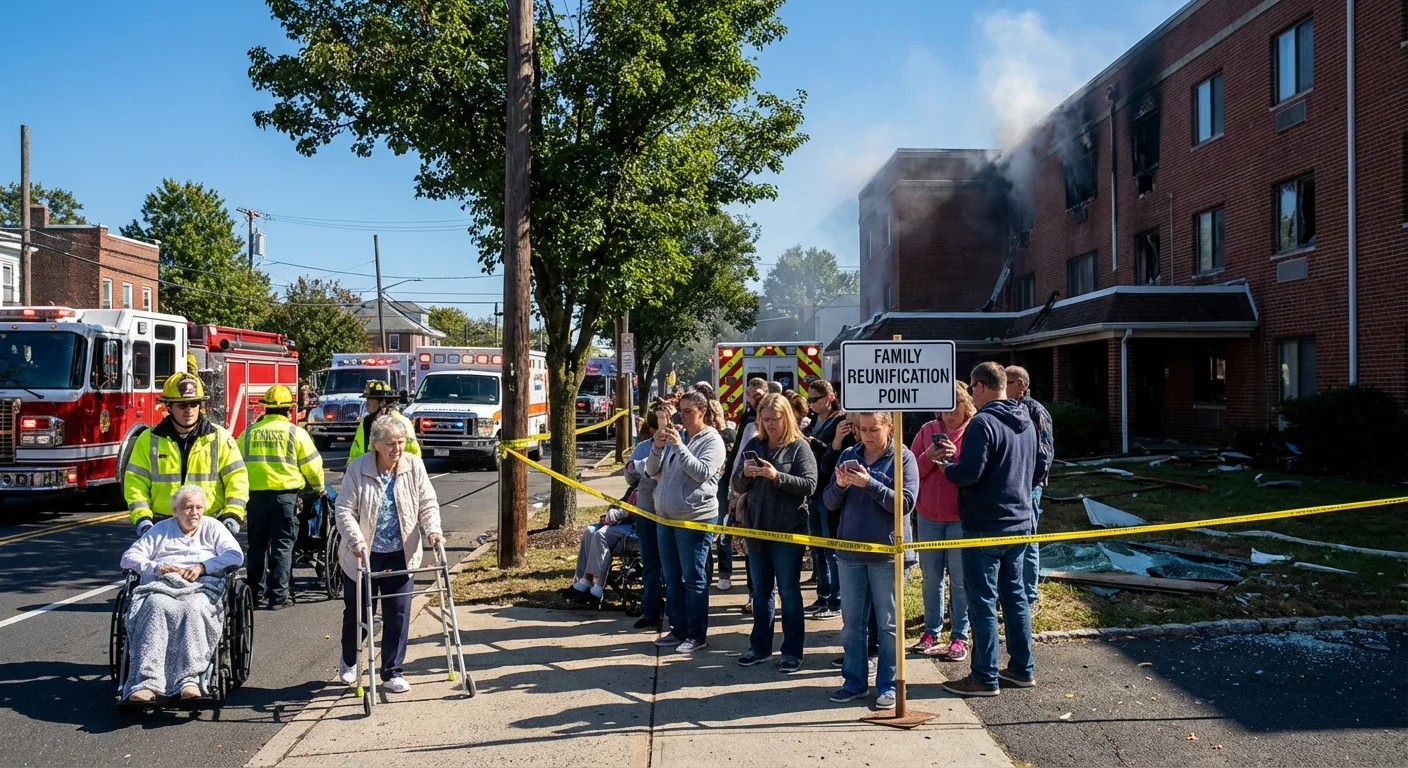
Cause has not been determined. Officials are preserving the scene and collecting evidence. Rumors help no one.
The legal and policy stakes
Long term care facilities operate under federal and state rules that are strict in moments like this. Under the federal Emergency Preparedness rule, nursing homes must maintain an all hazards plan, hold drills, and coordinate with local emergency managers. Pennsylvania’s Department of Health licenses these facilities and requires immediate reporting of serious incidents, including fires and explosions.
Two tracks of inquiry are likely. First, a fire and life safety investigation will probe ignition sources, alarms, sprinklers, gas service, and maintenance logs. Second, regulatory reviews will examine whether the facility followed its emergency plan, trained staff, and kept equipment in working order. If natural gas is suspected, the Pennsylvania Public Utility Commission can open a pipeline safety review. OSHA reviews workplace safety when employees are injured on the job.
If the investigation suggests negligence, civil liability follows. Families may bring wrongful death and survival actions in Pennsylvania courts. The statute of limitations for injury and wrongful death in Pennsylvania is generally two years. Evidence preservation is critical, including maintenance records and surveillance video. Courts can order those materials held.
Rights of residents and families
Residents have strong rights under federal law, known as the Nursing Home Reform Act, and under Pennsylvania rules. Those rights do not pause during an emergency. Families are entitled to timely information about a loved one’s status and location. Residents and their representatives may request medical records. If a transfer is needed, the facility must make safe arrangements and share care plans. Medicaid bed hold rules may apply for short hospital stays.
Here are smart steps to take now:
- Ask the facility for written confirmation of your loved one’s status and location
- Request the current care plan and medication list
- Keep a log of calls, names, and times, including any promises made
- Photograph or scan any discharge or transfer papers
- If you smell gas at home or on site, leave the area and call 911
If you cannot reach the facility, contact Bucks County Emergency Management. They can direct you to the reunification point and the health department liaison.
Medical privacy laws protect residents, but designated representatives have the right to information. If you are the health care proxy, bring your paperwork. If you are not sure who the proxy is, ask the facility’s administrator to identify the responsible party.
Accountability and next steps
Expect multiple formal actions. The Department of Health can conduct an immediate jeopardy inspection and issue deficiencies, fines, or even suspend admissions. CMS can withhold payments if the facility is noncompliant. The county fire marshal will release an origin and cause finding when ready. If a utility is involved, the PUC will report on pipeline or service safety.
Civil suits may center on maintenance, gas service, alarm performance, and whether staff followed the emergency plan. Plaintiffs often send a preservation letter early. That letter demands that the facility and any contractors keep logs, emails, work orders, and video. Courts can enforce sanctions if evidence goes missing.
Local officials can call hearings to question operators, utilities, and regulators. Records from public agencies are available under Pennsylvania’s Right to Know Law. Inspection reports and plans on file with the Department of Health are also public.
Beware of unsolicited calls asking for money or personal data. Verify any fundraiser or relocation service with county officials before you share information.
What we are watching
- The official cause and whether gas infrastructure played a role
- The facility’s emergency plan, training records, and maintenance history
- Patient transfer safety and continuity of care
- State enforcement, including fines and conditions on the facility’s license
- Any civil filings, including wrongful death claims and preservation orders
Conclusion
Tonight, this community is grieving, and families need clear answers. We will continue to report from the scene, hospitals, and county offices. The first duty is to the residents, their care, and their rights. The next duty is to find the cause, fix what failed, and hold the right parties accountable. That is how safety improves, and that is how trust is rebuilt.