A presidential flight turned back minutes after takeoff today, and every safety system worked as designed. Air Force One, carrying President Trump to Davos, returned to its departure base after a minor electrical issue lit up in flight. I confirmed with officials that the jet landed safely. No injuries. No security threat. The trip resumes after checks, but today’s pivot tells a bigger story about policy, process, and the public’s right to know. ✈️
What happened in the air
Crew detected a minor electrical fault shortly after climb. That triggered a standard decision, return to the nearest suitable airport. The aircraft circled, burned fuel, and came back for a routine landing. Ground teams moved in, the protective detail reset the motorcade plan, and the maintenance crew began diagnostics.
This is what the law expects. Presidential travel must preserve life and the office. When in doubt, come home, inspect, and then continue. That call protects the president, crew, and everyone on the ground.
Safety protocols and the law
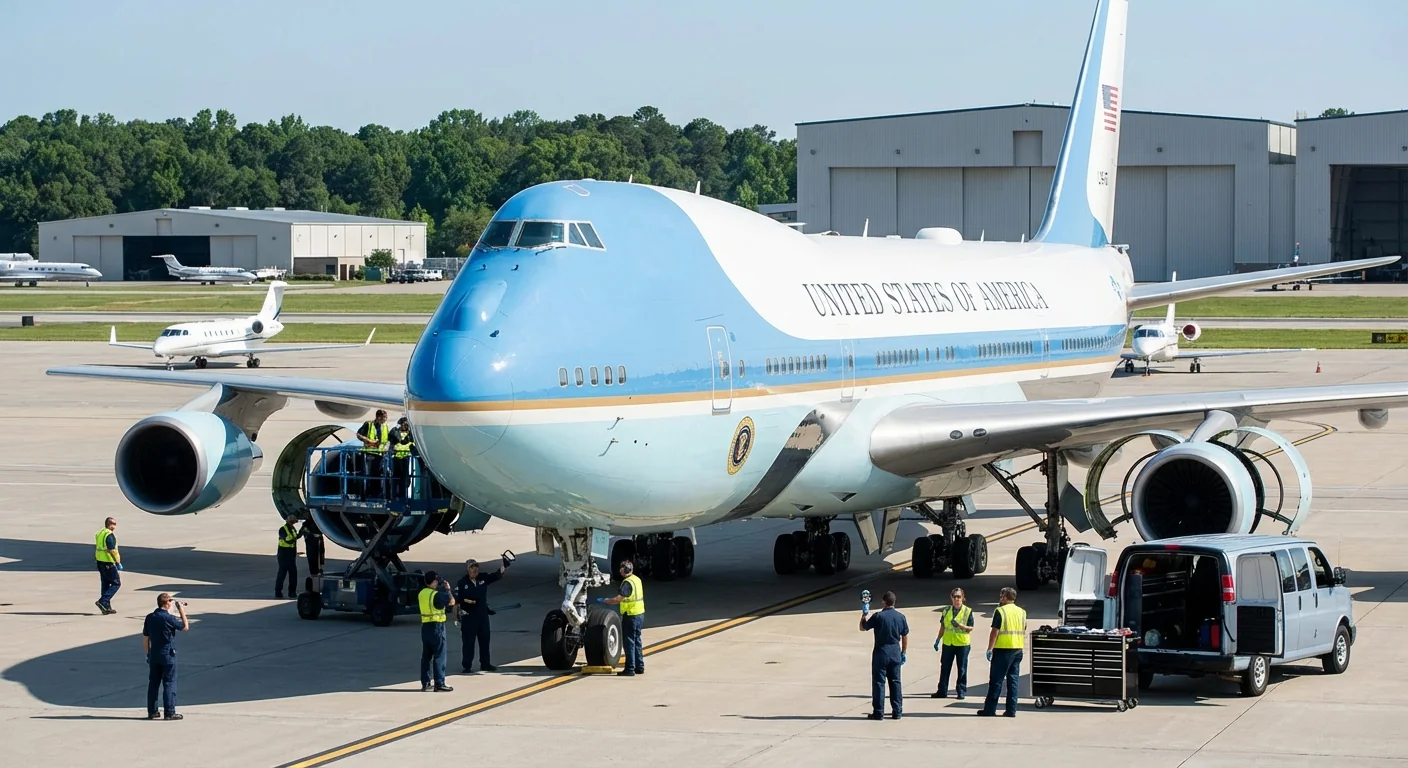
Air Force One is not a single plane, it is a call sign used when the president is aboard a U.S. Air Force aircraft, usually the VC-25A, a heavily modified Boeing 747. Federal and military rules govern its safety envelope. The Federal Aviation Administration sets airworthiness standards. The Air Force enforces technical orders, redundancy requirements, and inspection cycles. The Secret Service operates under 18 U.S.C. 3056, which gives clear protection authority, including control of routes, timing, and emergency responses.
Today’s return fits those rules. A minor fault does not mean danger, but policy says you treat it as a stop sign. That is how continuity of government is preserved. If the president’s aircraft has any doubt, you remove the doubt on the ground.
Air Force One uses backups for power, communications, and navigation. One system can fail, another takes over, and the mission stays safe.
Redundancy on board
The VC-25A carries multiple generators, battery systems, and independent power buses. Communications have layered backups, secure and unclassified. The cockpit has duplicated flight controls and instruments. A single warning light triggers a checklist, not panic. Crews train to isolate a fault, keep flying, and return if needed.
Who decides to turn back
The pilot in command owns the cockpit under U.S. aviation law. That authority is real on Air Force One. The military chain of command and the Secret Service provide risk inputs, but the captain makes the flight call. The mission commander and the lead agent then handle logistics, motorcades, and onward travel. If the president must reach a summit, a spare aircraft stands ready.
You may see a short delay, then a swap or a relaunch. That is baked into the plan. For foreign trips, a support fleet usually prepositions parts, technicians, and sometimes a backup airframe. The law demands continuity, so the policy funds resilience.
- Pilot in command, safety and air decisions
- Secret Service, protection and routing
- Air Force maintenance, inspection and repair
- White House Military Office, mission support
A safe return does not trigger a public accident probe. If no damage or injury occurred, the Air Force handles it as maintenance, not a mishap.
Citizen rights and public transparency
When the president travels, temporary flight restrictions limit airspace. The FAA posts these as notices to air missions under 14 CFR 91.141. That can affect nearby airports, medical flights, and drone operators. The public has a right to advance notice, balanced with security. Today’s turnback may adjust the timing window, and the FAA must update the restriction.
Your right to know is real, within limits. The public can ask for records of the delay, maintenance logs, and cost impacts through the Freedom of Information Act. Sensitive details can be withheld, such as communications security and certain protective methods. But basic facts, the nature of the fault, the duration of the delay, and airspace changes, are fair game for disclosure.
Do not expect live technical specifics. Real time details about power systems or comms routes can reveal security gaps.
What happens next
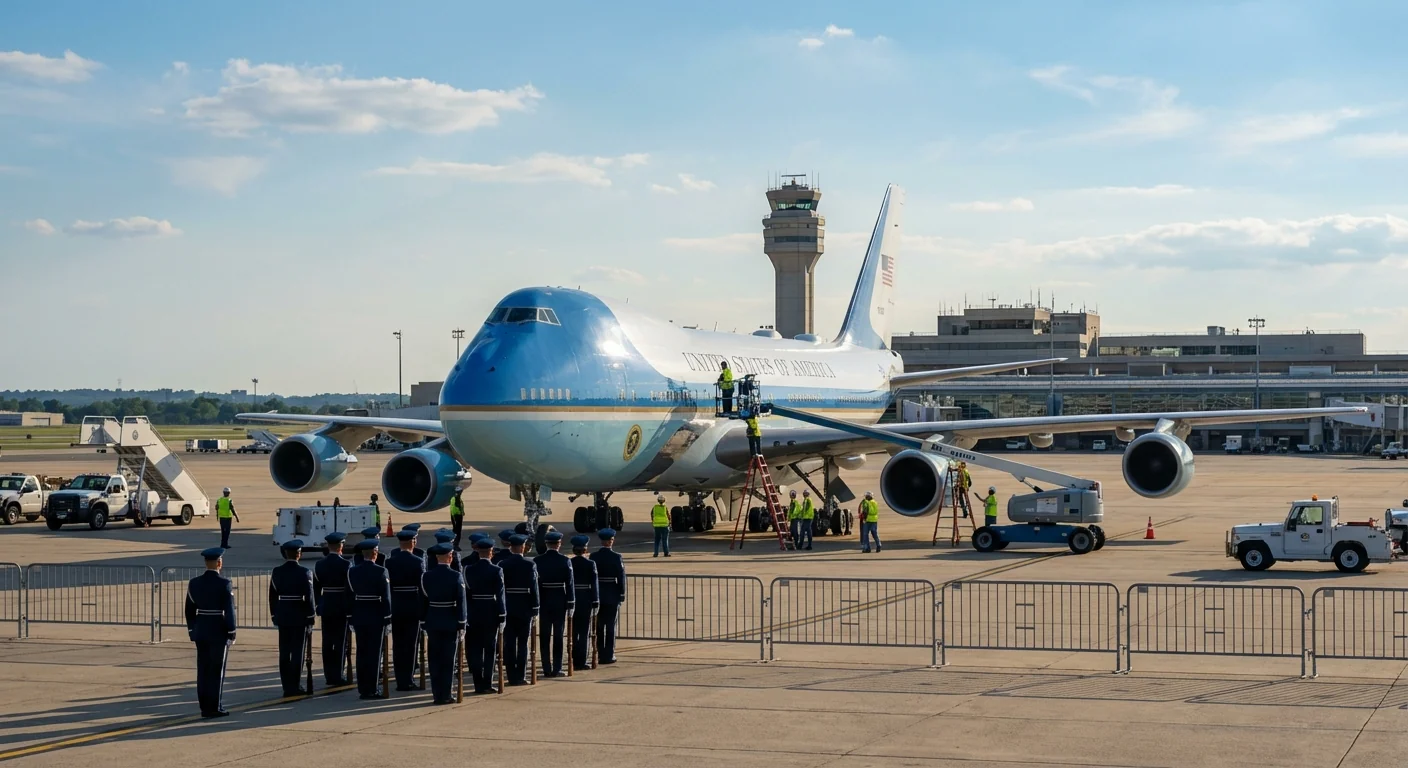
Officials tell me the Davos trip continues after inspections and a systems reset. If the fix is quick, the same jet flies. If not, the support plan activates, either a spare VC-25A or an alternate airframe with the same call sign once the president boards. None of this is unusual. Precaution is the policy, not the exception.
This brief diversion is a civics lesson in motion. Safety rules worked. Legal authority was clear. Public notice obligations continue. The presidency travels with redundancy for a reason, and today we saw that system do exactly what it was built to do.