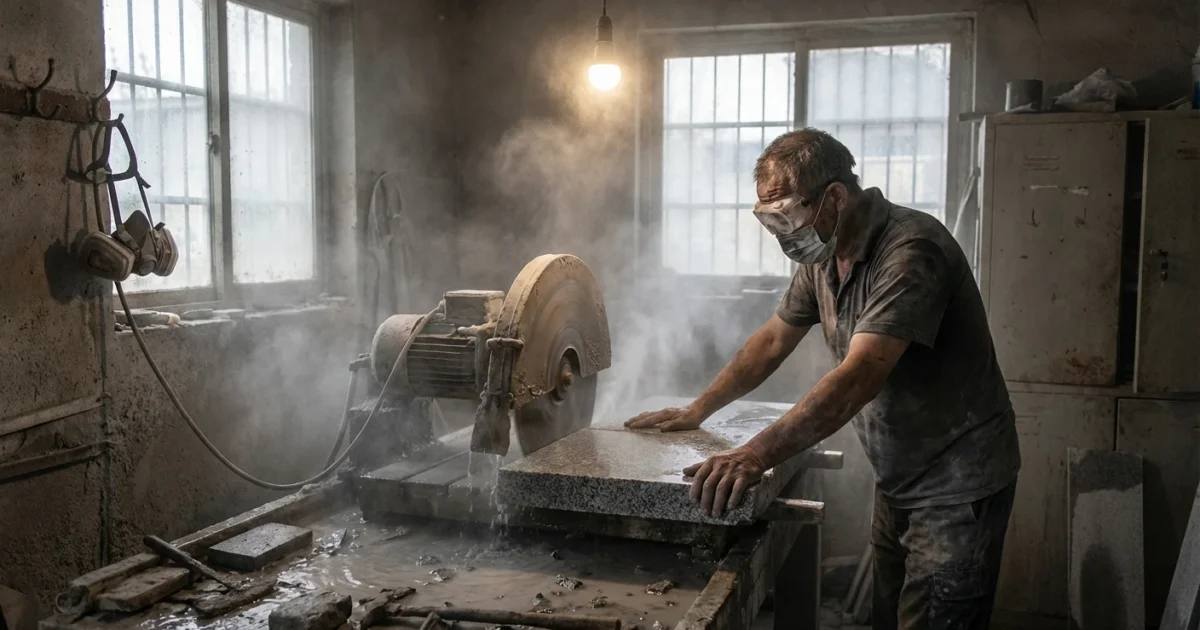
Silicosis is breaking into America’s kitchens and job sites today. I can confirm that Massachusetts has logged its first confirmed case tied to countertop fabrication, announced December 10, 2025. California now counts 447 confirmed engineered stone cases, including 25 deaths and 49 lung transplants. This is no slow-burn hazard. It is a fast, irreversible lung disease that is hitting relatively young workers. The public health alarm is real, and it is national. 🛑
What silicosis is, and why engineered stone is driving it
Silicosis is permanent scarring of the lungs caused by breathing very fine crystalline silica dust. Engineered stone, often sold as quartz, can contain over 90 percent crystalline silica. Cutting, grinding, polishing, and dry sweeping release clouds of tiny particles. These particles reach deep into the lungs. The body cannot clear them.
Symptoms often start mild. A dry cough. Shortness of breath on stairs. Chest tightness or fatigue. Once the scarring builds, oxygen cannot move well. People can go from working full time to gasping at rest in months. There is no cure. Lung transplant is sometimes the only option.
Wet cutting and disposable masks were once considered enough. Field evidence now shows they are not enough on their own, especially in small, poorly ventilated shops. The safest control is to remove the hazard at the source.
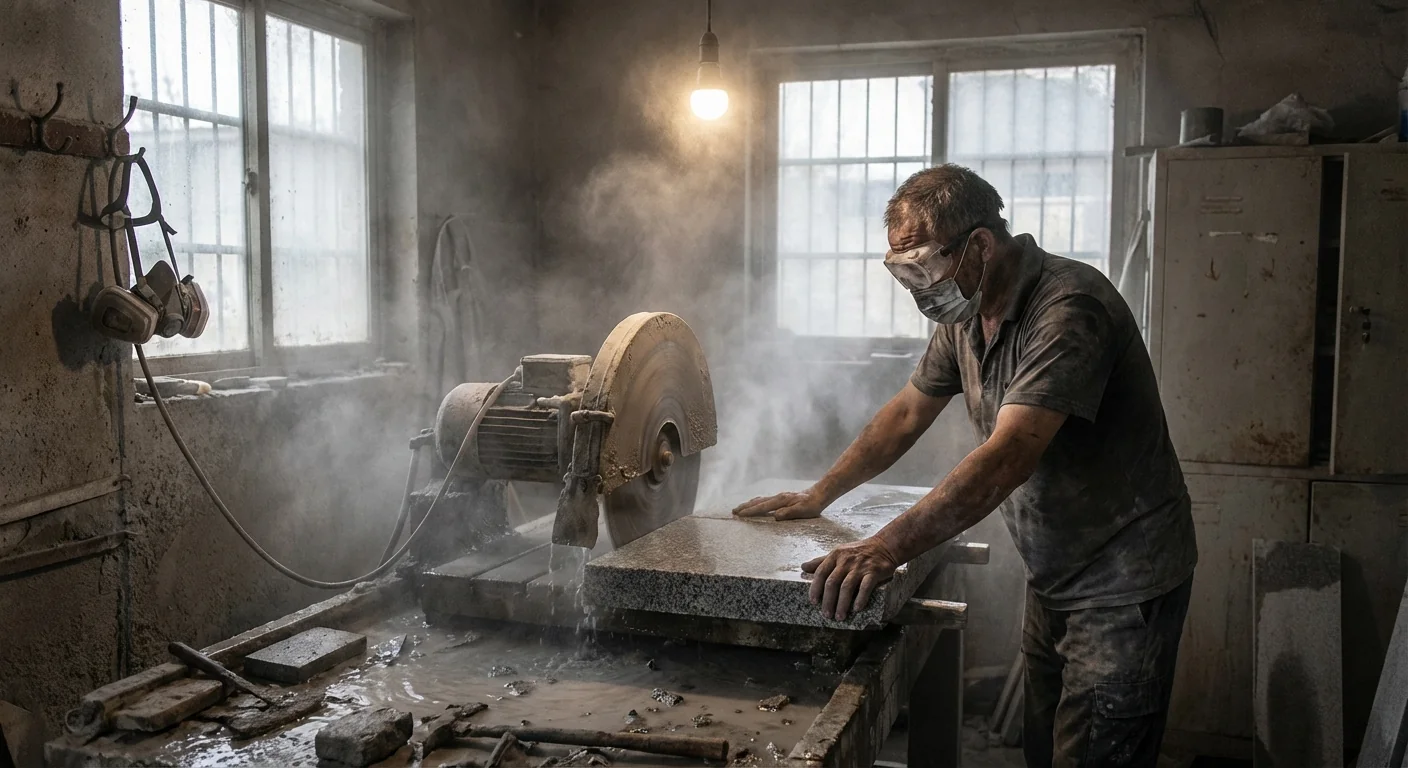
Engineered stone has an extremely high silica content. Even with water and basic respirators, dangerous dust can reach workers’ lungs.
Where the surge is happening now
California has made engineered stone silicosis a reportable disease. Clinicians must notify local health authorities within seven days when they suspect or confirm a case. That change is already revealing the scale of harm, with 447 confirmed cases to date, 25 deaths, and 49 lung transplants. Starting January 2026, Senate Bill 20 will tighten coordination between health officials and Cal OSHA to speed inspections and interventions.
Massachusetts has now confirmed its first countertop industry case. That single case matters. It signals spread beyond known hotspots and warns every state with active fabrication shops. Legal actions are also mounting, with settlements and verdicts exceeding 78 million dollars. Medical and occupational experts are urging limits or bans on engineered stone, similar to Australia’s national ban in 2023.
What to watch for, and when to act
Early symptoms can be subtle. If you work with stone, do not wait for severe breathlessness. Get checked if you notice the following:
- Persistent dry cough or chest tightness
- Shortness of breath with routine tasks
- Unusual fatigue or weight loss
- Worsening asthma or repeated bronchitis
Clinicians should ask about engineered stone and dust exposure. The right tests include a chest X-ray or high resolution CT, breathing tests, and oxygen checks during activity. Time matters. Early removal from exposure can slow harm.
If you cut, grind, or polish engineered stone and have any breathing symptoms, seek medical care now. Tell your clinician about silica dust exposure.
How to protect workers right now
Prevention starts with eliminating or substituting the material. Shops should switch to lower silica products where possible. If engineered stone is used, controls must be layered and enforced every shift.
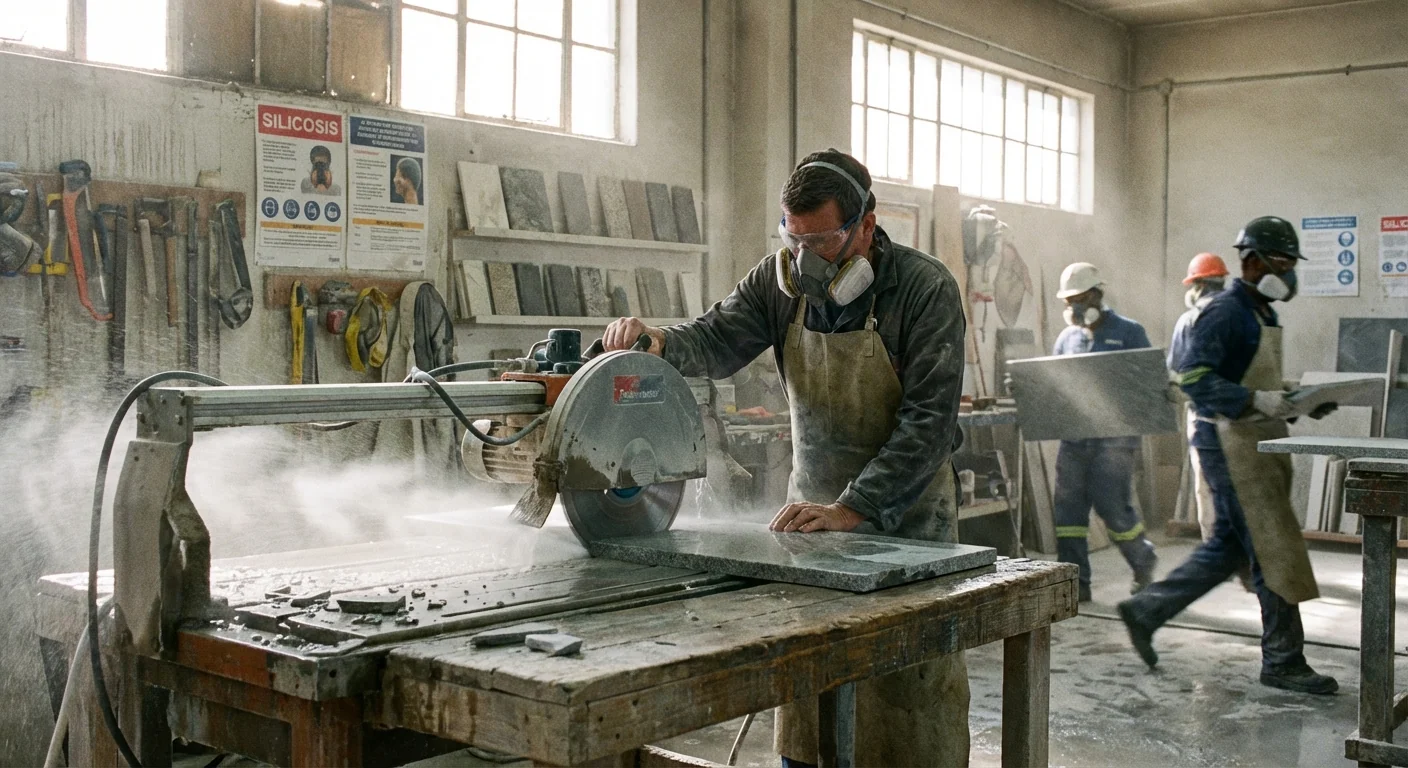
Enclosed wet saws, strong local exhaust that captures dust at the tool, and HEPA vacuums make a real difference when used together. Fit-tested powered air purifying respirators are far better than simple dust masks. Dry cutting and dry sweeping should be banned in policy and practice. Regular medical surveillance should be offered at no cost, with paid time to attend. Training must be clear and in the language workers speak.
I will be blunt. Controls reduce risk, but they may not fully prevent disease with ultra high silica stone. Removing the hazard remains the most protective step.
Homeowners and designers, ask your fabricator about silica content. Consider alternatives like natural stone with lower silica, porcelain slabs, sintered stone with verified low silica, or solid surface materials.
The bottom line
A popular surface turned into an occupational health crisis. I am tracking it in real time, and the picture is stark. California’s case surge, new reporting rules, and the first confirmed Massachusetts case show this is a national worker safety emergency. The path forward is clear. Reduce silica at the source, protect workers with layered controls, and give clinicians the tools and data to act fast. Lives and lungs depend on what we do next.