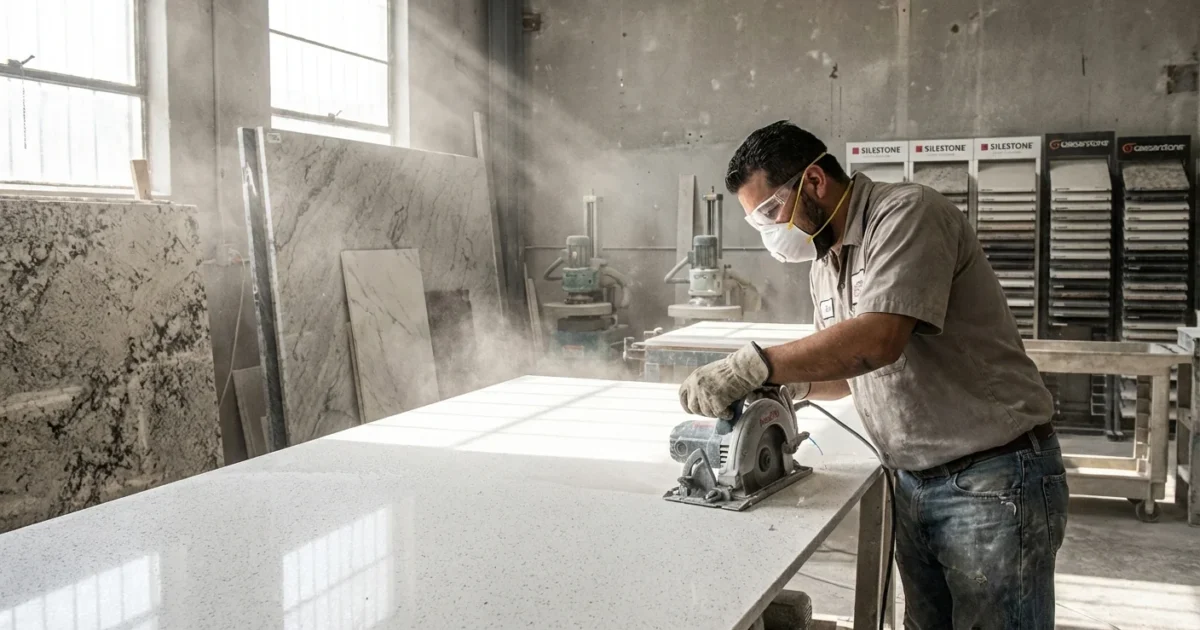
Silica dust from quartz countertops is driving a fast, deadly lung disease into American workshops. I can confirm new cases this week, including the first in Massachusetts, and a sharp surge in California. The pattern is clear, and it is urgent. Workers are getting sick younger, and the disease is often advanced by the time anyone notices. Families are facing transplant decisions in their 40s.
What is happening now
Engineered quartz, the polished slab behind many modern kitchens, contains very high levels of crystalline silica. Cutting, grinding, or polishing these slabs releases fine dust that can go deep into the lungs. That dust causes silicosis, an incurable disease that scars lung tissue and steals breath day by day.
California has now logged hundreds of confirmed cases tied to engineered stone, along with deaths and dozens of lung transplants. This week, Massachusetts confirmed its first countertop worker with silicosis, a Hispanic man in his 40s with 14 years in the trade. The cases skew young. Median age at diagnosis in California sits in the mid 40s, and deaths are occurring before 50. I am seeing the same red flags across multiple shops and regions.
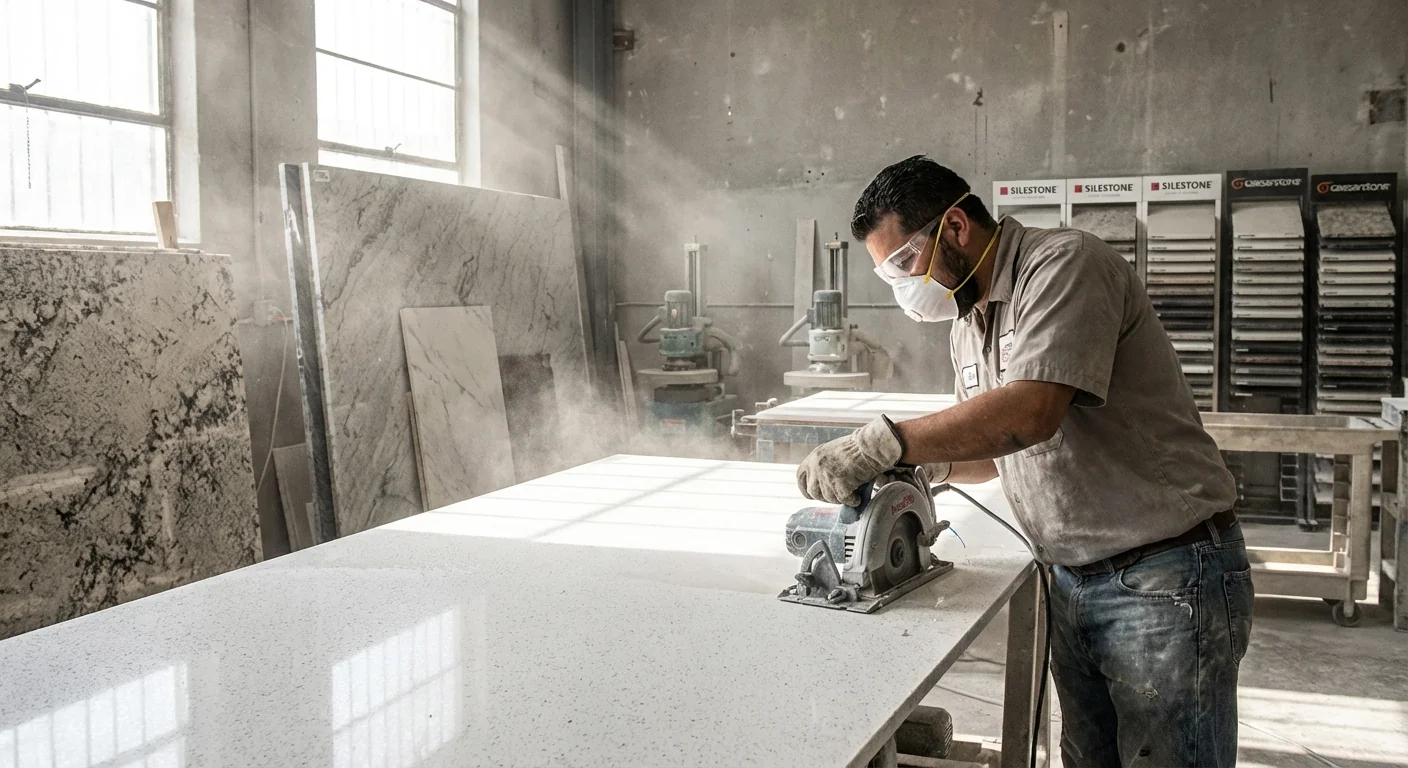
Silicosis is progressive and has no cure. Early prevention is the only reliable protection. ⚠️
Why quartz is different
Traditional stone like granite has much less silica. Engineered stone can contain more than 90 percent silica. When dry cutting or polishing happens in small shops without strong controls, the dust load in the air can be extreme. Even a few years of high exposure can lead to accelerated silicosis. In some workers, disease progresses in months, not decades.
Finished countertops in homes are not the problem. The danger comes during fabrication and installation, when slabs are shaped, cut, and drilled.
Who is most at risk
This epidemic is hitting countertop workers, many of them Hispanic immigrant men, often in their 30s and 40s. Many work in shops that lack ventilation, use dry cutting, or provide the wrong masks. Some are uninsured or hesitant to seek care, so diagnoses come late.
Symptoms can be easy to miss or mislabel as asthma or infection. Watch for:
- Cough that will not go away
- Shortness of breath, first on exertion, then at rest
- Chest pain or tightness
- Fatigue, weight loss, or night sweats
If you work with engineered stone and have these symptoms, ask a clinician about silica exposure. Request a chest X-ray or CT scan and lung function tests. 🫁
How to protect workers now
Prevention works. It is also straightforward when employers commit to it. The safest shops use water, air movement, and the right respiratory gear as a package.
- Use wet cutting and polishing at every step, with strong water flow
- Install local exhaust with HEPA filtration at the tool and the table
- Provide fit-tested respirators rated for silica, not simple paper masks
- Set up regular medical checks, training, and strict housekeeping with wet methods
Dry cutting should stop. Period. That single change can prevent a large share of cases. For installers, cut off-site under wet controls whenever possible, and vacuum with HEPA tools if drilling on-site is unavoidable.
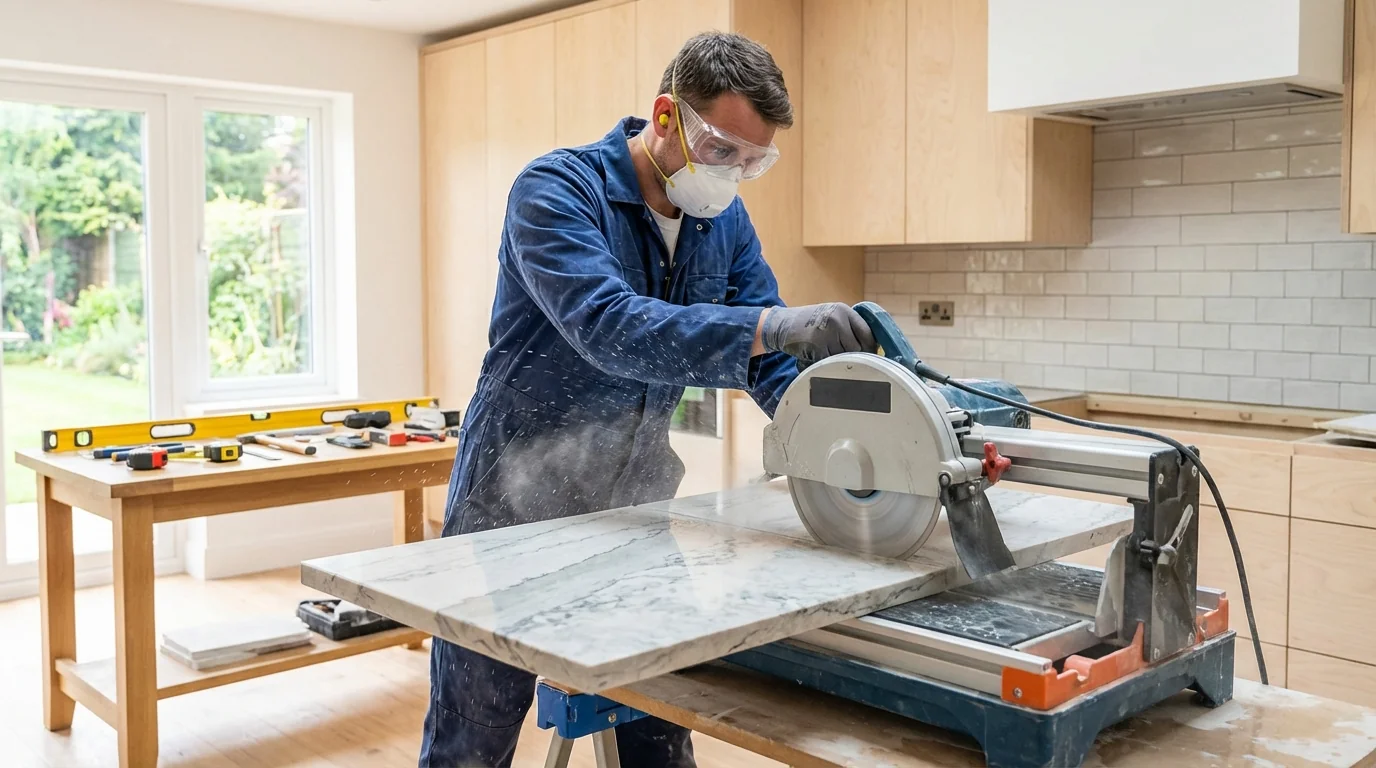
Workers, keep a simple exposure diary. Note dates, tasks, and whether cutting was wet or dry. This helps your doctor and can speed a correct diagnosis.
What consumers and designers can do
Ask your fabricator if they use wet methods and local exhaust at all saws and polishers. Get it in writing. Consider materials with lower silica content, such as some natural stones, solid surface, stainless steel, or certain sintered products. If you choose engineered stone, select shops that can demonstrate full controls, worker training, and respirator programs.
Policy and the road ahead
Australia banned engineered stone due to worker harm. In the United States, stronger rules are coming. California made silicosis reportable to track cases faster, and new enforcement powers take effect in 2026. Other states are moving to require medical surveillance and ban dry cutting. Based on the case curves I am reviewing, the risk is not theoretical. The faster employers and states act, the more lungs we save.