Breaking: New Nipah Virus Cases Confirmed in India, Asia Steps Up Health Checks
India has confirmed new Nipah virus cases, and regional health teams moved fast today. Hospitals raised infection controls. Close contacts are being traced and monitored. Several Asian airports added passenger screening as a precaution. This is a serious health alert, not a reason to panic. Here is what matters for your safety and wellbeing in 2026.
What we know right now
Nipah is a high-fatality zoonotic virus. It spreads from animals to people, and sometimes between people. Fruit bats are the natural host. Health workers in India have isolated patients and are testing contacts. Laboratory teams are confirming cases and ruling out lookalike illnesses.
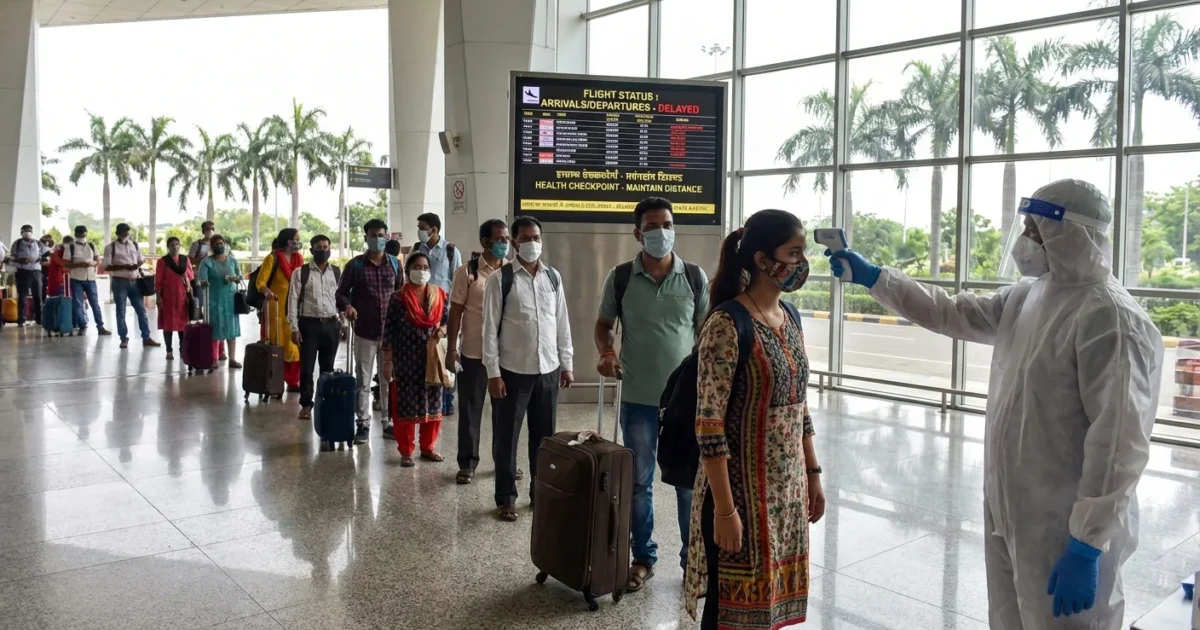
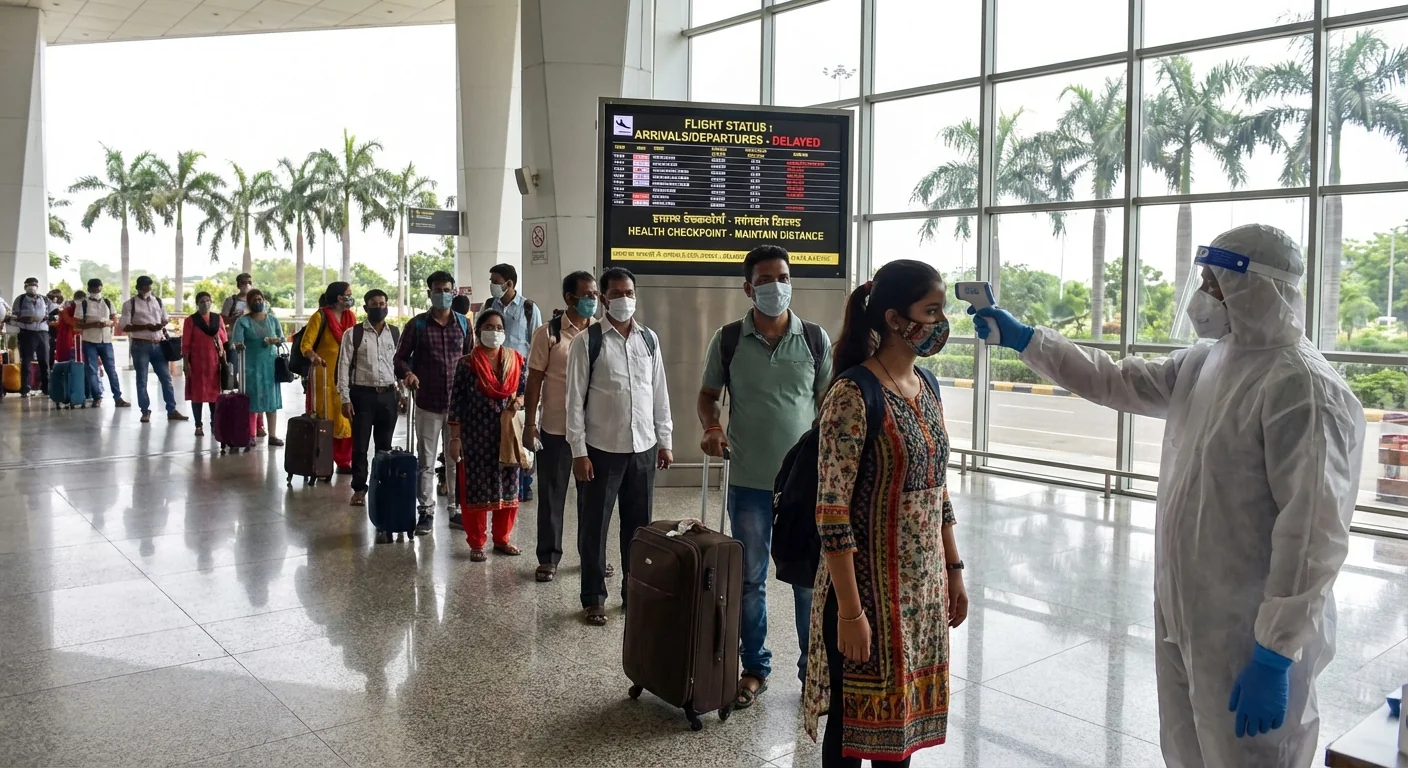
There is no signal of widespread international spread. Airports are screening to lower spillover risk. Expect temperature checks, health forms, and referral rooms for anyone ill on arrival. These steps help find sick travelers early and remind the public to stay alert.
Nipah has caused fatality rates of about 40 to 75 percent in past outbreaks. There is no licensed vaccine and no widely approved specific treatment. Supportive hospital care can save lives, so early action matters.
What is Nipah and how it spreads
Nipah is a Henipavirus. Fruit bats, also called flying foxes, carry it. People can get infected by eating fruit or raw sap contaminated by bats, by contact with sick animals like pigs, or by close contact with an infected person.
The incubation period is usually 4 to 14 days. Rare longer delays have been reported. Early symptoms are general and easy to miss. They can progress quickly.
Common signs to watch:
- Fever, headache, and muscle aches
- Cough, sore throat, and shortness of breath
- Drowsiness, confusion, or seizures, which signal brain swelling
If you have these symptoms after possible exposure, act fast. Call your clinic or hospital before you go. Wear a quality mask and avoid public transport if you must travel for care.
Why airports are screening
Airports across parts of Asia set up thermal scanning and health questionnaires today. Staff are trained to isolate a sick traveler and alert medical teams. This is a layer of protection, not a silver bullet. Screening can miss people who have no fever yet. Still, it helps slow spread and raises awareness at borders.
This move reflects caution because Nipah can be severe. It does not mean there is a global outbreak. Travel remains open, with added safeguards for public health.
Flying soon? Keep a high-filtration mask in your carry-on. Sanitize your hands often, avoid touching your face, and keep distance from anyone who is coughing. If you feel ill before a flight, do not travel. Reschedule and get checked.
How to protect yourself today
Most people can cut their risk with simple, steady habits. These steps matter in India and anywhere with travel links to affected areas.
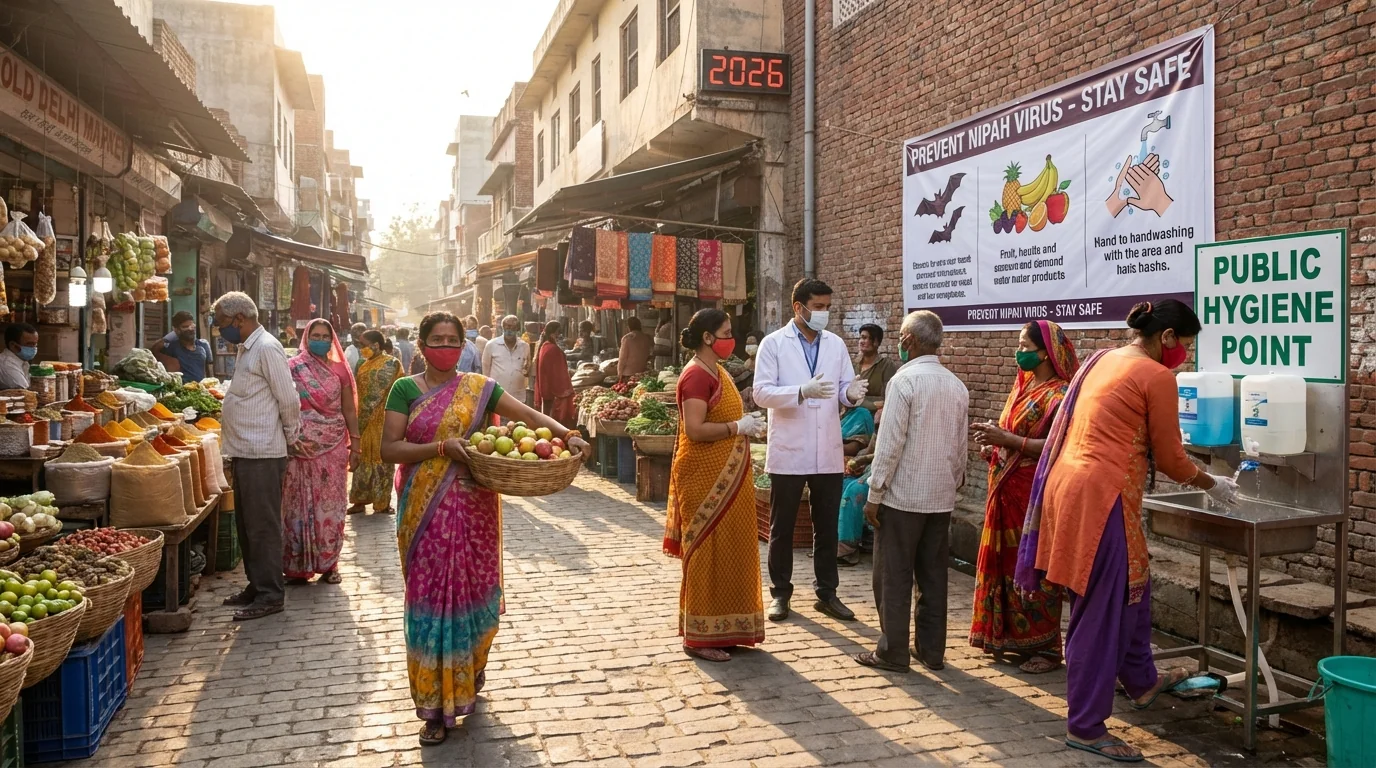
- Wash hands often with soap and water for 20 seconds, or use sanitizer with 60 percent alcohol.
- Do not drink raw date palm sap. Peel and wash fruit. Avoid fruit with bite marks or lying on the ground.
- Avoid contact with sick animals. Farmers and animal handlers should use gloves and masks when needed.
- In clinics or crowded indoor spaces, wear a well-fitted mask and keep good ventilation.
Healthy daily routines help your immune system. Sleep 7 to 9 hours, hydrate, and eat balanced meals. Stay connected with friends and family to reduce stress. Calm minds make better health choices in fast-moving situations.
When to seek care
If you were in an area with confirmed Nipah cases or had contact with a sick person, monitor your health for 21 days. Check your temperature twice daily. Watch for breathing trouble or any confusion.
Call a healthcare provider right away if symptoms start. Tell them about possible exposure so they can prepare a safe room and protective gear. Isolate at home while you wait for guidance. Use a separate bedroom and bathroom if possible. Do not share utensils, towels, or bedding.
Healthcare workers and caregivers should use contact and droplet precautions, including gloves, gown, medical mask, and eye protection. Clean high-touch surfaces with an approved disinfectant.
The path ahead
India has contained Nipah before with rapid contact tracing, strict isolation, and strong hospital infection control. That same playbook is underway now. Researchers continue to test vaccines and therapies, but they are still experimental. The best defense today is quick detection and smart prevention.
Here is the bottom line. Stay informed. Follow reliable health guidance. Keep your risk low with simple protective steps. If symptoms appear after possible exposure, do not wait. Call ahead, mask up, and get care fast. Lives can be saved with speed and calm action.